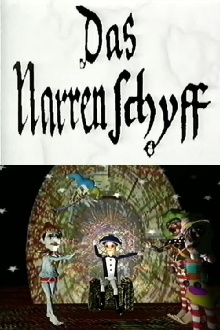
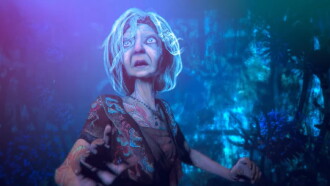
Admiral Flipside is one crazy sea-dog. Driven by a darker than black alter-ego he embarks upon a bizarre voyage of destruction and self discovery. Haunted by his subconscious he is driven by ghostly manifestations into a surreal world of circus and theatre inspired by Sebastian Brant’s 1494 book ‘Das Narrenschyff’ (The Ship of Fools). Unbeknown to him he is the leading actor in a stage play based on the ship of fools. He leads the witless fools on a disastrous voyage to find ‘Narragonia’ (Fools Utopia). Flipside finds himself the sole survivor after the ship is set upon by fire breathing monsters from the deep. He is washed up on the very beach that he left many years ago, only to discover his innocence waiting for him. Here at last, after so many long years searching, he is forced to confront the grim reality that is himself. These short films combine computer animation, traditional animation, video and concepts of theatre to produce a bizarre visual story.
A knight and his wife live in a small house in the middle of nowhere. Every day he fights passing knights and is rewarded by his wife with lots of love and delicious meals.
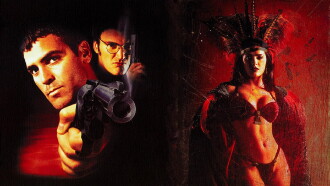
After kidnapping a father and his two kids, the Gecko brothers head south to a seedy Mexican bar to hide out in safety, unaware of its notorious clientele.
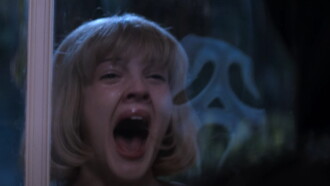
A year after the murder of her mother, a teenage girl is terrorized by a masked killer who targets her and her friends by using scary movies as part of a deadly game.
BEAUTIFUL FUNERALS is a hand-painted double-step-printed film composed of 1) dense blackness variously punctuated by brilliantly colored jewel/flower-like shapes AND 2) interruptive white sections which are fuzzily dotted with blurred whites and criss-crossed by black "brushstrokes" and hard-edge straight black and white lines.