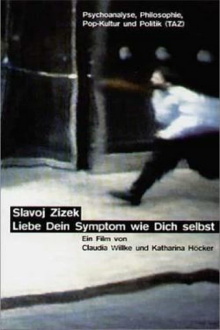
Slavoj Zizek, born in 1949 in Ljubljana, psychoanalyst and professor of philosophy, started early on a group of theoreticians who sharpened their thinking of the theses of Jacques Lacan. The Slovenian Lacan School was a spiritual resistance nest in orthodox ex-Yugoslavia, and Slavoj Zizek emerged as a globally operating philosopher-entertainer.
When Ethan Hunt, the leader of a crack espionage team whose perilous operation has gone awry with no explanation, discovers that a mole has penetrated the CIA, he's surprised to learn that he's the prime suspect.
Isolated in the bell tower of Notre Dame, Quasimodo longs to experience the world beyond the cathedral walls, despite the wishes of his stern guardian, the Judge of Paris Claude Frollo.
The true story of a Prussian aristocrat working for German military intelligence during World War II, who, with a group of fellow devout Christians, plotted to assassinate Hitler with a bomb in his briefcase.
When Hydro-Québec announced its intention to proceed with the enormous James Bay II hydroelectric project, the 15,000 Cree who live in the region decided to stand up to the giant utility.
Comprised of a series of bizarre and unrelated episodes, this absurd Italian comedy earned the inglorious honor of being the film with the most audience walkouts at the 1996 Venice Film Festival.
A doctor and his wife move to a new city where they plan to start a new life. However, trouble strikes in the form of a police inspector who gets completely obsessed with the doctor's wife.