The chromatic research based mainly on primary colors yearns for the incandescence of red, for strong tonal contrasts, with the gaze turned to an anti-naturalistic, subjective, internalized color, which looks to the Fauves, Munch and German Expressionists but also to Boccioni and Picasso for the metamorphosis of the human figure (here the female body) and his struggle against Euclidean geometry; to the Suprematists and Constructivists, cited in the geometric forms: sharp spiers of piercing light, flashes of lightning, triangles like blades that cut the screen and chase the evanescent bodies in the dark.
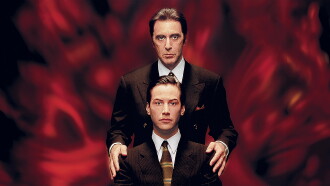
Aspiring Florida defense lawyer Kevin Lomax accepts a job at a New York law firm. With the stakes getting higher every case, Kevin quickly learns that his boss has something far more evil planned.
Wilfred Owen and Siegfried Sassoon, two of England's most important World War I poets are sent, along with other traumatized combatants, to a rest home in order to treat their emotional troubles, caused by the psychological fatigue that suffer the soldiers fighting in the no man's land.
Based on a novel of Segio Atzeni. By a lot of interviews, usualy contradictory, it discovers the many lifes of Tullio Saba, a Sardinian miner, thief, singer, union organizer, rebel.
HBO (in association with the American Film Institute) presents this 1997 anthology, narrated by Liev Schreiber, which looks at sports in cinema from the earliest silent films until the nineties.
In a backwoods cabin, a boy called Little Man lives with his dad (a trapper), his older sister Missy, and his younger sister Kid, who is feral, spends most of her time under the table, and can imitate the sound of any animal.
101-year-old Rose DeWitt Bukater tells the story of her life aboard the Titanic, 84 years later. A young Rose boards the ship with her mother and fiancé.