A revealing portrait of two young addicts, their life on the street and their despairing parents who find themselves powerless to save their children from the habit that is consuming them. As filmmaker Andrée Cazabon follows Cathy and Laurent for many months, recording their desperate drug-fuelled existence, she remembers her own life on the street. "My parents and I relived that horror," she says of her creative journey. But it was for all parents that she made this film. Cathy's and Laurent's parents live in a permanent state of bewildered anxiety and guilt. How can they avoid being totally destroyed by grief? How do they manage to carry on with their lives, in spite of everything? And how do they deal with a system that views them with suspicion? By grimly showing two children in the grip of a brutal addiction, No Quick Fix hopes to alleviate and identify some of the enormous pain endured by parents coping with an addicted child.
The film describes the microcosmos of the small village Wacken and shows the clash of the cultures, before and during the biggest heavy metal festival in Europe.
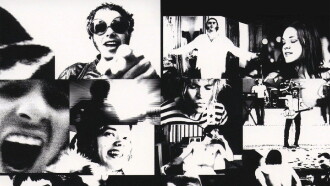
Elektro Moskva is an essayistic documentary about the Soviet electronic age and its legacy. The story begins with the inventor of the world's first electronic instrument, Leon Theremin, unveiling the KGB's huge pile of fascinating devices, some of which were musical.
An inspiring look inside a unique residence in Manhattan that is providing a safe home for 25 gay and transgender teenagers for have experienced violence at home and on the streets.
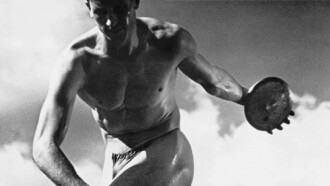
Starting with a long and lyrical overture, evoking the origins of the Olympic Games in ancient Greece, Riefenstahl covers twenty-one athletic events in the first half of this two-part love letter to the human body and spirit, culminating with the marathon, where Jesse Owens became the first track and field athlete to win four gold medals in a single Olympics.
Part two of Leni Riefenstahl's monumental examination of the 1938 Olympic Games, the cameras leave the main stadium and venture into the many halls and fields deployed for such sports as fencing, polo, cycling, and the modern pentathlon, which was won by American Glenn Morris.
This documentary follows painter and musician Lyn Foulkes from age 70 to 77 as he labors to complete two astonishing tableaux that demonstrate his outsider's perspective and eye for evocative imagery.
A poetic portrait of the world-renowned Ballet de l'Opéra national de Paris as they mount a new work by famed contemporary choreographer Anne Teresa De Keersmaeker, Rain is a formalist exercise in documentary filmmaking that at times resembles long lost outtakes from The Red Shoes.
Popular movie trailers from 2000
These some of the most viewed trailers for movies released in 2000:
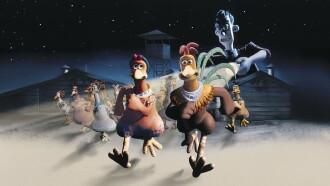
The creators of Wallace & Gromit bring you an exciting and original story about a group of chickens determined to fly the coop–even if they can’t fly! It’s hardly poultry in motion when Rocky attempts to teach Ginger and her feathered friends to fly…but, with teamwork, determination and a little bit o’ cluck, the fearless flock plots one last attempt in a spectacular bid for freedom.
When the self‑absorbed Emperor Kuzco is accidentally transformed into a llama, he must rely on a humble villager to survive the jungle and reclaim his throne.
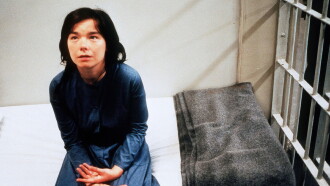
Selma, a Czech immigrant on the verge of blindness, struggles to make ends meet for herself and her young son, who has inherited the same genetic disorder and will suffer the same fate without an expensive operation.
Advertising executive Nick Marshall is as cocky as they come, but what happens to a chauvinistic guy when he can suddenly hear what women are thinking? Nick gets passed over for a promotion, but after an accident enables him to hear women's thoughts, he puts his newfound talent to work against Darcy, his new boss, who seems to be infatuated with him.
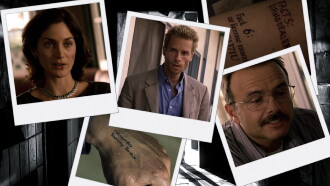
Leonard Shelby is tracking down the man who raped and murdered his wife. The difficulty of locating his wife's killer, however, is compounded by the fact that he suffers from a rare, untreatable form of short-term memory loss.
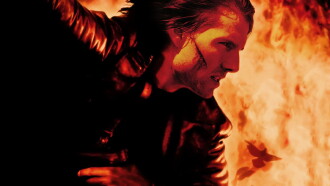
With computer genius Luther Stickell at his side and a beautiful thief on his mind, agent Ethan Hunt races across Australia and Spain to stop a former IMF agent from unleashing a genetically engineered biological weapon called Chimera.
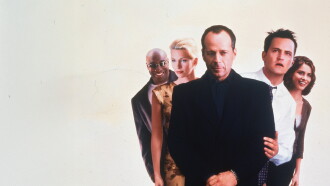
After a mobster agrees to cooperate with an FBI investigation in order to stay out of prison, he's relocated by the authorities to a life of suburban anonymity as part of a witness protection program.