"How much did the ancients really know?"01 August 2003Factual46 mins
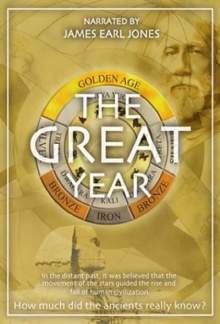
The Great Year is a compelling documentary that explores the possibility that the fall of ancient civilizations around the globe, and the rise of modern civilization, might be related to our Sun’s motion around a companion star. The film examines evidence that ancient civilizations may have known of this celestial cycle and that our Sun may indeed display the characteristics of binary motion. Just as the Earth’s spin on its axis causes day and night and our planet’s annual orbit around the Sun is responsible for the ongoing cycle of the seasons, what if there is some greater celestial cycle, lasting thousands of years, slowly influencing the rise and fall of civilization across the globe? Where is the evidence? What could be the cause?
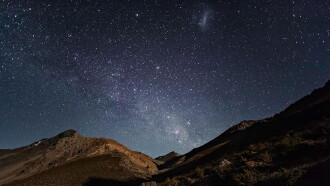
The first feature from Alison McAlpine is a dialogue with the heavens—in this case, the heavens above the Andes and the Atacama Desert in northern Chile, where she alights on the desert- and mountain-dwelling astronomers, fishermen, miners, and cowboys who live their lives with reverence and awe for the skies.
An account of the reign of Herod the Great, king of Judea under the rule of the Roman Empire, remembered for having ordered, according to the Gospel of Matthew, the murder of all male infants born in Bethlehem at the time of the birth of Jesus, an unproven event that is not mentioned by Titus Flavius Josephus, the main historian of that period.
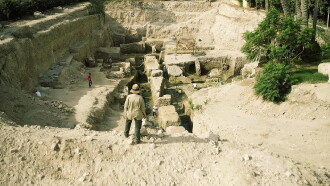
In this gripping investigation, archaeologist Pepi Papakosta is on a hunt for Alexander the Great's lost tomb, and she makes an extraordinary discovery.
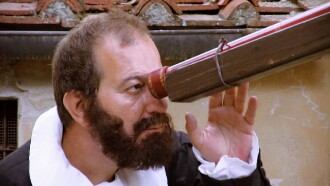
A documentary chronicling the history of the telescope from the time of Galileo. Featuring interviews with leading scientists discussing Galileo's first use of the telescope to the latest discoveries in cosmology.
An examination of how Africa's mythological stories have served as the basis for the world religions that came after, especially in Western civilization.
In the first century, after the death of Herod the Great, Judea goes through a long period of turbulence due to the actions of the corrupt Roman governors and the internal struggles, both religious and political, between Jewish factions, events that soon lead to the uprising of the population and a cruel war that lasts several years and causes thousands of deaths, a catastrophe described in detail by the Romanized Jewish historian Titus Flavius Josephus.
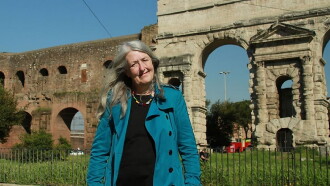
What is true and what is false in the hideous stories spread about the controversial figure of the Roman emperor Gaius Julius Caesar Augustus Germanicus (12-41), nicknamed Caligula? Professor Mary Beard explains what is accurate and what is mythical in the historical accounts that portray him as an unbalanced despot.
This feature-length documentary is a portrait of eclipse chasers, people for whom solar eclipses - among nature's more spectacular phenomena – are a veritable obsession.
Chaco Canyon, located in northwest New Mexico, is perhaps the only site in the world constructed in an elaborate pattern that mirrors the yearly cycle of the sun and the 19-year cycle of the moon.
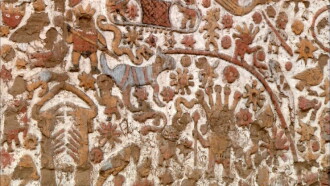
Starting from the colonial city of Trujillo, this documentary reveals natural and archeological features along the north coast of Peru, where the Moche culture thrived from the 1st Century BC to the 6th Century AD.
Popular movie trailers from 2003
These some of the most viewed trailers for movies released in 2003:
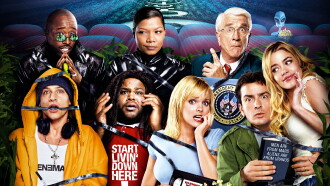
News anchorwoman Cindy Campbell has to investigate mysterious crop circles and killing video tapes, and help the President stop an alien invasion in the process.
When Isabelle and Theo invite Matthew to stay with them, what begins as a casual friendship ripens into a sensual voyage of discovery and desire in which nothing is off limits and everything is possible.
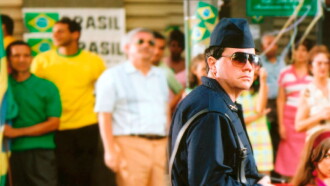
A satire about the dictatorship period in Brazil, in which communist militants try to steal the soccer World Cup Trophy from the players Pelé and Carlos Alberto Torres.
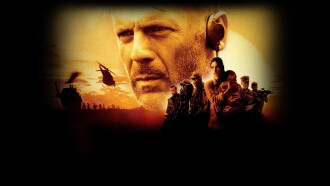
Navy SEAL Lieutenant A.K. Waters and his elite squadron of tactical specialists are forced to choose between their duty and their humanity, between following orders by ignoring the conflict that surrounds them, or finding the courage to follow their conscience and protect a group of innocent refugees.
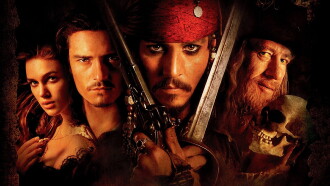
When wily pirate Captain Barbossa seizes Jack Sparrow’s beloved ship, the Black Pearl, and kidnaps the governor’s daughter, Elizabeth Swann, blacksmith Will Turner reluctantly teams up with the unpredictable pirate Jack to rescue her—only to uncover a terrifying curse that turns Barbossa’s crew into the undead.
Bruce Banner, a genetics researcher with a tragic past, suffers massive radiation exposure in his laboratory that causes him to transform into a raging green monster when he gets angry.
A group of actors is shooting a film in Aguas Buenas, based on the legend of a magician. There, they become infected with the honesty syndrome, which unleashes a number of hidden secrets to come to light.
Comments
Have you watched The Great Year yet? What did you think about it?