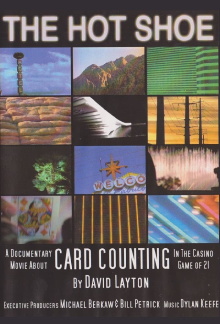
A Documentary Movie About Card Counting In The Casino Game of 21. The director used $5,000 of the movie's budget to learn the counting methods, and put them to the test on screen.
Gardeners, veterinarians and breeders. And some imposing mammals capable of running at seventy kilometers per hour: the baths in the sun, the runway before the confrontation.
A short documentary about my lovely aunt Lili. The film shows just a small part of her life. She is always on the lookout for luck, whether in love or with scratch-off tickets.
Lucky Number addresses the world of compulsive gamblers. Topics include who these individuals are, what drives them to gamble, the consequences of compulsive gambling, and treatments available to them.
Comedian and presenter Lloyd Griffith embarks on an experiment to find out if he can uncover the secrets of gambling success and in the process learn the truth about how the industry operates.
Internet comedian Carl Déman from the humor group JLC lived a life that looked glorious. But beneath the surface was a terrible gambling addiction that almost cost him his life.
January, 1947. The public receives the news of Al Capone's death with indifference, although twenty years earlier he had ruled Chicago's crime underworld with brute force and corrupting many touchable individuals.
Popular movie trailers from 2003
These some of the most viewed trailers for movies released in 2003:
When Travis, the mouthy son of a criminal, disappears in the Amazon in search of a treasured artifact, his father sends in Beck, who becomes Travis's rival for the affections of Mariana, a mysterious Brazilian woman.
Bruce Banner, a genetics researcher with a tragic past, suffers massive radiation exposure in his laboratory that causes him to transform into a raging green monster when he gets angry.
In Santiago, Chile, the schoolteacher Luisa proposes a debate about sex with the parents of her students with the intention of giving classes about sex education to the youngsters.
When an impulsive boy named Kenai is magically transformed into a bear, he must literally walk in another's footsteps until he learns some valuable life lessons.
Eight very different couples deal with their love lives in various loosely interrelated tales all set during a frantic month before Christmas in London.
A lowly pencil pusher working for MI7, Johnny English is suddenly promoted to super spy after Agent One is assassinated and every other agent is blown up at his funeral.
When Isabelle and Theo invite Matthew to stay with them, what begins as a casual friendship ripens into a sensual voyage of discovery and desire in which nothing is off limits and everything is possible.
It's been 10 years since John Connor saved Earth from Judgment Day, and he's now living under the radar, steering clear of using anything Skynet can trace.