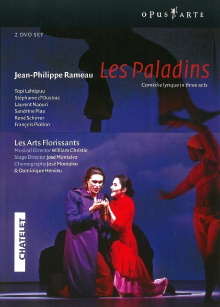
Inspired by a fable by La Fontaine, [composer Jean-Philippe] Rameau produced perhaps his most brilliant music for his penultimate great work, blending reality and the surreal on several levels.
Who loves whom in Così fan tutte, Mozart’s and Da Ponte’s cruelly comic reflection on desire, fidelity and betrayal? Or have the confusions to which the main characters subject one another ensured that in spite of the heartfelt love duets and superficially fleetfooted comedy nothing will work any longer and that a sense of emotional erosion has replaced true feelings? Così fan tutte is a timeless work full of questions that affect us all.
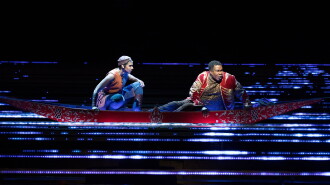
Robert Lepage’s dreamlike production, with its thousands of twinkling LED lights stretching across the stage to represent the sea, encapsulates the mystic feeling of L’Amour de Loin, Saariaho’s haunting opera of distant love.
La traviata (Italian: [la traˈviaːta], "The Fallen Woman"[1][2]) is an opera in three acts by Giuseppe Verdi set to an Italian libretto by Francesco Maria Piave.
Based on Ruggero Leoncavallo's opera Pagliacci. The film recounts the tragedy of Canio, the lead clown (or pagliaccio in Italian) in a commedia dell'arte troupe, his wife Nedda, and her lover, Silvio.
Trapped in an abusive marriage, a wealthy German prince desperately seeks a way out. But what appears to be the road to salvation soon turns into a highway to hell.
Popular movie trailers from 2005
These some of the most viewed trailers for movies released in 2005:
After terrorizing the people of Nodaway County and repeatedly escaping justice for years, the town bully finally meets his demise at the hands of the townspeople of Skidmore, Missouri.
A girl from a peaceful, Edo-era Japanese village seeks revenge for the death of a disgraced elder with the help of her sister and a lethal lady ninja nun.
Sebastien is a small town boy who moves to Paris and begins to explore the gay night life there. When a friend from back home calls to announce he's coming to Paris, Sebastien confronts some unrequited feelings.
After Silvia Broome, an interpreter at United Nations headquarters, overhears plans of an assassination, an American Secret Service agent is sent to investigate.
"The Prodigy" tells the story of small-time enforcer Truman Fisher's vicious conflict with a sadistic assassin who has chosen the unwilling Truman to be his successor.
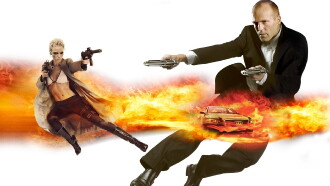
Professional driver, and former Special Forces officer, Frank Martin is living in Miami, where he is temporarily filling in for a friend as the chauffeur for a government narcotics control policy director and his family.