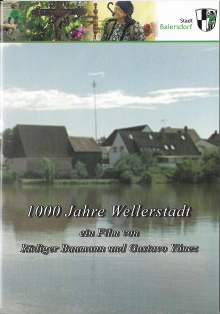
"a film by Rüdiger Baumann and Gustavo Yánez"08 July 2007Factual30 mins
In a document from November 1st, 1007, Wellerstadt is mentioned for the first time verifiably. The royal couple Heinrich and Kunigunde make the plan to establish a diocese, with Bamberg at its centre. During the imperial synod in Frankfurt in 1007, the bishops approve the plan. Heinrich transfers his royal court Forchheim together with 14 villages, including Wellerstadt, to the diocese.
As “Waldrichesbach”, Wellerstadt is not only presumably earlier mentioned in documents than Baiersdorf but is in fact older than Baiersdorf. A once presumably Thuringian settlement at the river Regnitz has by now become the district of the small Franconian town of Baiersdorf: Founded at a ford, destroyed during the Thirty Year’s War, rebuild, often flooded by the Regnitz, pushed back and forth between the diocese and the margraviate. Waldrichesbach has turned into Wellerstadt, an endearing small village in Middle Franconia.
The film describes the microcosmos of the small village Wacken and shows the clash of the cultures, before and during the biggest heavy metal festival in Europe.
Inspired by the student revolutions of 1968, two women in Germany and Japan set out to plot world revolution as leaders of the Baader Meinhof Group and the Japanese Red Army.
In buildings where foreign workers lived in Germany, there were strict rules of conduct, defined by the house rules and supervised by the building superintendents.
The film was shot in an old, decrepit building where dozens of guest-workers' families live. The owner, a local influential politician, has avoided paying for the maintenance of the building under the legal standards by using his connections to proclaim the building a national cultural heritage.
Eight hundred German filmmakers (cast and crew) fled the Nazis in the 1930s. The film uses voice-overs, archival footage, and film clips to examine Berlin's vital filmmaking in the 1920s; then it follows a producer, directors, composers, editors, writers, and actors to Hollywood: some succeeded and many found no work.
Actor and writer Mark Gatiss embarks on a chilling journey through European horror cinema, from the silent nightmares of German Expressionism in the 1920s to the Belgian lesbian vampires in the 1970s, from the black-gloved killers of Italian bloody giallo cinema to the ghosts of the Spanish Civil War, and finally reveals how Europe's turbulent 20th century forged its ground-breaking horror tradition.
A multinational company owned by Mrs Judit Angst is facing financial difficulties: she decides to hire a group of young anarchists to fake her "kidnapping".
Firas, Jallow and Batoul just arrived in Berlin. They meet one another in a theatre group. They are searching for the good life in Germany - yet things don’t turn out the way they hoped.
A BAFTA award nominated documentary intended for secondary schools exploring the three distinct geographical regions of Germany from a British perspective.
Nine fictitious documentaries and films reflect the mood of late 1970s Germany, particularly the two-month period in 1977 when a businessman was kidnapped by the RAF (Red Army Faction).
Popular movie trailers from 2007
These some of the most viewed trailers for movies released in 2007:
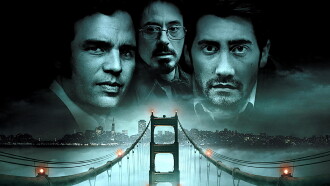
Police conduct a manhunt for the Zodiac Killer, a serial killer who terrorized the San Francisco Bay Area during the late 1960s and early 1970s, taunting police with letters, bloodstained clothing, and ciphers mailed to newspapers.
Barry B. Benson, a recent college graduate who wants more out of his life than making honey, decides to sue the human race after learning about the exploitation of bees at the hands of mankind.
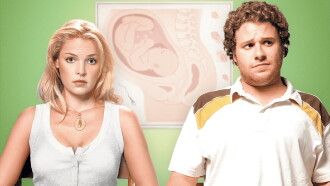
A slacker and a career-driven woman accidentally conceive a child after a one-night stand. As they try to make the relationship work, they must navigate the challenges of parenthood and their differences in lifestyle and maturity.
Three characters from various regions in the Middle East seek to find peace of mind by challenging their contrasting political and personal identities before an act of senseless violence brings them together.
Loosely based on the criminal career of Frank Lucas, a gangster from La Grange, North Carolina, who smuggled heroin into the United States on American service planes returning from the Vietnam War, before being detained by a task force led by Newark Detective Richie Roberts.