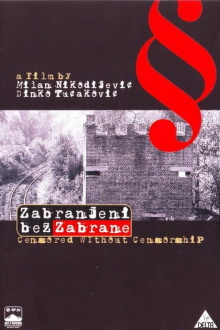
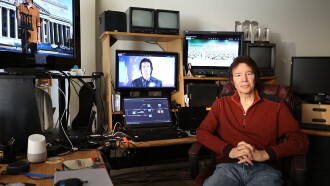
Through the conversation with Yugoslav film authors and excerpts from their films, this documentary film tells a story of a film phenomenon and censorship, and its focus is, in fact, a painful epoch of Yugoslav film called “a Black Wave”, which was the most important and artistically strongest period of Yugoslav film industry, created in the sixties and buried in the early seventies by means of ideological and political decisions. The film tells a great “thriller” story of the ideological madness which characterised the totalitarian psychology having left multiple consequences felt up to our very days. It stresses similarities between totalitarian regimes defending their taboos on the example of the persecution of the most important Yugoslav film authors. Those film authors have, however, made world careers and inspired many later authors. The film is the beginning of a debt pay-off to the most significant Yugoslav film authors.
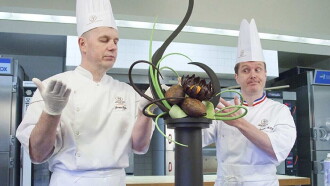
The collar awarded to the winners of the Meilleur Ouvrier de France (Best Craftsman in France) is more than the ultimate recognition for every pastry chef - it is a dream and an obsession.
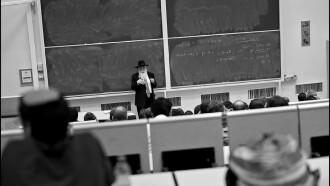
In April 1969 Ilya (Eliyahu) Rips, then a young student of mathematics, tried to burn himself in a public square in Riga, Latvia protesting against the Soviet invasion of Czechoslovakia.
The stirring personal journey of an amazing couple whose story would help shape the 20th century. A small town boy from Illinois with big dreams, Ronald Wilson Reagan began his rise to public life in sports broadcasting and then as a star of film and television.
Petar Peca Popović is one of the greatest, most famous, most authoritative and for sure, the best, connoisseur of Rock and Roll in the former Yugoslavia.
Follows Vietnamese migrant workers, to examine the reasons behind their numerous escapes and to trace the family situations of those who were deported from Taiwan.
Zdravko Čolić is the biggest pop star in Yugoslavia. We follow him during his "Traveling Earthquake Tour", lerning who is the man behind the microphone, dancers, glittery suits.
On August 9, 1988, the NHL was forever changed with the single stroke of a pen. The Edmonton Oilers, fresh off their fourth Stanley Cup victory in five years, signed a deal that sent Wayne Gretzky, a Canadian national treasure and the greatest hockey player ever to play the game, to the Los Angeles Kings in a multi-player, multi-million dollar deal.
A true story of a courageous boy who becomes a legend. Living a dream that wouldn't die; his passion empowered him to historically change the course of baseball.
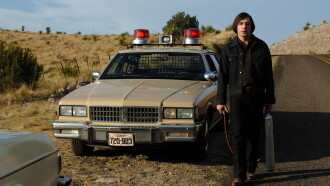
Llewelyn Moss stumbles upon dead bodies, $2 million and a hoard of heroin in a Texas desert, but methodical killer Anton Chigurh comes looking for it, with local sheriff Ed Tom Bell hot on his trail.
John McClane is back and badder than ever, and this time he calls on the services of a young hacker in his bid to stop a ring of Internet terrorists intent on taking control of America's computer infrastructure.
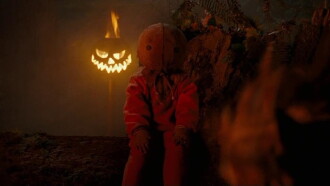
Four interwoven stories that occur on Halloween: an everyday high school principal has a secret life as a serial killer; a college virgin might have just met the one guy for her; a group of teenagers pull a mean prank, and a bitter old recluse receives an uninvited guest.
A troubled young black teenager Maxine rescues an eccentric old lady Eve from an unhappy slap by a mixed-race gang of teens and is rewarded for her act of kindness with the gift of a terrible secret: how to make and operate a WISHBABY.
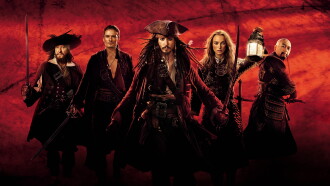
After losing Captain Jack Sparrow to the locker of Davy Jones, Will Turner, Elizabeth Swann, and Captain Barbossa journey to the ends of the earth to rescue him.