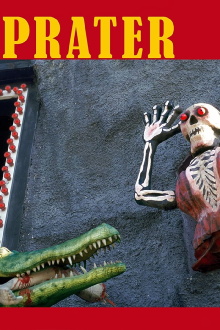
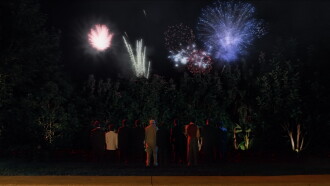
Vienna’s Prater is an amusement park and a desire machine. No mechanical invention, no novel idea or sensational innovation could escape incorporation into the Prater. The diverse story-telling in Ulrike Ottinger’s film “Prater” transforms this place of sensations into a modern cinema of attractions. The Prater’s history from the beginning to the present is told by its protagonists and those who have documented it, including contemporary cinematic images of the Prater, interviews with carnies, commentary by Austrians and visitors from abroad, film quotes, and photographic and written documentary materials. The meaning of the Prater, its status as a place of technological innovation, and its role as a cultural medium are reflected in texts by Elfriede Jelinek, Josef von Sternberg, Erich Kästner and Elias Canetti, as well as in music devoted to this amusement venue throughout the course of its history.
An account of the professional and personal life of renowned American photographer Annie Leibovitz, from her early artistic endeavors to her international success as a photojournalist, war reporter, and pop culture chronicler.
An intimate portrait of the small shops and shopkeepers of the Rue Daguerre in Paris, a picturesque street that has been the filmmaker’s home for more than 50 years.
Although the Cold War is behind us, the threat of nuclear disaster remains very real. Director Lucy Walker discusses the invention of the atomic bomb and brings the story into the present day, examining the possibility of nuclear calamity under the categories of "Madness," "Accident" and "Miscalculation.
Orson Welles' archives of unfinished/never released movies and the last years of his life from the perspective of Oja Kodar (life and artistic partner of Orson Welles in his last years).
A gritty, provocative true-life story of three friends from the 'hood, Rameck Hunt, Sampson Davis, and George Jenkins, who made a pact in high school to find a way to go to college and then medical school.
Monika Treut explores the worlds and thoughts of several female to male transgendered individuals. As with Treuts first film, Jungfrauenmaschine, Gendernauts, enters a minority sector of San Fransisco culture.
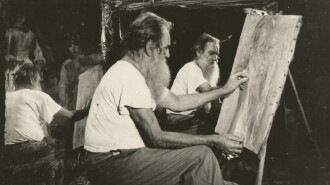
Directed by Margot Benacerraf, Reverón is a poetic and visually striking documentary that delves into the life and artistic vision of Venezuelan painter Armando Reverón.
Alternative movies trailers for Prater
More movie trailers, teasers, and clips from Prater:
Three characters from various regions in the Middle East seek to find peace of mind by challenging their contrasting political and personal identities before an act of senseless violence brings them together.
Michael Cockerell tells the story of how prime ministers have coped with life after Number Ten, after Tony Blair became the youngest member of the ex-PMs' club for a hundred years.
Four lonely and disenfranchised urbanites in contemporary Mexico City: a preteen boy under tremendous emotional strain, the pretty cashier with whom he is infatuated, an enraged and embittered cabbie, and the estranged daughter of one of his fares.
A troubled young black teenager Maxine rescues an eccentric old lady Eve from an unhappy slap by a mixed-race gang of teens and is rewarded for her act of kindness with the gift of a terrible secret: how to make and operate a WISHBABY.
Danny Ocean's team of criminals are back and composing a plan more personal than ever. When ruthless casino owner Willy Bank doublecrosses Reuben Tishkoff, causing a heart attack, Danny Ocean vows that he and his team will do anything to bring down Willy Bank along with everything he's got.
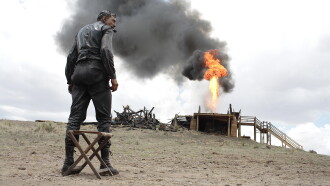
Ruthless silver miner, turned oil prospector, Daniel Plainview, moves to oil-rich California. Using his son to project a trustworthy, family-man image, Plainview cons local landowners into selling him their valuable properties for a pittance.
Twenty-eight weeks after the spread of a deadly rage virus, the inhabitants of the British Isles have lost their battle against the onslaught, as the virus has killed everyone there.
John McClane is back and badder than ever, and this time he calls on the services of a young hacker in his bid to stop a ring of Internet terrorists intent on taking control of America's computer infrastructure.
Comments
Have you watched Prater yet? What did you think about it?