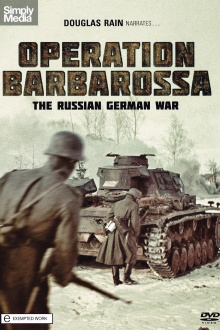
This is a rare look at one of the worst horror stories in the long infamous history of warfare. This series features captured German and Russian film footage, much of which has never been seen before. For decades the Cold War prevented us from looking closely at what really happened between the Russians and the Germans on the Eastern Front during World War II. More than a struggle between nations, it pitted maniacal tyrant against maniacal tyrant, evil ideology against evil ideology. The lives of tens of millions of human beings were consumed by its raging hatreds and appalling indignities. One in every ten Russians died. One in every four Poles died. Whole divisions of Italians, Romanians, Hungarians disappeared with barely a trace. An average of 17,800 people died on every single day and this, the war on the Russian German Front, lasted for 1,400 days. This series features captured German and Russian film footage, much of which has never been seen before.
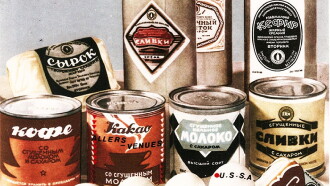
"The film is a travelogue of sorts. In 1960 my family lived in Brazil when my father discovered his sister and brother in Moscow, who he hadn't seen for 40 years, were still alive.
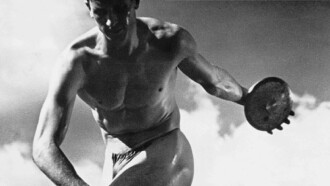
Starting with a long and lyrical overture, evoking the origins of the Olympic Games in ancient Greece, Riefenstahl covers twenty-one athletic events in the first half of this two-part love letter to the human body and spirit, culminating with the marathon, where Jesse Owens became the first track and field athlete to win four gold medals in a single Olympics.
Brest, 1950. The war ended five years ago and nothing remains of the city. Massive bombings and intense fighting lasting more than a month turned the city, its docks, its arsenal, into ashes.
Part two of Leni Riefenstahl's monumental examination of the 1938 Olympic Games, the cameras leave the main stadium and venture into the many halls and fields deployed for such sports as fencing, polo, cycling, and the modern pentathlon, which was won by American Glenn Morris.
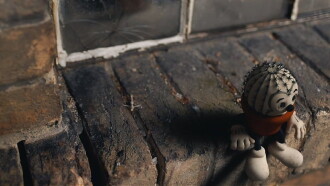
Aleksandar Zograf, a renowned cartoonist discovers an unusual comic book from World War II. The comic’s hero is Kaktus Kid – a small cactus trapped in his pot.
The ruined harbor of Rotterdam obstructs the recovery of The Netherlands after the war. Rapidly and with borrowed strength the harbor takes its rightful place in the city of Rotterdam.
Goofy’s teenage son Max is desperate to impress his crush and fit in at school. After well-meaning but ignorant Goofy suddenly whisks him away on a cross-country road trip—messing up Max’s first date plans in the process—Goofy’s old-school parenting and Max’s desire for independence lead to a vacation of hilarious mishaps, as they both learn to see eye to eye and listen to each other.
Obsessive master thief Neil McCauley leads a top-notch crew on various daring heists throughout Los Angeles while determined detective Vincent Hanna pursues him without rest.
New York detective John McClane is back and kicking bad-guy butt in the third installment of this action-packed series, which finds him teaming with civilian Zeus Carver to prevent the loss of innocent lives.
Based on a true story from the case of the familiarity of the Thai people, the whole country, the story of Syamol young woman who was ruthlessly murdered in front of the 2-year-old baby.
Casper is a kind young ghost who peacefully haunts a mansion in Maine. When specialist James Harvey arrives to communicate with Casper and his fellow spirits, he brings along his teenage daughter, Kat.
Marcus Burnett is a henpecked family man. Mike Lowrey is a footloose and fancy free ladies' man. Both Miami policemen, they have 72 hours to reclaim a consignment of drugs stolen from under their station's nose.
Held in an L.A. interrogation room, Verbal Kint attempts to convince the feds that a mythic crime lord, Keyser Soze, not only exists, but was also responsible for drawing him and his four partners into a multi-million dollar heist that ended with an explosion in San Pedro harbor – leaving few survivors.
Comments
Have you watched The Russian German War yet? What did you think about it?