Eduard Sagalaev flew to London to sit with Makarevich in the back garden of the studio and talk about life. About why beer cannot be mixed with vodka, but with whiskey. About why Makarevich started writing books and almost stopped diving. About how Makarevich gave his first autograph, and about how a samurai should live. About the love of life and the fear of death.
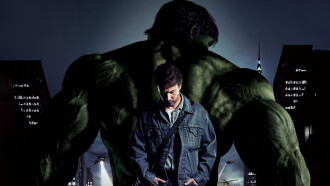
Daniel is a scientist who just got married to April, an attractive, immature and extroverted youth who reveals a side of herself which he has not yet seen, unleashing conflicts with the inhabitants of her hometown.
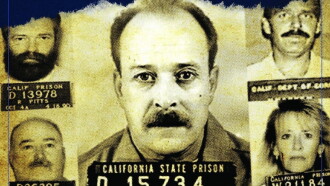
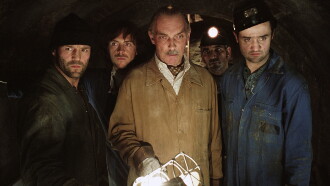
Terminal Island, New York: 2020. Overcrowding in the US penal system has reached a breaking point. Prisons have been turned over to a monolithic Weyland Corporation, which sees jails full of thugs as an opportunity for televised sport.
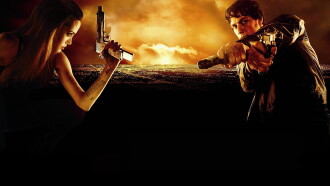
Doormat Wesley Gibson is an office worker whose life is going nowhere. He meets an attractive woman named Fox and discovers that his recently murdered father - whom Wesley never knew - belonged to the Fraternity, a secret society of assassins which takes its orders from Fate itself.
Director and actor Ray O'Neill presents the movie Greater Threat in the year (2008). the movieis an action-crime film starring Ray Goodwin as Ray Kieffer, Ray O'Neill as Mike Johnson, Tamas Menyhart as Nicolai, Leeann Johnson as Carol Green, Chuck French as Steve Mancini, Caitlin Noah as Marie Kieffer, Jason McAleer as Sachon, Cheryl Goodlin as Eileen Conway, Ray Dippolito as Judge Overton, David Schramm as Ivan, Mikel Mahoney as Santos DeJesus.
Terry is a small-time car dealer trying to leave his shady past behind and start a family. Martine is a beautiful model from Terry's old neighbourhood who knows that Terry is no angel.
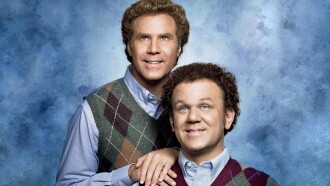
Brennan Huff and Dale Doback might be grown men. But that doesn't stop them from living at home and turning into jealous, competitive stepbrothers when their single parents marry.
A radical hybrid of spy, sci-fi, Western, and even horror genres, Craig Baldwin's Mock Up On Mu cobbles together a feature-length "collage-narrative" based on (mostly) true stories of California's post-War sub-cultures of rocket pioneers, alternative religions, and Beat lifestyles.
Comments
Have you watched Andrey Makarevich. Traffic Rules yet? What did you think about it?