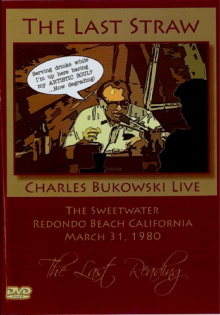
The Last Straw is a film documenting the very last live poetry reading given by Charles Bukowski at The Sweetwater, a music club in Redondo Beach, California on March 31, 1980
The œuvre of poet Raffaello Baldini (1924-2005) through the words of those who knew him, the poems he himself read, the fragments of his monologues, his beloved Romagna landscapes.
With precisely articulated turns of phrase, Sibylle Berg - celebrated novelist, playwright and columnist known for her provocations and the sharpness of her comments - takes the film's two directors on an anecdotal and humorous foray through her eventful life.
A docu-drama portrait of the early-20th-century French author Marcel Proust, based on Alain de Botton's updated analysis of his work as a modern-day self-help guide.
T. S. Eliot ends one of his most famous poems, "The Hollow Men", by repeating three times the sentence "This is how the world ends" - and then adding: "Not with a bang but a whimper.
Dorothy Johnson was a Western writer ahead of her time. Women saved men, heroes died unwept and unsung, whites lived with Indians and benefited from the experience.
The film focuses on the exciting life journey of Swiss writer Katharina Zimmermann. She follows her husband on a mission to the jungle in Indonesia where she raises their four children and five foster children and lives through the military coup.
The Spanish author Enrique Jardiel Poncela (1901-1952) was one of the best comedy writers of all time, a novelist and newspaper columnist, misunderstood, even censored, both by the Second Republic government and Francoism, an outsider ahead of his time; also a filmmaker and screenwriter in Hollywood, architect of a revolutionary theatrical building and scenographer, cartoonist and illustrator.
In this artistic exploration of the life and work of writer Henry Miller, filmmaker Joe Kishton skillfully weaves clips of films and interviews of Miller with the music of Laurie Anderson.
Popular movie trailers from 2008
These some of the most viewed trailers for movies released in 2008:
Following their mother's suicide, three children are the subject of a dispute between their gay half-brother and his infertile sister, who are fighting for custody.
In this soulful surf documentary, filmmaker Cyrus Sutton shadows five different surfers, capturing the ups and downs of their daily routines -- much like the ebb and flow of the waves they ride with such passion.
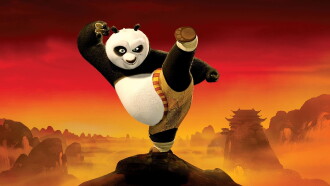
Chosen by prophecy but doubted by all, Po is an unlikely choice for the mystical title of the Dragon Warrior—a clumsy panda thrust into the world of kung fu as a deadly enemy threatens the Valley of Peace.
Director and actor Ray O'Neill presents the movie Greater Threat in the year (2008). the movieis an action-crime film starring Ray Goodwin as Ray Kieffer, Ray O'Neill as Mike Johnson, Tamas Menyhart as Nicolai, Leeann Johnson as Carol Green, Chuck French as Steve Mancini, Caitlin Noah as Marie Kieffer, Jason McAleer as Sachon, Cheryl Goodlin as Eileen Conway, Ray Dippolito as Judge Overton, David Schramm as Ivan, Mikel Mahoney as Santos DeJesus.
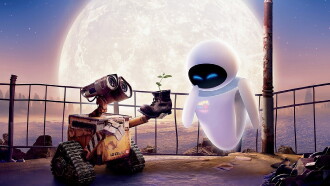
After hundreds of years doing what he was built for, WALL•E— a robot designed to clean up the earth—discovers a new purpose in life when he meets a sleek search robot named EVE.
Spring 1945: the Allies are outside Hamburg. In front of a movie theater, Lena Brücker meets Hermann Bremer, a marine assigned to the 'final battle on the home front'.
A documentary on Paul Watson, who takes the law into his own hands on the open seas, confronting, by any nonviolent means necessary, the hunters who indiscriminately slaughter whales, seals and sharks, along with complicit governments and environmental organizations.
Daniel is a scientist who just got married to April, an attractive, immature and extroverted youth who reveals a side of herself which he has not yet seen, unleashing conflicts with the inhabitants of her hometown.
A spirited young bride-to-be living with her single mother on a small Greek island secretly invites three of her mother's ex-boyfriends in hope of finding her biological father to walk her down the aisle.