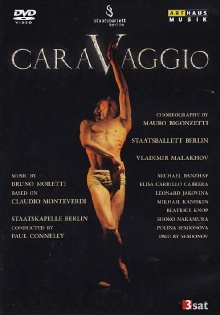
Caravaggio, born Michelangelo Merisi, has entered history due to his paintings of dramatic intensity. Caravaggio used to venture the threshold beyond the pale throughout his life. He was seen for admiration of his work and harsh opposition towards his extraordinary realism in painting human beings. Due to his passionate personality, he encountered more than several confl icts with people around him, sponsors, and the law. One of his foremost artistic twists was the extreme contrast between brightness and darkness, light and shadow. Mauro Bigonzetti is one of the leading choreographers of the Italian ballet which freed itself from the predominance of mainly classical opera companies in the 80's. He created his choreographies mainly for the Aterballetto in Reggio Emilia that helped him to fame and worldwide attention. In collaboration with the Staatsballett Berlin.
A radical hybrid of spy, sci-fi, Western, and even horror genres, Craig Baldwin's Mock Up On Mu cobbles together a feature-length "collage-narrative" based on (mostly) true stories of California's post-War sub-cultures of rocket pioneers, alternative religions, and Beat lifestyles.
Archaeologist Rick O'Connell travels to China, pitting him against an emperor from the 2,000-year-old Han dynasty who's returned from the dead to pursue a quest for world domination.
Three small films for as many reflections on the senses and human knowledge. In the first episode, Emmer reviews with anthological and didactic intent the precepts of ancient philosophy, from Greek to Roman civilization; in the second, working as he did at the beginning of his career on a vast repertoire of pictorial and non-pictorial images, he analyzes the “history of the gaze” in the visual arts, from prehistoric graffiti to medieval altarpieces, from Impressionist and Cubist paintings to modern-day advertising posters; finally, in the third, recounting with irony and lightness a day of solitude in his mountain home, he reflects on the intellectual thinking of writers and great thinkers, relating to his own individual experience as much the words of oral tradition and popular culture as the writings of geniuses such as Shakespeare, Spinoza or Gogol.
This making-of features additional background on the original ideas for the film. Shyamalan discusses his initial inspiration to make the ultimate B-movie, but one that morphed into something deeper.