Namuuna, the only daughter of a wealthy family, is annoyed by the fact that her friends and even her boyfriend see her as nothing more than a cash machine. When Namuuna meets a young man named Ithaq, she pretends to be a "poor girl" and her life opens up to a new door. To make all this seem believable, Namuuna takes a job as a nurse at a hospital and lives at home. However, the film unfolds when Namuuna falls in love with Ithaq, whom she met without considering all this.
A documentary on Paul Watson, who takes the law into his own hands on the open seas, confronting, by any nonviolent means necessary, the hunters who indiscriminately slaughter whales, seals and sharks, along with complicit governments and environmental organizations.
Daniel is a scientist who just got married to April, an attractive, immature and extroverted youth who reveals a side of herself which he has not yet seen, unleashing conflicts with the inhabitants of her hometown.
When Bella Swan moves to a small town in the Pacific Northwest, she falls in love with Edward Cullen, a mysterious classmate who reveals himself to be a 108-year-old vampire.
A human story unfolds when detectives aggravated by a major bust gone wrong are forced to deal with a tormented man thrown into the cage after urinating on the Mayor's limo.
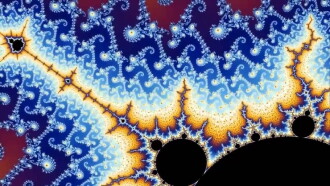
Determined to understand the repeating patterns he was finding in nature, French mathematician Benoit Mandelbrot used an early form of computer imagery to produce his own versions, coining the recurring shapes fractals.
A radical hybrid of spy, sci-fi, Western, and even horror genres, Craig Baldwin's Mock Up On Mu cobbles together a feature-length "collage-narrative" based on (mostly) true stories of California's post-War sub-cultures of rocket pioneers, alternative religions, and Beat lifestyles.
Three small films for as many reflections on the senses and human knowledge. In the first episode, Emmer reviews with anthological and didactic intent the precepts of ancient philosophy, from Greek to Roman civilization; in the second, working as he did at the beginning of his career on a vast repertoire of pictorial and non-pictorial images, he analyzes the “history of the gaze” in the visual arts, from prehistoric graffiti to medieval altarpieces, from Impressionist and Cubist paintings to modern-day advertising posters; finally, in the third, recounting with irony and lightness a day of solitude in his mountain home, he reflects on the intellectual thinking of writers and great thinkers, relating to his own individual experience as much the words of oral tradition and popular culture as the writings of geniuses such as Shakespeare, Spinoza or Gogol.