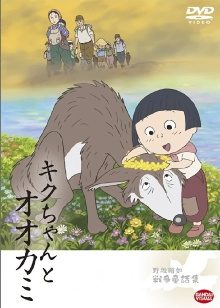
Kiku-chan to Ookami is, like most of the Sensou Douwa specials, based on a short story by Nosaka Akiyuki. It is set in the Japanese puppet state of Manchukuo (the Chinese province of Manchuria) during the closing days of Word War II. Life for the Japanese colonists is tranquil, with none of the hazards and shortages occurring in the Japanese homeland. Then, on August 9, 1945, the Soviet Union, fulfilling its obligations to the Western Allies, declares war and invades. The local Kwantung Army folds up like a house of cards, leaving the Japanese colonists exposed to the invading Russians and Chinese.
Chosen by prophecy but doubted by all, Po is an unlikely choice for the mystical title of the Dragon Warrior—a clumsy panda thrust into the world of kung fu as a deadly enemy threatens the Valley of Peace.
A documentary on Paul Watson, who takes the law into his own hands on the open seas, confronting, by any nonviolent means necessary, the hunters who indiscriminately slaughter whales, seals and sharks, along with complicit governments and environmental organizations.
Director and actor Ray O'Neill presents the movie Greater Threat in the year (2008). the movieis an action-crime film starring Ray Goodwin as Ray Kieffer, Ray O'Neill as Mike Johnson, Tamas Menyhart as Nicolai, Leeann Johnson as Carol Green, Chuck French as Steve Mancini, Caitlin Noah as Marie Kieffer, Jason McAleer as Sachon, Cheryl Goodlin as Eileen Conway, Ray Dippolito as Judge Overton, David Schramm as Ivan, Mikel Mahoney as Santos DeJesus.
Spring 1945: the Allies are outside Hamburg. In front of a movie theater, Lena Brücker meets Hermann Bremer, a marine assigned to the 'final battle on the home front'.
Three small films for as many reflections on the senses and human knowledge. In the first episode, Emmer reviews with anthological and didactic intent the precepts of ancient philosophy, from Greek to Roman civilization; in the second, working as he did at the beginning of his career on a vast repertoire of pictorial and non-pictorial images, he analyzes the “history of the gaze” in the visual arts, from prehistoric graffiti to medieval altarpieces, from Impressionist and Cubist paintings to modern-day advertising posters; finally, in the third, recounting with irony and lightness a day of solitude in his mountain home, he reflects on the intellectual thinking of writers and great thinkers, relating to his own individual experience as much the words of oral tradition and popular culture as the writings of geniuses such as Shakespeare, Spinoza or Gogol.