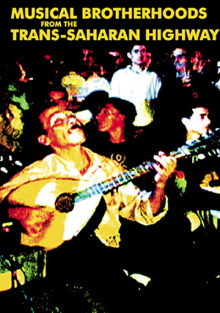
Filmed in 2005 by Hisham Mayet predominately at the Jemaa Al Fna in Marrakesh Morocco, 'Musical Brotherhoods of the Trans-Saharan Highway' captures an assortment of spectacular musical dramas presented live and unfiltered on the home turf of the world's most dynamic string and drum specialists performing and manifesting the ecstatic truth. Ancient mystical brotherhoods have been flourishing for centuries in and around the cities of Marrakesh and Essaouira in Morocco where the trade caravans have gathered from their long journeys across the Trans-Saharan Highway. This is some of the last great street music on Earth. A must see for string aficionados looking for inspiration as electric ouds, banjos, mandolins and the Gnawa sentir peel flesh from bone right before your eyes!
Far into the future after the world has brought about the apocalypse what remains of humanity has split into two warring tribes - the Plaebian and the Huron.
A beautiful grad student named Tara Simmons is abducted by aliens in a flying saucer. Four days later she finds herself back on earth at the top secret government facility Areola 51, which documents sexual encounters with aliens.
Daniel is a scientist who just got married to April, an attractive, immature and extroverted youth who reveals a side of herself which he has not yet seen, unleashing conflicts with the inhabitants of her hometown.
A human story unfolds when detectives aggravated by a major bust gone wrong are forced to deal with a tormented man thrown into the cage after urinating on the Mayor's limo.
With Australia at war in Vietnam in 1967, suddenly Prime Minister Harold Holt disappeared without a trace—an event unparalleled in the history of western democracy.
Three small films for as many reflections on the senses and human knowledge. In the first episode, Emmer reviews with anthological and didactic intent the precepts of ancient philosophy, from Greek to Roman civilization; in the second, working as he did at the beginning of his career on a vast repertoire of pictorial and non-pictorial images, he analyzes the “history of the gaze” in the visual arts, from prehistoric graffiti to medieval altarpieces, from Impressionist and Cubist paintings to modern-day advertising posters; finally, in the third, recounting with irony and lightness a day of solitude in his mountain home, he reflects on the intellectual thinking of writers and great thinkers, relating to his own individual experience as much the words of oral tradition and popular culture as the writings of geniuses such as Shakespeare, Spinoza or Gogol.
Comments
Have you watched Musical Brotherhoods From The Trans-Saharan Highway yet? What did you think about it?