"Why do we overlook the feminine characteristics of God?"01 February 2008Family13 mins
We didn't have anything to do with our birth. We are all here because some woman somewhere gave us life. Her pain, her effort, for our life. And when a mother gives like that to a child, she is showing us what God is like. But sometimes this part of God's nature is overlooked. A lot of us are comfortable with male imagery for God. But what about female imagery for God? Is God limited to a gender? Or does God transcend and yet include what we know as male and female? Maybe if we were more aware of the feminine imagery for God we would have a better understanding of who God is and what God is like.
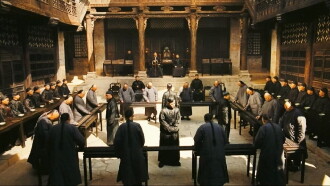
The Monkey King and his friends try to break free from a ruler that takes them hostage. However, their exploits provoke the anger of a deity that decides to punish them for their actions.
John H. Groberg, a middle class kid from Idaho Falls, crosses the Pacific to become a Mormon missionary in the remote and exotic Tongan island kingdom during the 1950's.
Simon Birch and Joe Wenteworth are boys who have a reputation for being oddballs. Joe never knew his father, and his mother, Rebecca, is keeping her lips sealed no matter how much he protests.
Fifteen years ago, Ben Walker made a decision to leave his college sweetheart and ultimately his faith, in order to pursue a lucrative business opportunity.
Comedy about faith and family directed by Shavar Ross. When a recently widowed Baptist preacher (Bill Toliver) loses the respect of his congregation over rumors of his impending marriage to a woman 45 years younger, best friends hatch a plan to help him regain his flock.
A gonzo black comedy with six intertwining stories set in the streets of Tokyo about the ongoing battle between the Internet generation and the older generation.
A witty young woman, Samantha Billows, is diagnosed with a bizarre social anxiety disorder. No therapist seems to help her move beyond her plant maintenance job.
Chris Jackson is a taxi driver with a childhood trauma. The trauma has made him a portal for obsessions to pass from the mind to the physical world and hence disrupt the world's multiple planes of reality.
A spirited young bride-to-be living with her single mother on a small Greek island secretly invites three of her mother's ex-boyfriends in hope of finding her biological father to walk her down the aisle.
Director and actor Ray O'Neill presents the movie Greater Threat in the year (2008). the movieis an action-crime film starring Ray Goodwin as Ray Kieffer, Ray O'Neill as Mike Johnson, Tamas Menyhart as Nicolai, Leeann Johnson as Carol Green, Chuck French as Steve Mancini, Caitlin Noah as Marie Kieffer, Jason McAleer as Sachon, Cheryl Goodlin as Eileen Conway, Ray Dippolito as Judge Overton, David Schramm as Ivan, Mikel Mahoney as Santos DeJesus.
Comments
Have you watched Nooma She 021 yet? What did you think about it?