Stephanie Barber 2008 | 00:13:21 | United States | English | Color | Stereo | 4:3 "how looking at what has become the skeletons of photographs is a visual lecture on aesthetic pleasure or emotion. and how being, almost entirely denied of this pleasure, or having the pleasure merely suggested induces a viewer to ruminate on the act of viewing and that of wanting to view. and maybe it is evolution which causes this anxiety and art form." A series of collages recreating the photographs of well known artists (Uta Barth, Kohei Yoshiyuki, Candida Hofer, Deborah Willis) and a very slight suggestion of the actual photographs. The soundtrack is composed of approximately 25 statements on photography. -- Stephanie Barber
Chris Jackson is a taxi driver with a childhood trauma. The trauma has made him a portal for obsessions to pass from the mind to the physical world and hence disrupt the world's multiple planes of reality.
Determined to understand the repeating patterns he was finding in nature, French mathematician Benoit Mandelbrot used an early form of computer imagery to produce his own versions, coining the recurring shapes fractals.
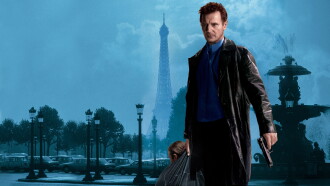
Bryan Mills, a former government operative, is trying to reconnect with his teenage daughter Kim. After reluctantly agreeing with his ex-wife to let Kim go to Paris on vacation with a friend, his worst nightmare comes true.
A radical hybrid of spy, sci-fi, Western, and even horror genres, Craig Baldwin's Mock Up On Mu cobbles together a feature-length "collage-narrative" based on (mostly) true stories of California's post-War sub-cultures of rocket pioneers, alternative religions, and Beat lifestyles.
A woman takes a man she just met at a nightclub to a hotel, so they can have a one-night stand, but things start to get complicated when he asks her to spend the night with him so they can have a chance to know about each other between the sheets.
Daniel is a scientist who just got married to April, an attractive, immature and extroverted youth who reveals a side of herself which he has not yet seen, unleashing conflicts with the inhabitants of her hometown.
Comments
Have you watched the inversion, transcription, evening track and attractor yet? What did you think about it?