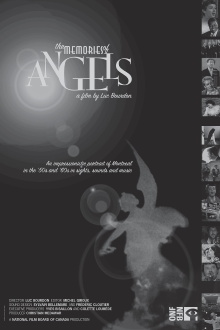
Documentary, poetry and essay rolled into one, this compilation of stockshots and clips sourced from NFB productions of the '50s and '60s offers a singular lesson in Montreal history - its famous figures, symbolic places, and ordinary citizens. Without commentary, the film moves from the red light district to Jean Drapeau, the Jacques-Cartier market, department stores downtown, textile factories, and the construction of Place Ville-Marie. We meet Geneviève Bujold, Oscar Peterson, Monique Mercure, and Igor Stravinsky. We hear Raymond Lévesque, Jean Drapeau, and René Lecavalier.
Quebec, on the cusp of the 1960s. The province is on the brink of momentous change. Deftly selecting clips from nearly 200 films from the National Film Board of Canada archives, director Luc Bourdon reinterprets the historical record, offering us a new and distinctive perspective on the Quiet Revolution.
This 2005 documentary film chronicles the life of Daniel Johnston, a manic-depressive genius singer/songwriter/artist, from childhood up to the present, with an emphasis on his mental illness and how it manifested itself in demonic self-obsession.
Does privacy still exist in 2019? In less than a generation, the internet has become a mass surveillance machine based on one simple mindset: If it's free, you're the product.
Explore the birth, growth and eventual tipping point of punk rock during the 90s. Narrated by skateboarder Tony Hawk, the film features interviews and footage of various bands and figures in the punk scene.
The Death of 'Superman Lives': What Happened? feature film documents the process of development of the ill fated "Superman Lives" movie, that was to be directed by Tim Burton and star Nicolas Cage as the man of steel himself, Superman.
In this soulful surf documentary, filmmaker Cyrus Sutton shadows five different surfers, capturing the ups and downs of their daily routines -- much like the ebb and flow of the waves they ride with such passion.
John Legend: Live from Philadelphia actually constitutes a two-disc set, with an album and a disc of concert footage culled from r&b and neo-soul demigod Legend's Philadelphia engagements on his "Show Me" tour.
Betrayed by Vesper, the woman he loved, 007 fights the urge to make his latest mission personal. Pursuing his determination to uncover the truth, Bond and M interrogate Mr.
A radical hybrid of spy, sci-fi, Western, and even horror genres, Craig Baldwin's Mock Up On Mu cobbles together a feature-length "collage-narrative" based on (mostly) true stories of California's post-War sub-cultures of rocket pioneers, alternative religions, and Beat lifestyles.
Kadhalil Vizhunthen is a movie starring Nakul and Sunaina. The movie's music was composed by Vijay Antony, cinematography by S D Vijay Milton and editing by V.
Terry is a small-time car dealer trying to leave his shady past behind and start a family. Martine is a beautiful model from Terry's old neighbourhood who knows that Terry is no angel.
Bolt is the star of the biggest show in Hollywood. The only problem is, he thinks it's real. After he's accidentally shipped to New York City and separated from Penny, his beloved co-star and owner, Bolt must harness all his "super powers" to find a way home.
Comments
Have you watched The Memories of Angels yet? What did you think about it?