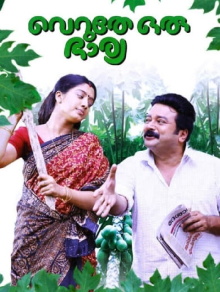
Sugunan is the typical male chauvinist who thinks a wife is meant to cook, clean and take care of the house. His wife Bindu suffers silently for many years when an incident makes her take a drastic step.
Alternative movies trailers for Veruthe Oru Bharya
More movie trailers, teasers, and clips from Veruthe Oru Bharya:
Veruthe oru bharya Trailer
Akbar of the Akbar-Jose director duo (of Mazhathullikilukkam Sadanandante Samayam fame) has now started directing films alone under the name Akku ...
Veruthe Oru Bharya Trailer
Veruthe oru Bharya Trailer Starring: Jayaram
Omkaram (M) - Veruthe Oru Bharya
Veruthe Oru Bharya (English: A Wife for Nothing) is a 2008 Malayalam film written by K. Gireesh Kumar and directed by Akku Akbar. The film stars Jayaram ...
Veruthe oru bharya Trailer
Directed by Akku Akber Distributed By Pyramid Saimira Theatre Ltd.
Manjil kulikkum raverayi-Veruthe Oru Bharya Movie Song
Veruthe Oru Bharya full hd movie trailer.
Padathengango - Veruthe Oru Bharya
Veruthe Oru Bharya (English: A Wife for Nothing) is a 2008 Malayalam film written by K. Gireesh Kumar and directed by Akku Akbar. The film stars Jayaram ...
Popular movie trailers from 2008
These some of the most viewed trailers for movies released in 2008:
A gonzo black comedy with six intertwining stories set in the streets of Tokyo about the ongoing battle between the Internet generation and the older generation.
A radical hybrid of spy, sci-fi, Western, and even horror genres, Craig Baldwin's Mock Up On Mu cobbles together a feature-length "collage-narrative" based on (mostly) true stories of California's post-War sub-cultures of rocket pioneers, alternative religions, and Beat lifestyles.
Terminal Island, New York: 2020. Overcrowding in the US penal system has reached a breaking point. Prisons have been turned over to a monolithic Weyland Corporation, which sees jails full of thugs as an opportunity for televised sport.
When Bella Swan moves to a small town in the Pacific Northwest, she falls in love with Edward Cullen, a mysterious classmate who reveals himself to be a 108-year-old vampire.
A woman takes a man she just met at a nightclub to a hotel, so they can have a one-night stand, but things start to get complicated when he asks her to spend the night with him so they can have a chance to know about each other between the sheets.
Far into the future after the world has brought about the apocalypse what remains of humanity has split into two warring tribes - the Plaebian and the Huron.
After hundreds of years doing what he was built for, WALL•E— a robot designed to clean up the earth—discovers a new purpose in life when he meets a sleek search robot named EVE.
Comments
Have you watched Veruthe Oru Bharya yet? What did you think about it?