Noa Eshkol considered dance to be a piece choreographed for at least two dancers. The film installation Four Exercises in Eshkol-Wachman Movement Notation features four of Noa Eshkol’s dances, deemed here to be “exercises” as they are each performed by a single dancer – Ruti Sela, who began dancing with Eshkol in 1969. Sela moves among four identical gray volumes, which were designed by Lockhart to reference the space that the dancer’s body occupies as she moves through each exercise. Changing position for each dance, the volumes are sized according to the dancer’s measurements: the height of each volume is the height of the dancer with her arms raised, the width of each is equal to the dancer’s wingspan. The compositions of the volumes highlight the different spaces that each of the four dances occupy in space.
When Nina Patel is nominated to represent her eighth grade class at Homecoming, she's thrilled. However, Nina's traditional Indian parents refuse to let her assimilate to such an American tradition.
The film is a short story about a guy called Steve who has struggled with the Christian faith, having seen his parents, who are both Christians, break up because of his dad's unfaithfulness.
When decorated soldier Captain Colter Stevens wakes up in the body of an unknown man, he discovers he's part of a mission to find the bomber of a Chicago commuter train.
To win the celebrity and self-made wealth he craves, an aimless, twenty-something Manhattan playboy devises a film based on his party-boy, club-going lifestyle, and hires a self-destructive aspiring playwright to ghost the feature script.
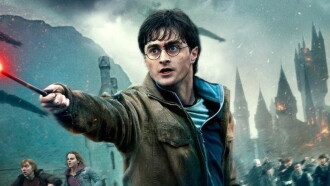
Harry, Ron and Hermione continue their quest to vanquish the evil Voldemort once and for all. Just as things begin to look hopeless for the young wizards, Harry discovers a trio of magical objects that endow him with powers to rival Voldemort's formidable skills.
A Mexican boy bound for Chicago tries to cross the border, but is the crowded wagon he rides in going the right way? An offbeat, allegorical odyssey that blends absurd humor with pastoral imagery.
A young Russian woman, smuggled into America by human traffickers, and a notorious Egyptian transporter hired to drive her from the Mexican border to New York City, form an unlikely bond that transforms them and threatens to derail the traffickers' plans.
Comments
Have you watched Four Exercises in Eshkol-Wachman Movement Notation yet? What did you think about it?