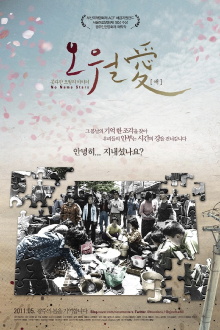
This year is the 30th anniversary of the Gwangju Democratization Movement. Though the country commemorates the event as the official historical records, it does not include any 'real' accounts of the people who experienced it firsthand. The students who were part of the movement; the female vendors who made rice balls for the students; the female high school students cooked at the government building; now, past their middle age, they live as ordinary citizens in Gwangju city. How is the event remembered by these people?
In the spring of 1999, a group of old friends gather to celebrate their 20 year reunion. Among the group is Yeong-ho, a cold, unhappy man, whose demeanor puts a damper on the festivities.
The son of a freedom fighter, Sang-hun is a member of an anti-Japanese resistance group called "Seongjinhoe," composed of students who share a dedication to the cause of liberation.
A well-meaning but politically naive barber gets pulled into the inner circle of the South Korean dictator Park Chung-Hee, with rather baleful consequences for his hapless family.
Names of Revolution recalls the memories of those who participated in the struggle to rewrite the history of the “Busan-Masan Democratic Protests,” which has been under-represented in modern Korean history.
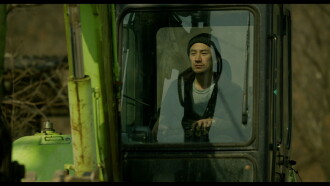
20 years after discharge from the army and now an excavator driver, a former paratrooper who had been mobilized to suppress the May 18th Democratic Uprising in Korea in 1980, happens to find a skull in the ground one day.
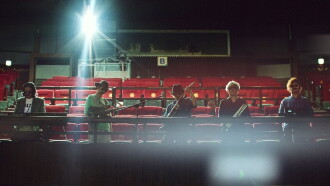
Cinema Gwangju is the first theater in the Honam-region and the only theater that opened in 1935. The cinema has screened films in its original place up to these days.
The title Good Light, Good Air is oddly paradoxical. Keenly working at the point where his artistic identity and persistent attention on modern Korean history meet, director Im in this film focused on where the history of oppression and struggle intersect between Gwangju and Buenos Aires.
1980, Kwang-ju is fired up about a genius pitcher, a senior in high school. Ho-chang takes confident strides across the field making his way by cutting through the sand dust.
There is HWAPYONG Restaurant with full of hopes of the family of three generations. Grandfather, the first-generation owner, and the first son, the second-generation owner, who lives as a fugitive after being branded as a communist and his wife and Cheol-soo’s mom who has to work hard by juggling work and family without complaint.
The expressions of democratization are usually interpreted by elites from two different parties but neglect the real faces/ life of every individual among the resistance rally.
Alternative movies trailers for No Name Stars
More movie trailers, teasers, and clips from No Name Stars:
台北電影節【五月之愛】中文字幕預告 No Name Stars trailer
導演:金兌鎰KIM Tae-il 國家:南韓South Korea 年代:2010 片長:104 min 劇情簡介: 1980年5月18日,韓國光州展開史上重要的民主抗爭運動,為爭...
Popular movie trailers from 2011
These some of the most viewed trailers for movies released in 2011:
The 'Hidden Faith of Our Founding Fathers' is perhaps the first and only documentary to go where no film has ever gone before: into the hidden faith of America's founding fathers.
When Jack crosses paths with a woman from his past, he's not sure if it's love...or if she's a ruthless con artist using him to find the fabled Fountain of Youth.
A young aspiring rock guitarist is forced to become the musical director of the local marching band when his father is hit by a bus just four weeks before a major competition.
There's a new teacher in town—Spelunker! This unusual man is anything but a typical instructor, giving speeches about traffic safety to the students, reacting strangely to a humidifier, and enjoying lunch— albeit with ample condiment mishaps.
A true story of two men who should never have met – a quadriplegic aristocrat who was injured in a paragliding accident and a young man from the projects.