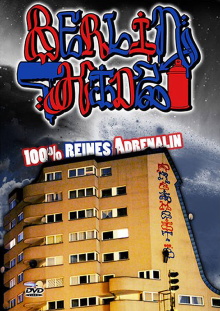
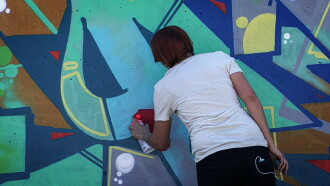
Berlin Kidz is a limited underground DVD, offering you 90 minutes of pure Adrenaline. The DVD features dangerous graffiti actions in enormous heights and is also giving insight into Berlin’s train-surfer scene which has been kept underground for many years.
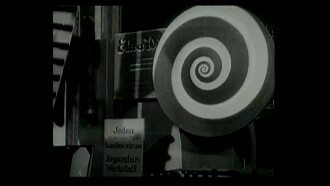
A day in the city of Berlin, which experienced an industrial boom in the 1920s, and still provides an insight into the living and working conditions at that time.
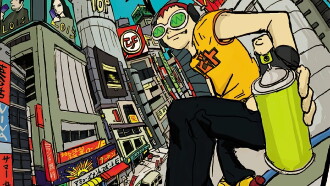
Aki's Imagination is imbued through Tobu Himeo aka the Floating Girls. As a Japanese born Australian artist, Aki Yaguchi moulds her artwork around the interplay between her heritage and being a women within a male dominated space.
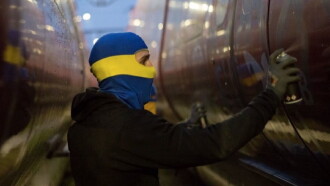
Spending the youth in the suburb of Copenhagen, these young guys started painting the clasic S - Trains at their early teenage years, to distance themselves from the mundane and trivial every day life.
Girl Power is a documentary that presents female graffiti writers from fifteen cities – from Prague to Moscow, Cape Town, Sydney, Biel, Madrid, Berlin, Toulouse, Barcelona and all the way to New York.
Journey with the musicians of the Berlin Philharmonic and their conductor Sir Simon Rattle on a breakneck concert tour of six metropolises across Asia: Beijing, Seoul, Shanghai, Hong Kong, Taipei and Tokyo.
Young princess Anna of Arendelle dreams about finding true love at her sister Elsa’s coronation. Fate takes her on a dangerous journey in an attempt to end the eternal winter that has fallen over the kingdom.
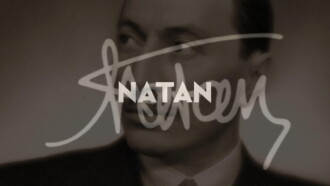
Natan tells the remarkable story of Bernard Natan, a Romanian immigrant who came to Paris in 1905 and was involved almost immediately with French cinema.
Len van Jaarsveld used to be on the top of his game. As one of the country’s leading music producers he had it all: the stars, the hits, the connections and the.
When a lonely man finds out the love of his life has a conjoined twin, who happens to be a serial killer, he must take drastic measures to keep his love life intact while keeping himself out of big trouble.
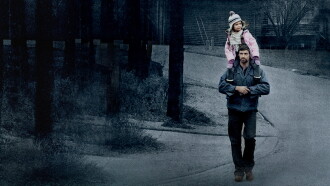
After his six-year-old daughter is abducted, a desperate father takes justice into his own hands when he loses faith in the detective leading the investigation, setting both men on a collision course as the search descends into obsession and moral compromise.
What does it take to say a word of love? How long and how much strength does it take for the heart to speak? How many streets at night? How fast? How many faces in how many bars? What tenderness? What pain? What music? What images in the mind? And where does it come from? Is it in the darkness of a closed park at night? In the back room of a Chinese bar? In the bottom of a beer? In a collective dance? In a sister's laughter? When does it finally happen? For the soul to let go.