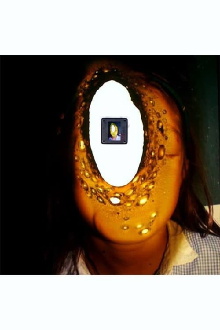
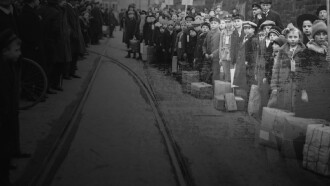
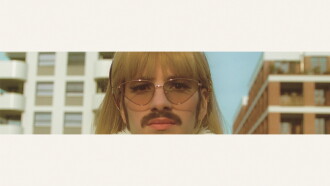
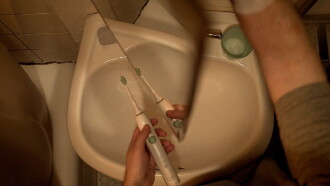
Neither the skin nor the filmic material is exempt from the temporal becoming and its consequent growing degradation. Both have such a fragile sensitivity that their potential for intervention seems to be infinitely finite, yet a common point seems to open a gulf between them: memory. However, one point in common seems to open an abyss between them: memory. How does dermatological memory operate? The photographic archive sends us back to vital mummification. Virtual skin and digital body exchange mails.
What happens when two hands touch? How close are they like? And how can proximity be measured, and even more so, in times of a pandemic and distancing? We think we touch things, that we can take other people by the hand, but physics tells us quite another story.
A young Polish filmmaker sets out to find out what happened to Mateusz Birkut, a bricklayer who became a propaganda hero in the 1950s but later fell out of favor and disappeared.
On October 4, 2018, France celebrated the 60th anniversary of the Fifth Republic. It is a republic born in the throes of the Algerian War and one which—from the day it was founded by General de Gaulle until the presidency of a very Jupiterian Emmanuel Macron—has been assailed as a “Republican monarchy” by partisans of a more assertive parliamentarian state.
James Franco's Sal chronicles the final hours of the life of actor Sal Mineo, one-time teen idol and star of the blockbuster films Rebel Without a Cause and Exodus.
Surfer Dane Reynolds takes a sharp look into the timeless style of Craig Anderson. A modern approach with hints to the past, Slow Dance follows Craig in and out of the water as he travels the world meeting up with heroes and friends in Australia, Chile, India, West Africa and Tahiti to name a few.
What does it take to say a word of love? How long and how much strength does it take for the heart to speak? How many streets at night? How fast? How many faces in how many bars? What tenderness? What pain? What music? What images in the mind? And where does it come from? Is it in the darkness of a closed park at night? In the back room of a Chinese bar? In the bottom of a beer? In a collective dance? In a sister's laughter? When does it finally happen? For the soul to let go.