Korean film critic Jeong Sung-il’s camera explores the work of Wang Bing, a Chinese director who won international fame with his film Tie Xi Qu: West of the Tracks.
Filmmaker Kogonada unpicks what defines the Golden Age of Italian cinema with a side-by-side comparison of two edits of the same film, one according to Italian director Vittorio De Sica, and the other according to Hollywood producer David O.
Chris Gallagher’s feature-length film essay Time Being is an elegant and thought-provoking investigation of the nature and experience of time, and its filmic representation.
Video essay ‘Rock and Cliff' investigates the creation of Horn Town, a new model village and centre of large scale tourist development, and the experiences of rural residents moved there through government-led displacement.
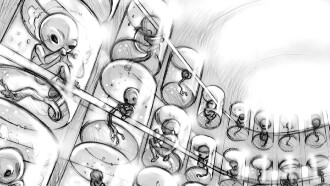
"If there is a relationship between production and destruction, between the development of productive and destructive forces, then the atom bomb is the ultimate weapon of the post-industrial age.
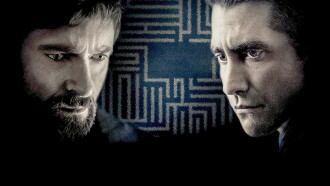
After his six-year-old daughter is abducted, a desperate father takes justice into his own hands when he loses faith in the detective leading the investigation, setting both men on a collision course as the search descends into obsession and moral compromise.
A woman and young daughter escape her abusive husband by faking their deaths. Eight years later she is happily living in the upscale Palm Springs with her now-17-year-old daughter.
Hamdan is a former Palestinian leader who spent 15 years locked up in the old Israeli prisons. In 1973, while living in Syria, he was given a mission to smuggle explosives across the border and train a person he trusted.
When a lonely man finds out the love of his life has a conjoined twin, who happens to be a serial killer, he must take drastic measures to keep his love life intact while keeping himself out of big trouble.
James Franco's Sal chronicles the final hours of the life of actor Sal Mineo, one-time teen idol and star of the blockbuster films Rebel Without a Cause and Exodus.
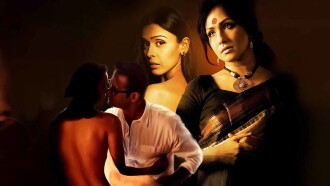
What does it take to say a word of love? How long and how much strength does it take for the heart to speak? How many streets at night? How fast? How many faces in how many bars? What tenderness? What pain? What music? What images in the mind? And where does it come from? Is it in the darkness of a closed park at night? In the back room of a Chinese bar? In the bottom of a beer? In a collective dance? In a sister's laughter? When does it finally happen? For the soul to let go.
Who loves whom in Così fan tutte, Mozart’s and Da Ponte’s cruelly comic reflection on desire, fidelity and betrayal? Or have the confusions to which the main characters subject one another ensured that in spite of the heartfelt love duets and superficially fleetfooted comedy nothing will work any longer and that a sense of emotional erosion has replaced true feelings? Così fan tutte is a timeless work full of questions that affect us all.