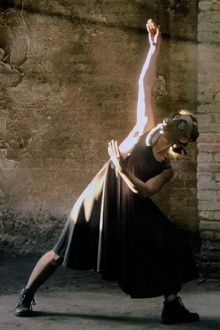
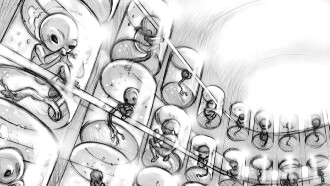
A woman visits a deserted old industrial building. Once there, she encounters two children. They lead her deeper inside the building and closer to their dark secret. What started as an innocent game, has suddenly become an odd ballet.
A mother's jealousy, of her daughter's relationship with the father, becomes abusively hateful after the young girl accidentally causes the death of her father.
Demi has stayed in bed for weeks due to the Chinese postpartum tradition. Although she tries to be as cooperative as possible, the weeks-long confinement and endless chicken soup push her to her limit.
Chaya, a school teacher in India, is telling the story of Diwali to her pupils. At the same time in the US, Murray who is a war photographer is about to meet his family for the first time after a tour in Afghanistan with the US Army.
A New York stockbroker refuses to cooperate in a large securities fraud case involving corruption on Wall Street, corporate banking world and mob infiltration.
Who loves whom in Così fan tutte, Mozart’s and Da Ponte’s cruelly comic reflection on desire, fidelity and betrayal? Or have the confusions to which the main characters subject one another ensured that in spite of the heartfelt love duets and superficially fleetfooted comedy nothing will work any longer and that a sense of emotional erosion has replaced true feelings? Così fan tutte is a timeless work full of questions that affect us all.
What does it take to say a word of love? How long and how much strength does it take for the heart to speak? How many streets at night? How fast? How many faces in how many bars? What tenderness? What pain? What music? What images in the mind? And where does it come from? Is it in the darkness of a closed park at night? In the back room of a Chinese bar? In the bottom of a beer? In a collective dance? In a sister's laughter? When does it finally happen? For the soul to let go.