Most 72 is the very first film essay directed and produced by The Markerists and the inaugural installment in the series 'Most'. The footage and the audio were recorded in a single day on June 17th, 2013 on location in Auschwitz-Birkenau with post-production being completed within 72 hours. Surbhi Goel, a professor of cultural studies from India on her first trip outside of her homeland, recorded extemporaneous impressions as she walked the grounds of the death camp with the filmmakers. These were later used as the voice-over narration. The project serves as the template in which future Markerists film essays will be produced--shot and recorded on location and completed immediately afterwards, staying relevant in this age of instant global communication.
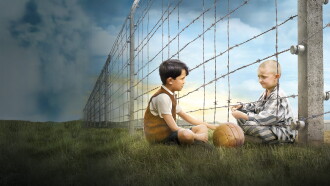
When his family moves from their home in Berlin to a strange new house in Poland, young Bruno befriends Shmuel, a boy who lives on the other side of the fence where everyone seems to be wearing striped pajamas.
One journalist described it as a chance "to see justice catch up with evil." On November 20, 1945, the twenty-two surviving representatives of the Nazi elite stood before an international military tribunal at the Palace of Justice in Nuremberg, Germany; they were charged with the systematic murder of millions of people.
Kurt Gerstein—a member of the Institute for Hygiene of the Waffen-SS—is appalled to discover that a poison gas he helped discover is being used to kill Jews.
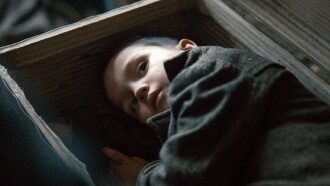
Taking place at the Concentration camp Buchenwald at the end of March 1945, prisoner Hans Pippig discovers in a carrying case of an incoming prisoner a Jewish child.
Four young women joined the Resistance to fight Nazi oppression and brutality in occupied France. They were arrested and deported to Ravensbruck concentration camp, where they helped each other to survive.
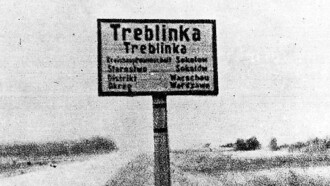
Samuel Willenberg and Kalman Taigman, the last two survivors of the Nazi extermination camp Treblinka, recount the horrors they experienced during the war and talk about their lives after their escape in a prisoner uprising in 1943.
Faced with the relentless and unstoppable advance of the Soviet Red Army, from the spring of 1944 until the capitulation of the Third Reich in May 1945, the Nazis evacuated the labor, concentration and extermination camps, factories of pain and death which, during years of nightmare, they had established in the occupied eastern territories.
A biographical documentary on eminent Indian rock and jazz musician and percussionist Nondon Bagchi and a generation of 60's musicians playing English rock music in India.
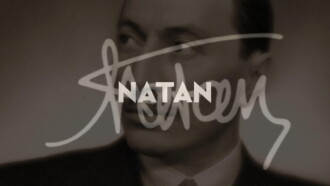
Natan tells the remarkable story of Bernard Natan, a Romanian immigrant who came to Paris in 1905 and was involved almost immediately with French cinema.
Len van Jaarsveld used to be on the top of his game. As one of the country’s leading music producers he had it all: the stars, the hits, the connections and the.
A bullied student sees visions of a rabbit he was forced to kill as a child, and those visions propel him into a state where his imagination causes him to carry out violent acts.
When a lonely man finds out the love of his life has a conjoined twin, who happens to be a serial killer, he must take drastic measures to keep his love life intact while keeping himself out of big trouble.
Bethlehem tells the story of the unlikely bond between Razi, an Israeli secret service officer, and his Palestinian informant Sanfur, the younger brother of a senior Palestinian militant.