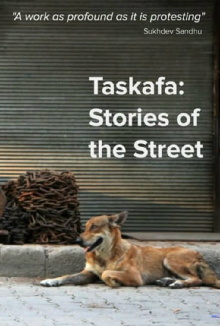
Taşkafa is a real dog and also a legend on the streets of Istanbul. John Berger begins Taşkafa’s story, reading from his novel, King, the story of the disappearance of a community told from a dog’s perspective. The area’s ordinary people – taxi drivers, shopkeepers, street traders – care deeply about the welfare of the city’s street dogs and they tell us stories about Taşkafa and their other canine neighbours. The animals are a symbol of community living, where people (and dogs) look out for each other, but this is a community in transition; one from which dogs are starting to be expelled. Eccentric, amusing and very warm, the film is a powerful indictment of the impact of global politics and the economic appropriation of public space but, even more, it is a tribute to both the spirit of resistance and to city life that can accommodate people and dogs together.
In this entrancing documentary on performance artist, photographer and underground filmmaker Jack Smith, photographs and rare clips of Smith's performances and films punctuate interviews with artists, critics, friends and foes to create an engaging portrait of the artist.
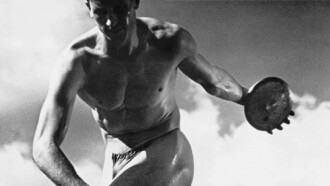
Starting with a long and lyrical overture, evoking the origins of the Olympic Games in ancient Greece, Riefenstahl covers twenty-one athletic events in the first half of this two-part love letter to the human body and spirit, culminating with the marathon, where Jesse Owens became the first track and field athlete to win four gold medals in a single Olympics.
'History is always made in the middle of the night. And when it happens, you are so damned tired, that you couldn't care less,' says Robert Cooper, an EU peace negotiator whose job it is to get Serbia and Kosovo to reach an agreement about peaceful coexistence.
Part two of Leni Riefenstahl's monumental examination of the 1938 Olympic Games, the cameras leave the main stadium and venture into the many halls and fields deployed for such sports as fencing, polo, cycling, and the modern pentathlon, which was won by American Glenn Morris.
Long Tack Sam was an internationally renowned Chinese acrobat and magician. He overcame isolation, poverty, cultural and linguistic barriers, extreme racism and world wars to become one of the most successful vaudeville acts of his time.
After her father’s sudden death, Feride takes on the role of the father in the family. Her mother, Nurcan, desperately tries to replace her lost husband with Feride, while her brother, İlker, starts to drift away from the family.
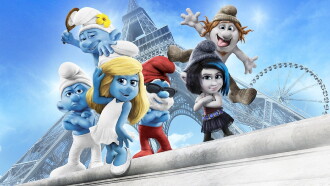
The evil wizard Gargamel creates a couple of mischievous Smurf-like creatures called the Naughties that he hopes will let him harness the all-powerful, magical Smurf-essence.
Len van Jaarsveld used to be on the top of his game. As one of the country’s leading music producers he had it all: the stars, the hits, the connections and the.
The film shows a strong bond between two brothers that live in a remote fjord with their parents. We look into their world through the eyes of the younger brother and follow him on a journey that marks a turning point in the lives of the brothers.
An FBI agent and an Interpol detective track a team of illusionists who pull off bank heists during their performances and reward their audiences with the money.