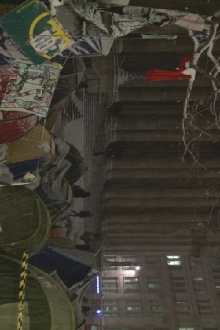
The paradox of the present as a time that cannot be reflected upon until it has already become past, seems consistent with the idea of thinking about the passage of time as the movement within a wave, where the individual particles of water remain static despite an illusion of movement upon the surface. Might not the succession of events in daily life pertain to a similar form of illusory movement? Time and the Wave engages with this paradox by focusing on key London events filmed in 2012 and 2013: the opening of Westfield Shopping Centre at Stratford, the Saint Paul's Occupy movement, the Queen's Jubilee Thames pageant and the funeral of Margaret Thatcher to expose the condition of this country in the time of crisis of late capitalism.
Hamdan is a former Palestinian leader who spent 15 years locked up in the old Israeli prisons. In 1973, while living in Syria, he was given a mission to smuggle explosives across the border and train a person he trusted.
The film shows a strong bond between two brothers that live in a remote fjord with their parents. We look into their world through the eyes of the younger brother and follow him on a journey that marks a turning point in the lives of the brothers.
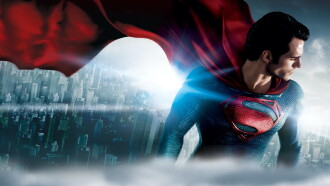
A young boy learns that he has extraordinary powers and is not of this earth. As a young man, he journeys to discover where he came from and what he was sent here to do.
Eight short stories of seduction and illicit encounters between lovers, filled with humor and eroticism, which use a circular structure located in the cosmopolitan atmosphere of a colonial city of Mexico.
Comments
Have you watched Time and the Wave yet? What did you think about it?