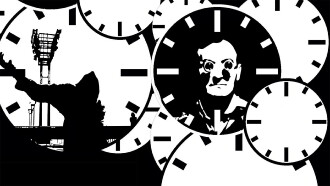
An immersive film installation by Cally Spooner. In this work, a musical for six continuously rolling cameras, a black box soundstage and its inhabitants, are recorded in a single take. The mechanics of the shoot (cameras, microphones, mixing boards, chromakey screens and crew) remain as present as the performers they capture. Cast and crew become a constant-motion human backdrop, pragmatically recomposing scene-changes through lighting cues, voice, body movement, or continuous shifts of filmic apparatus and props. The semblance of a post-production edit arrives through the organisation and orchestration of bodies on set. Delivered by a chorus line of women, the film gossips about various celebrities, athletes and politicians who have outsourced their performances to different technologies.
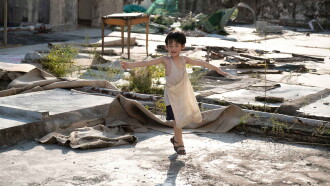
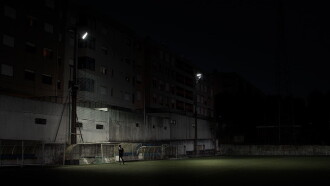
On his final delivery of the day, a carefree pizza delivery guy arrives at an unfamiliar, desolate apartment building, only to find the customer absent.
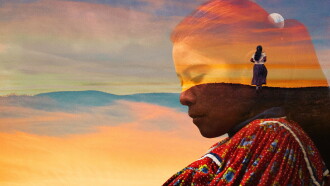
A young woman of the Tarahumara, well-known for their extraordinary long distance running abilities, wins ultramarathons seemingly out of nowhere despite running in sandals.
Issa, a footballer from Guinea-Bissau who plays in Portugal, is contacted by two filmmakers who want to know more about his life and make a documentary.
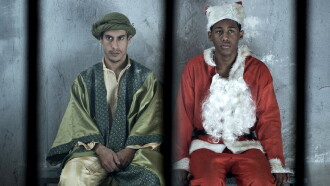
A documentary chronicling the events surrounding three Americans arrested and held as political hostages in Iran and their families’ campaign to free them.
What is art and how does it relate to society? Is its value determined by its popularity or originality? Is the goal profit or expressing one's personal vision? These are some of the questions raised as we follow fiercely independent New York artist Robert Cenedella in his artistic journey through decades of struggling for creative expression.
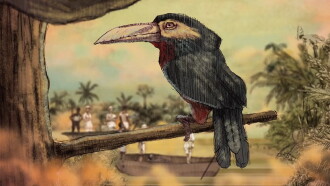
The octogenarian Angono Mba recalls the expedition in which he worked as porter for the Spanish filmmaker Manuel Hernández Sanjuán who, between 1944 and 1946, traveled through Spanish Guinea documenting life in the colony as he obsessively searched for a mysterious lake.
Evil pirate Burger Beard is in search of the final page of a magical book that makes any evil plan he writes in it come true, but the final page happens to be the Krabby Patty secret formula.
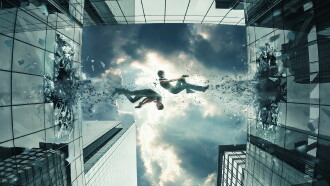
In one tragic night, Quantum Physics Professor Jacob Matthews loses his wife...his everything. What he does to get her back will bring him to the edge of madness.
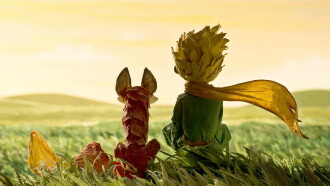
Based on the best-seller book 'The Little Prince', the movie tells the story of a little girl that lives with resignation in a world where efficiency and work are the only dogmas.
The Democratic Republic of Congo has been called a geological scandal due to its mineral rich soil. Unfortunately, those minerals, necessary to sustain today's technology, are funding the deadliest war since WWII.
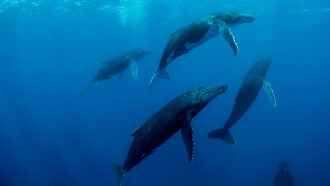
Humpback Whales takes audiences to Alaska, Hawaii and the Kingdom of Tonga for a close-up look at how these whales communicate, sing, feed, play and take care of their young.
Comments
Have you watched And You Were Wonderful, On Stage yet? What did you think about it?