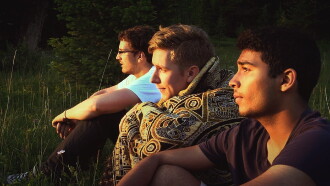
Stories of resistance, words of pain and suffering, tales of life and death, and in particular of dignity, that show the reality that the Sahrawi people experience in Western Sahara. This documentary gathers the testimonies collected during a journey to the occupied territories by an international delegation headed by the mayor of Donostia/San Sebastián, Juan Karlos Izagirre. Over the course of five days they held over twenty secret meetings with human rights activists, from home to home, constantly under watch by the Moroccan police. Despite living under an occupation that has lasted for almost 40 years, the Sahrawi people maintain their identity and culture. A revolutionary act, a struggle to defend their right to exist as a people.
Straddling a 2,400-kilometer-long wall constructed by the Moroccan army, the Western Sahara is today divided into two sections — one occupied by Morocco, the other under the control of the Sahrawi National Liberation Movement’s Polisario Front.
How would you claim your identity in a hostile land? How could you live under harassment and repression? How would you make your voice break through the walls of silence? Sahrawi young people living at the Occupied Territories (O.
The documentary #FreeSultana, tells the story of a Sahrawi activist who has been under house arrest for a year with her entire family, without a court order.
This documentary illustrates the story of Gdeim Izik through the voices of the Sahrawis themselves, giving personal accounts of how the camp was dismantled, what happened in the following weeks, and what it meant for them, as a people and as a nation.
Drawing from the inspiration of their grandmothers, singer Aziza Brahim and activist Senia Abderhaman wrestle for the independence of their people from a brutal and corporate backed Moroccan regime using culturally derived methods of music, poetry, and nonviolent resistance.
A documentary chronicling the events surrounding three Americans arrested and held as political hostages in Iran and their families’ campaign to free them.
Itso, about 35, drives a special ambulance called a 'corpse-van'. His job is to pick up the bodies of the recently deceased and transport them to the morgue.
When 11-year-old Riley moves to a new city, her Emotions team up to help her through the transition. Joy, Fear, Anger, Disgust and Sadness work together, but when Joy and Sadness get lost, they must journey through unfamiliar places to get back home.
This documentary feature pulls back the curtain on the world of ‘working class’ rappers. The film spotlights independent artists struggling to find a balance between making a living and pursuing their art alongside the never-ending saga of age and relevance.
The Democratic Republic of Congo has been called a geological scandal due to its mineral rich soil. Unfortunately, those minerals, necessary to sustain today's technology, are funding the deadliest war since WWII.
What is art and how does it relate to society? Is its value determined by its popularity or originality? Is the goal profit or expressing one's personal vision? These are some of the questions raised as we follow fiercely independent New York artist Robert Cenedella in his artistic journey through decades of struggling for creative expression.
"Holland Road, located off NY Route 5 in between the town of Angola and Evangola State Park, is more frequently known as "Pigman Road" and it has been at the forefront of Western New York folklore for decades.
Comments
Have you watched Messages from Western Sahara yet? What did you think about it?