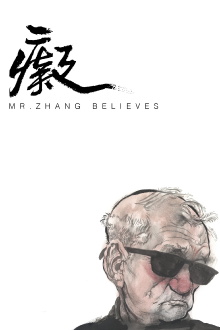
Zhang Xianchi is a man thrown into the Cultural Revolution and its afterimage, plunged into the ideological deadlocks of the era and suffering its consequences beyond it. Born into a family that supports the nationalist Kuomintang, Zhang eventually became a leftist and joined the Communist Party. But his family’s background eventually catches up with him, and in a series of bureaucratic measures, he is labelled as a Rightist, leading to a slew of irrational yet life-affecting consequences. His story is told through an exhilarating hybrid of forms, blending documentary-styled interviews and spectral theatrical displays within an ever-mutating studio-space. Hypnagogic in its imagery and ironic in attitude, Mr. Zhang Believes is a tour-de-force treatise of a man caught within dogmatic political maneuverings, which it critiques indirectly with creative and stoic fervour.
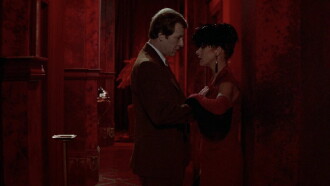
When churlish mobster Albert Spica acquires an upscale French restaurant in London, he dines there nightly, effectively scaring off the clientele with his bad manners.
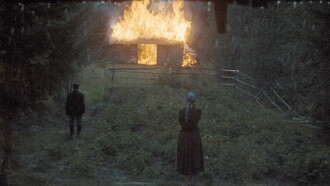
Dinner time in a remote home of a prairie family turns nightmarish when a band of blood spattered outlaws break through the front door in search of food, horses, and women.
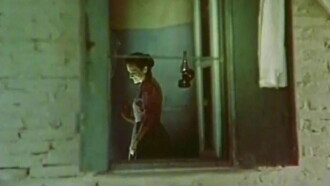
A dying man in his forties recalls his childhood, his mother, the war and personal moments that tell of and juxtapose pivotal moments in Soviet history with daily life.
A successful mod photographer in London whose world is bounded by fashion, pop music, marijuana, and easy sex, feels his life is boring and despairing.
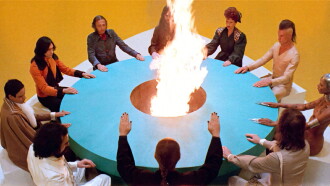
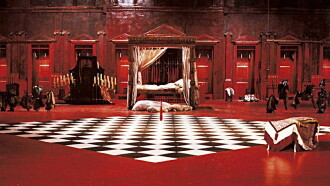
In 17th-century Tuscany, a church play is performed for the benefit of young aristocrat Cosimo. In the play, a grotesque old woman gives birth to a beautiful baby boy.
Originally edited in two versions. Version I, 70 minutes; version II, 90 minutes. (The only known existing version is not Markopoulos’s edit and contains additional titles, music and voice-over added later than 1961.
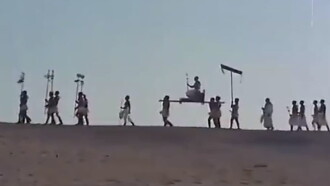
Based on one of the major literary texts survived from the Middle Kingdom, the classical period of Egyptian literature, The Eloquent Peasant is a combination of a morality/folk tale and a poem.
During its 85-minute running time, this jarring experimental film takes a no-holds-barred look at the way women have been treated and depicted in Western art.
Alternative movies trailers for Mr. Zhang Believes
More movie trailers, teasers, and clips from Mr. Zhang Believes:
Mr Zhang Believes Trailer | SGIFF 2015
FOCUS: BETWEEN VISIBLE AND INVISIBLE – ALTERNATIVE VISION OF CHINESE INDEPENDENT DOCUMENTARY Director: Qiu Jiongjiong Producers: ...
Popular movie trailers from 2015
These some of the most viewed trailers for movies released in 2015:
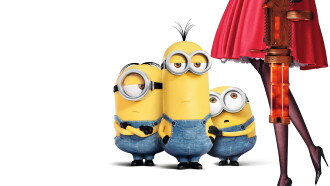
Minions Stuart, Kevin and Bob are recruited by Scarlet Overkill, a super-villain who, alongside her inventor husband Herb, hatches a plot to take over the world.
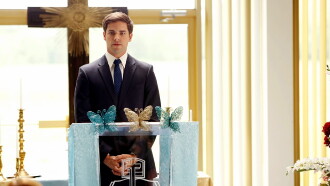
Itso, about 35, drives a special ambulance called a 'corpse-van'. His job is to pick up the bodies of the recently deceased and transport them to the morgue.
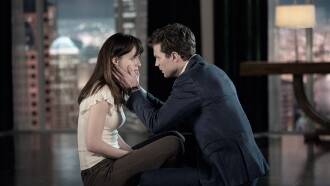
When college senior Anastasia Steele steps in for her sick roommate to interview prominent businessman Christian Grey for their campus paper, little does she realize the path her life will take.
The story of a super-secret spy organization that recruits an unrefined but promising street kid into the agency's ultra-competitive training program just as a global threat emerges from a twisted tech genius.
A people's struggle to save the animal at the heart of their culture. For centuries the Bunong indigenous people on the Cambodian-Vietnamese border lived with elephants, believing they shared the same destiny.
When Tony Stark tries to jumpstart a dormant peacekeeping program, things go awry and Earth’s Mightiest Heroes are put to the ultimate test as the fate of the planet hangs in the balance.
Comments
Have you watched Mr. Zhang Believes yet? What did you think about it?