With his film Generation '68, the author makes a homage to the generation with which he shares his youthful enthusiasm and the idea about a revolution that will change the world, while being "realistic and demanding the impossible". At the same time he questions the true impact of these changes on social and - probably more important - private level. Having ideas is easy; making them look credible to the generations that follow is somewhat more difficult. By rejecting the ideals of the 1968 as unworkable, the new generations are coming up with some of their own, maybe even more unrealistic ones...
France, 1974. The erotic film Emmanuelle, directed by Just Jaeckin, breaks all records for cinema attendance: the story of the creation of a sensual epic that marked a turning point in the struggle for sexual emancipation.
"Marx can wait" was something Camillo Bellocchio said to his twin Marco the last time they met before the former died at a young age in the heated days of 1968.
A montage film that begins in May 1, 68 and ends in mid-June. Everything is there: the students of Nanterre in revolt, the demonstrations, the cobbles, the barricades, the rioting nights, the busy Sorbonne, the happening of the Odeon, the factories on strike and Séguy who gets on the bandwagon , the general protest, 10 million French without work, de Gaulle and The reform, yes, the doglit, no, the Gaullist demonstration of May 30, Grenelle, the death of a high school student, the offensive Pompidou and the return in the factories.
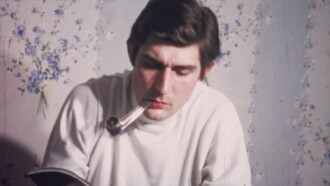
Paris, Latin Quarter, May 1968. Images of barricades and police movements in the street. In his bedroom, on his bed, a young man indulges in daydreams that invade the whole space.
Based on the true story of two young men, David Packouz and Efraim Diveroli, who won a $300 million contract from the Pentagon to arm America's allies in Afghanistan.