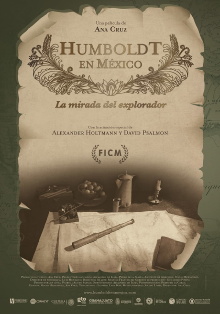
The greatest explorer of the Americas, German scientist Alexander von Humboldt, narrates his voyage to New Spain in 1803 as he prepares his magnum opus Cosmos for publication from his library in Berlin. During his journey, he discovers Mexico’s extraordinary biodiversity; its mineral, volcanic, architectural, and pre-Hispanic richness; and its profound inequalities.
Watch the official Humboldt in Mexico: The Gaze of the Explorer 2017 trailer in HD below.
The biggest tech revolution of the 21st century isn’t digital, it’s biological. A breakthrough called CRISPR gives us unprecedented control over the basic building blocks of life.
Of the Seven Wonders of the Ancient World, the Pyramid is the only one to survive. Many believe that even with our 21st-century technology, we could not build anything like it today.
Kate Humble and Helen Czerski reveal the inner workings of the sun and investigate why scientists think changes in the sun's behaviour may have powerful effects on our climate.
Dr Helen Czerski delves into the Horizon archive to chart the transformation of a little-known theory into one of the greatest scientific undertakings in history.
Prof. Jim Al-Khalili tackles the biggest subject of all, the universe. Through a series of critical observations and experiments that revolutionised our understanding of our world Jim guides us through the greatest cosmic detective story of all.
A celebration of the universe, displaying the whole of time, from its start to its final collapse. This film examines all that occurred to prepare the world that stands before us now: science and spirit, birth and death, the grand cosmos and the minute life systems of our planet.
Many geneticists and archaeologists have long surmised that human life began in Africa. Dr. Spencer Wells, one of a group of scientists studying the origin of human life, offers evidence and theories to support such a thesis in this PBS special.
Anatomist Alice Roberts embarks on a quest to rebuild her own body from scratch, taking inspiration from the very best designs the natural world has to offer.
From Raymond Baxter live on Tomorrow's World testing a new-fangled bulletproof vest on a nervous inventor to Doctor Who's contemporary spin on the War on Terror, British television and the Great British public have been fascinated with the brave new world offered up by science on TV.
After Hurricane Katrina, New Orleans handyman and blues singer-songwriter Gabe Recolte was bereft. Left homeless and heartbroken, he had been forced to evacuate and relocate before he could tell club owner Hattie how much he cares for her.
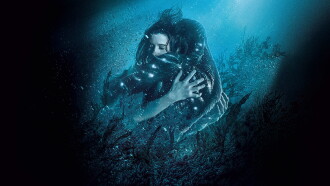
An other-worldly story, set against the backdrop of Cold War era America circa 1962, where a mute janitor working at a lab falls in love with an amphibious man being held captive there and devises a plan to help him escape.
In the summer of 1976, a shared family yard becomes the setting, as the adults bicker over selling the garden and the kids are free to explore the mysterious neighboring lot.
For Agatha, Christmas triggers sadness. She yearns for freedom laced with imagination, when magical creatures were part of a game played with friends in the forest.
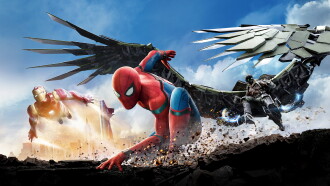
Following the events of Captain America: Civil War, Peter Parker, with the help of his mentor Tony Stark, tries to balance his life as an ordinary high school student in Queens, New York City, with fighting crime as his superhero alter ego Spider-Man as a new threat, the Vulture, emerges.
Comments
Have you watched Humboldt in Mexico: The Gaze of the Explorer yet? What did you think about it?