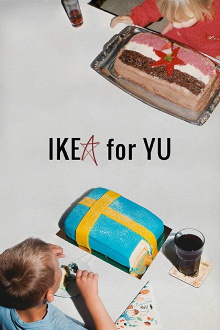
Marija grew up in a family that lives Yugoslav ideals even today. Given that Marija and her family are of Serbian origin, who continued to live in Croatia, regardless of the pressures of the recent war, the Yugoslav identity is the one they felt closest to. She had always felt that her family's ideals were her own, until her life path turned her in a different direction. When she founded her own family with her husband, she began to question her parents' and grandparents' values, as well as her own, and if that was the environment in which she wanted to raise her son. Within a journey through the family history, Marija opts for a "new beginning" in a totally different environment and sets up a new home - in Sweden. This film is a story about growing up, separation from the nest, and accepting one's own value system, and how to get there, in the atmosphere of a stable and loving family.
Watch the official IKEA for YU 2018 trailer in HD below.
A research-based essay film, but also a very personal perspective on the history of socialist Yugoslavia, its dramatic end, and its recent transformation into a few democratic nation states.
An archival road trip with Stevan Labudović, cameraman to Yugoslav President Tito and cinematic eye of the Algerian revolution, investigating the role of cinema in the liberation struggles of the Third World and reconstructing the birth of the Non-Aligned Movement.
Bosnian Croat writer Miljenko Jergović and Serbian writer Marko Vidojković replace one another by the steering wheel of Yugo, a symbol of their common past while driving on the Brotherhood and Unity Highway that stretched across five of six republics of Yugoslavia.
True stories of the Croatian People's struggle to overcome oppression from communist Yugoslavia and the 1990's fight to save their war ravaged homeland.
In 1947, Yugoslav President Josip Broz Tito visited, for the first time, Romania. Its communist regime gave him, as present, a painting from a great Romanian artist Ion Andeescu: 'The Leafless Forest'.
Three years after Jurassic World was destroyed, Isla Nublar now sits abandoned. When the island's dormant volcano begins roaring to life, Owen and Claire mount a campaign to rescue the remaining dinosaurs from this extinction-level event.
Jimmy Morris has a special surprise guest on his podcast, The Film Dick. It's Chester Holloway who reveals all the secrets behind the mysterious 1939 film, 'Sex Madness.
Created over 75 years and three generations, Les Quatre Vents stands as an enchanted place of beauty and surprise, a horticultural masterpiece of the 21st century.
Believing they have left behind shadowy figures from their past, newlyweds Christian and Ana fully embrace an inextricable connection and shared life of luxury.
Elastigirl springs into action to save the day, while Mr. Incredible faces his greatest challenge yet – taking care of the problems of his three children.
From 2019 Maui Film Festival This powerful documentary celebrates the historic Malama Honua Worldwide Voyage that connected countless individuals and communities from around the globe.
Dracula, Mavis, Johnny and the rest of the Drac Pack take a vacation on a luxury Monster Cruise Ship, where Dracula falls in love with the ship’s captain, Ericka, who’s secretly a descendant of Abraham Van Helsing, the notorious monster slayer.
Seasoned musician Jackson Maine discovers — and falls in love with — struggling artist Ally. She has just about given up on her dream to make it big as a singer — until Jack coaxes her into the spotlight.
Comments
Have you watched IKEA for YU yet? What did you think about it?