Alberto Cavalcanti Trailers
Cavalcanti TrailerBirth of a Nation TrailerUm Homem e o Cinema Trailer
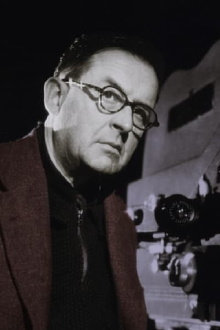
Alberto de Almeida Cavalcanti was a Brazilian-born film director and producer. He was born in Rio de Janeiro, the son of a prominent mathematician. He was a precociously intelligent child, and by the age of 15 was studying law at university. Following an argument with a professor he was expelled. His father sent him to Geneva, Switzerland on condition that he did not study law or politics. Cavalcanti chose to study architecture instead. At 18 he moved to Paris to work for an architect, later switching to working on interior design. After a visit back to Brazil he took up a position at the Brazilian consulate in Liverpool, England.
Cavalcanti corresponded with Marcel L'Herbier, a leading light in France's avant-garde film movement. This led to a job offer from L'Herbier for Cavalcanti to work as a set designer. So, in 1920 he left his job at the Consulate and moved back to France to work for L'Herbier; he was to be involved in the making of numerous films, the most notable being L'Inhumaine.
He was soon making his own films, in 1926 directing his first, Rien Que les Heures (Nothing But Time) — a day in the life of Paris and its citizens. In 1927 he collaborated with Walter Ruttmann on a similar project set in Berlin, called Berlin: Die Sinfonie der Großstadt (Berlin: Symphony of a Big City).
Cavalcanti took a job with Paramount's French studios after the talkies came in, but he found himself making more commercial films which could not hold his interest and left Paramount in 1933. In the same year he returned to England to work for John Grierson's GPO Film Unit. He was involved in many capacities, from production to sound engineer. He was to spend seven years at the GPO Film Unit, working on many projects. Much of his work at the GPO was uncredited, he acted as a mentor to many new film makers, but in 1937 he was appointed acting head of the GPO Film Unit when Grierson left for Canada. When told that the only way the position could become permanent was to become a naturalized British citizen, he decided to leave the unit.
In 1940 Cavalcanti joined Ealing Studios, under the leadership of producer Michael Balcon. He worked as an art editor, producer and director. His most notable works of this period (many of them propaganda films) were Yellow Caesar (1941), Went the Day Well? (1942), Three Songs of Resistance (1943), Champagne Charlie (1944), Dead of Night (as co-director) (1945) and Nicholas Nickleby (1947). In 1946 Cavalcanti left Ealing over a dispute about money. He went on to direct three more films in the UK, before returning to Brazil in 1950.
In Brazil he worked as a producer for Companhia Cinematográfica Vera Cruz; the company eventually became insolvent. After being blacklisted as a communist in Brazil, he decided to move back to Europe in 1954. He eventually settled in France, where he continued his work in television. He died in Paris in 1982 at the age of 85.

Most Popular Alberto Cavalcanti Trailers
Total trailers found: 98
24 May 1941
Using edited archive footage, mockery is made of Italy's dictator Benito Mussolini.
01 January 1976
Alberto Cavalcanti reviews his own prolific career as a filmmaker.
01 January 1943
British war documentary
28 June 1935
The production of King George V's Silver Jubilee (1910-1935) special postage stamp, and a brief dramatised history of the development of the penny post.
01 January 1937
“Catching up with gossip, inspecting new ducklings, clambering over gates, walking across meadows - the life of a postman appears idyllic, but this Devon postie has some startling ideas about improving efficiency.
01 December 1940
The first months of WWII as experienced by the new young recruits - the 'young Berts' - of the British Army.
09 September 1945
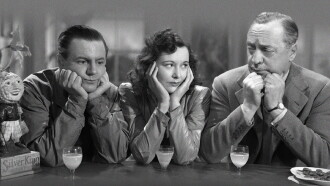
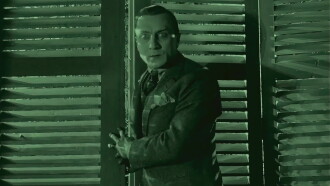
An architect, visiting an English country house, realizes the other guests are familiar from his recurring nightmare.
25 August 1944
A man from the countryside becomes London’s newest music hall sensation, and competes with a rival music hall performer for the audience’s attention.
01 January 1942
Deals with the training of Fleet Air Arm pilots and crew during World War II.
13 September 1973
A portrait of John Grierson, the first Canadian Government Film Commissioner and founder of the National Film Board in 1939.
18 October 1934
Documentary following an Edinburgh fishing trawler, the "Isabella Grieg".
21 October 1929
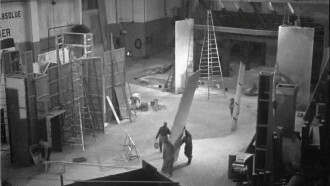
The first behind-the-scenes documentary in the film industry, from the making of a camera (Debrie) to studio shooting and directing, including animation techniques.
01 January 1936
This expository film shows the mood of European society on the eve of the Second World War while promoting the values of international cooperation.
27 June 1947
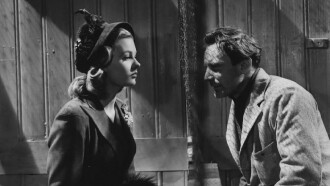
After being framed for a policeman's murder, a criminal escapes prison and sets out for revenge.
12 December 1924
A famous singer Claire Lescot, who lives on the outskirts of Paris, is courted by many men, including a maharajah, Djorah de Nopur, and a young Swedish scientist, Einar Norsen.
02 January 1924
After the death of her mother, Germaine moves in with her father in a small town near the Rhône river.
12 March 1947
A fatherless boy tries to make his fortune despite interference from his rich uncle.
22 June 1942
Based on the true story of Melbourne Johns, an aircraft factory foreman sent to France to prevent the Nazis getting hold of some vital equipment.
06 August 1997
Jonas Mekas assembles 160 portraits, appearances, and fleeting sketches of underground and independent filmmakers captured between 1955 and 1996.
07 June 1934
A young couple goes through a plot unscathed in the welcoming salons of a large fashion house.
26 October 1950
Marina, a beautiful young woman with leprous parents, marries a shipyard owner to escape an institution.
01 January 1951
Documentary on the fresco paintings of Candido Portinari, who contributed to the development of a more realistic and modernist style in the art of Brazil.
01 May 1961
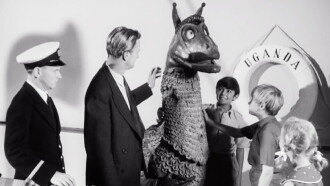
The story of three children who find themselves with a friendly monster that grows at an alarming rate.
07 December 1942
The quiet village of Bramley End is taken over by German troops posing as Royal Engineers. Their task is to disrupt England's radar network in preparation for a full scale German invasion.
21 October 1960
This first film adaptation of Bertolt Brecht’s play about class distinctions was made in 1955 in the Vienna Rosenhügel studios, but it was only premiered five years later.
02 April 1951
Old Zé Cristino, riding his donkey, goes to Congonhas do Campo to fulfill a promise to São Bom Jesus do Matozinho.
30 December 1927
Paris 1883. Yvette is the daughter of a courtesan who serves men of wealth and status. She is unaware of how her mother makes money and why they are always in the presence of princes, dukes and barons.
15 August 1951
A woman marries a gambler, thinking she could straighten him up, but he loses all their assets, even their own house, and tries to commit suicide.
26 May 1952
A one-eyed businessman wants to become rich and retrieve his lost eye at any cost. He tries many schemes, and eventually regains his eye with a vengeance: the power of invisibility.
15 March 1948
The story of a romance between the daughter of the Prince Regent and Prince Leopold of Saxe-Coburg.
03 October 2026
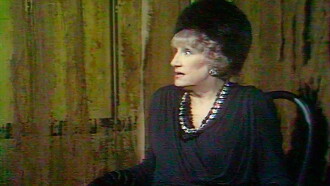
Adaptation for TV of the play by Friedrich Durrenmatt. A very rich old lady arrives in her nearly bankrupt native village.
24 October 1953
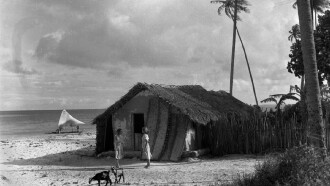
In the drought areas of Northeastern of Brazil, groups of migrants move trying to find better place to live, at least with water.
01 October 1927
La P’tite Lili is a silent short drama depicting the fate of a young orphaned girl in the working-class districts of Paris.
12 November 1925
Mathias Pascal, only son of a once-rich family, marries beautiful Romalinda, who has a terrible mother-in-law.
09 December 1932
A young man who loves his wife wants rid of his troublesome mistress. He dresses up as a wealthy Brazilian and seduces her in a jiffy.
06 July 1955
A nurse falls in love with her patient and secretly marries him. When treating another patient, he falls in love with her and, pretending to be in agony, asks for one last wish: to marry him, and she accepts.
04 August 1934
How news of a general reduction in GPO charges was finally brought to parliament and the people, despite attempts by the country's enemies to prevent the announcement.
01 September 1926
The life of a great city (Paris) from dawn until dusk, including the beautiful and the ragged, the rich and the poor.
16 April 1934
The film, made to advertise domestic telephone sets, is based around two very different families. The Petts are conventional, happy and have children; the Potts are unconventional and unhappy, without children.
15 February 1929
A nobleman decides to join a traveling group of actors to be with a girl he admires, but ultimately s
18 November 1927
The ill-fated romance of a brow-beaten seaport slum café waitress and a young man with a possessive mother, who dreams of going out to sea.
23 May 1972
This film is based on actual letters German soldiers sent home from the siege of Leningrad during World War II.
30 November 1934
Ambitious documentary chronicling the cultural life and religious customs of the Sinhalese and the effects of advanced industrialism on such customs.
05 February 1938
Correspondence between young lovers nearly ends in disaster through a mistake in postal district. Fortunately the GPO spots the error and all ends well, but with the moral that correspondents should get the address right.
01 January 1940
Wartime propaganda short in which a professor enlists the help of a dustman to explain the importance of saving paper, bones and metal to help the war effort.
13 May 1938
This documentary short examines the special train on which mail is sorted, dropped and collected on the run, and delivered in Scotland on the overnight run from Euston, London to Glasgow.
13 December 1982
It starts in the Indian tabas, goes through colonial architecture and arrives in the Brazilian capital.
03 June 1935
1935 documentary about the hard working life of Welsh coal miners.
01 January 1939
Londoners prepare for war.
21 April 1949
In this drama, a frustrated upper-class writer decides that he will find real inspiration by examining his subjects first-hand.
06 March 1942
A compilation tracing the history of realist cinema from its beginnings to World War II. Divided into five parts, it covers the development of realism in both documentaries and feature-length fiction films.
01 January 1939
Spare Time is a 1939 British film directed by Humphrey Jennings for the GPO Film Unit, and made for the 1939 New York World's Fair.
23 January 1931
Literary adaptation: A female musician in Asia's tropics escapes from harassers' advances to an island where a timid man has retreated.
29 October 1978
Where he goes, he doesn't need luggage... A very talkative traveler settles in the only wagon occupied by a man with a strange diction.