Andrei Platonov Trailers
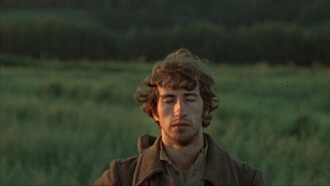
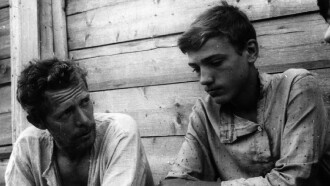
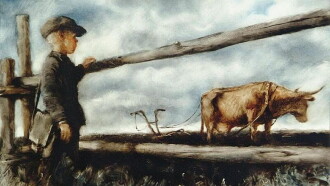
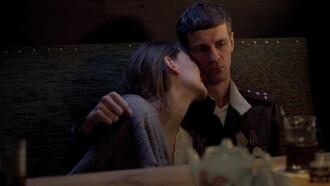
The first word TrailerIn The Land of Makar And His Calves TrailerAlyosha's Love Trailer
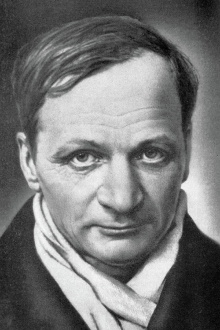
Andrei Platonovich Klimentov, known by his pen name Andrei Platonov (1899–1951) was a Soviet Russian writer, philosopher, playwright and poet. Although Platonov regarded himself as a communist, his principal works remained unpublished in his lifetime because of their skeptical attitude toward collectivization of agriculture (1929–1940) and other Stalinist policies, as well as for their experimental, avant-garde form. His famous works include the novels Chevengur (1928) and The Foundation Pit (1930).
Platonov's writing has strong ties to the works of earlier Russian authors like Fyodor Dostoevsky. Christian symbolism is prevalent in his works, as well as a prominent and discernible influence from a wide range of contemporary and ancient philosophers, most importantly Nikolai Fedorov. Platonov's influence on later Russian writers is considerable. Some of his work was published or republished during the 1960s' Khrushchev Thaw, and during the 1970s and 1980s. Because of his political writings, perceived anti-totalitarian stance, Joseph Brodsky called him the world's strangest writer.

Most Popular Andrei Platonov Trailers
Total trailers found: 21
15 July 1984
A World War II prisoner returns home to his childhood sweetheart. However, back home, he discovers that he has to compete to win her love.
01 January 2005
A very rare, unfortunately unfinished film based on the brilliant novel by Andrei Platonov. Shot partly in the style of a silent movie.
01 January 1964
The 1930s were a time of five-year plans, construction projects, and the development of remote areas of the country.
19 March 1981
In a farmhouse in southern Italy, an old woman dies. Her husband summons their sons: from Rome, Raffaele, a judge facing a political case for which he risks assassination; from Naples, the religious and ideological Rocco, a counselor at a correctional institute for boys; from Turin, Nicola, a factory worker involved in labor disputes.
05 September 1987
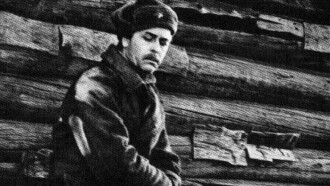
Set in the early 1920s after the end of the Russian Civil War, Red Army soldier Nikita returns to his hometown to see his partner Lyuba, both of whom are scarred by the trauma of the Russian Empire of yesteryear.
03 May 1983
A movie about love and betrayal. About war, about returning from war. However, the film does not reflect Platonov's important theme of epiphany.
01 January 1996
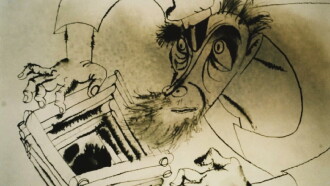
An attempt to express the relationship between space and the ability to reflect it. The result of these relations can be considered the non-representational nature of space, as a tangible form, and the tendency of space to have consciousness.
26 September 2025
The nine-year-old son of a station watchman tends to a cow, trying to ease its suffering as it nears death.
01 January 1984
Based on A. Platonov's tale.
31 December 1967
Two young directors adapted the short stories of two Russian authors whose works had been banned for decades, and so their film ended up in the censor’s vault as well – for twenty years.
08 November 1989
A boy recalls the story of how his family lost its cow. Based on a short story by Andrei Platonov.
22 October 2013
1945. The War has ended. Alyosha is coming home, expecting tenderness and kindness of his beloved wife, Lyba, and his children.
01 January 1968
The soldier returned home after the end of the war. And now we need to get used to a peaceful life again, a wife, children who grew up without him.
01 January 1989
This is a story about a man who brings about the end of the world, which his compatriots greet with joy and merriment.
01 August 1977
It consists of three short stories united by the theme of war: "Where Are You, Lyubov Dunyashova?", "You Have Me", "Everyday Matters".
17 August 1970
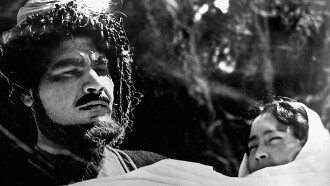
In the 1920s, in Turkmenistan, Qalli-bai makes the difficult decision to join the Basmachi, leaving behind his ailing wife in the care of their daughter, Dzhamal.
01 January 1984
The story of a little dreamer for whom the world around him is a fairy tale, where every object and every thing has a soul.
01 January 1930
Partially lost.
29 March 1992
Based on the story by A. Platonov.
01 January 2008
Fro is a woman from a small Ukrainian town. Her life has become dull and sluggish since her husband left to seek new horizons and employment opportunities in Europe.