António Lopes Ribeiro Trailers
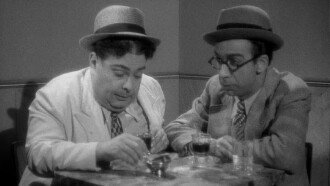
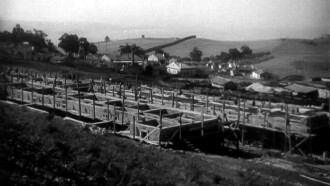
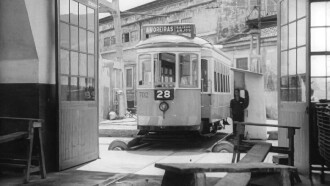
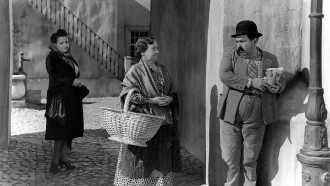
Lusitanian Illusion TrailerAntónio Silva - Um Artista Popular TrailerO Carro da Estrela Trailer
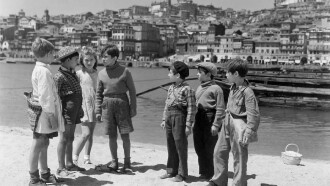
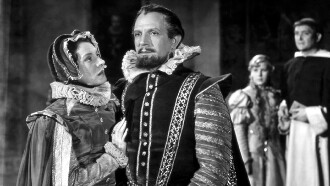
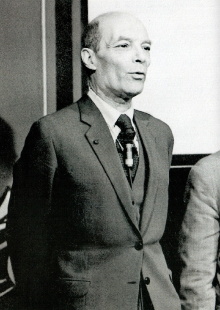
Director, journalist, and producer, António Lopes Ribeiro (1908-1995) was a central name in the history of Portuguese cinema in the first half of the 20th century. Movie critic since the late 1920s, he supported the European cinematographic avant-gardes and the aesthetical and technical renewal of Portuguese cinema. He directed his first film, Bailando ao sol, in 1928 and took part in the shooting of J. Leitão de Barros film’s Nazaré, praia de pescadores (1929), Lisboa, Crónica Anedótica and Maria do Mar (1930). Shortly before that, he undertook a long journey to the great movie studios of Paris, Berlin and Moscow, where he became up to speed with the most recent techniques and tendencies, and where he also met Clair, Renoir, Lang, Pabst, Eisenstein and Vertov. His first sound film was Gado Bravo (1934), made with several Jewish film actors and technicians that had just escaped from Hitler’s Germany. Ribeiro’s first big propaganda film for the New State was A Revolução de Maio (The May Revolution, 1937), whose script he wrote with António Ferro, the founder and director of the Secretariado da Propaganda Nacional (National Propaganda Office/SPN). The following year, he accompanied the head of the state, President Óscar Carmona, in a trip to the Portuguese colonies in Africa, shooting topical footage that would be used in several documentaries, as well as in his second propaganda feature film, Feitiço do Império (1940). Also in 1938, Ribeiro began producing for SPN the New State’s first newsreel, Jornal Português, which would last until 1951. With his production and distribution company Sociedade Portuguesa de Actualidades Cinematográficas (SPAC), he produced and directed many propaganda documentaries commissioned by the New State, thus earning the reputation of the regime’s official filmmaker and reinforcing his influence in the State-sponsored Sindicato Nacional dos Profissionais de Cinema (National Union of Cinema Professionals). In 1941, he founded Produções António Lopes Ribeiro, a production company that released famous comedies such as O Pai Tirano (1941), O Pátio das Cantigas (1942, directed by his brother, Francisco Ribeiro), or A Vizinha do Lado (1945); Manoel de Oliveira’s first feature film, Aniki-Bóbó (1942); or historical dramas such as Amor de Perdição (1943), Frei Luis de Sousa (1950) and O Primo Basílio (1959). Until 1974, Ribeiro produced or directed dozens of propaganda documentaries and newsreels. Between 1957 and 1974 he was also the author and host of a very popular TV show about the history of cinema titled “O Museu do Cinema” (“The Cinema Museum”).

Most Popular António Lopes Ribeiro Trailers
Total trailers found: 27
20 September 1946
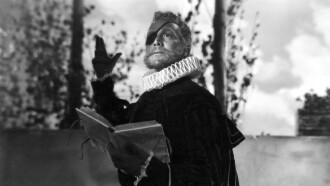
The adventurous life of Portugal's epic poet, Luis de Camões.
03 December 1959
Jorge, a successful engineer and employee of a ministry and Luísa, a romantic and dreamy girl, star as the typical bourgeois couple of the Lisbon society of the 19th century.
01 April 1930
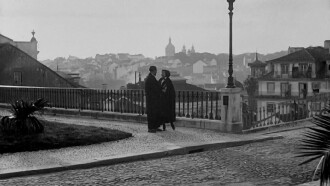
Caleidoscope of documentary-like scenes and re-enacted episodes of a day in the life of a large port town – Lisbon, from the old district around Saint George's Castle down to the docks and the 'Sagres' on the Tagus river, to the new commercial districts.
06 June 1937
The most well-known fascist propaganda film in Portugal. A communist man falls in love with a woman of Salazarian beliefs and changes his way of looking at things.
19 September 1941
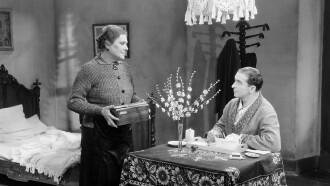
While rehearsing the annual play, a clerk tries to regain the attention of his beloved, in a comedy of equivoques.
07 May 1945
The story of how the conflicting relationship of Eduardo and vaudeville actress Isabel is affected by the passion he feels for their neighbor, Mariana, a young overprotected, and the unexpected visit of his uncle Plácido, a moral teacher.
01 January 1946
This documentary, produced in 1946 on the occasion of the half-century of Portuguese presence in Guinea-Bissau, reveals interesting contradictions.
01 January 1947
Commemorative procession celebrating the eighth centenary of the inbreak of Lisbon from the Moors in 1147 by the forces of D.
01 January 1948
Recent population growth in the capital leads to an ambitious development plan, involving public and private initiative as documented here, pinpointing over 60 locations (streets, roads, parks, schools) being modernized or built anew.
11 July 1957
The film documents the official visit of the President of the Portuguese Republic, Craveiro Lopes, to Brazil, and his meeting with the President of the Republic of Brazil, Juscelino Kubitschek, in June 20, 1957.
23 January 1942
A portrait of the relations between neighbours in a Lisbon courtyard. A story made of small episodes of humour, friendship, rivalry, love.
18 December 1942
Two schoolboys, Carlitos and Eduardo, fight for the affection of a girl, Teresinha.
02 October 1944
The Jamor National Stadium was inaugurated on June 10, 1944—a date then celebrated as the "Day of the Race.
21 September 1950
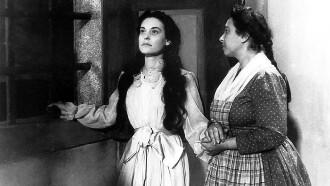
Seven years after the disastrous Battle of Alcácer Quibir, where King Sebastian and the nobleman Dom João disappeared, the latter's wife Dona Madalena de Vilhena finally gives up hope that he'll return and marries the knight Dom Manuel de Sousa Coutinho, with whom she has a daughter, who is afflicted by a fatal illness.
14 July 2022
This remake of the 1940 film with the same name tells the story of a theatre company, its men and women in love, mistakes and misunderstandings.
10 February 1989
Documentary on the life of filmmaker and cultural figure António Lopes Ribeiro.
08 August 1934
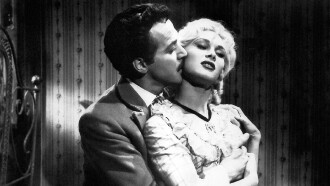
A love triangle set in Lisbon between German singer Nina, bullfighter Garrido and local girl Branca.
23 May 1940
Luís immigrated to the USA and intends to become an American. But after his father invites him on a journey to the Portuguese territories in Africa, he will find true love, and also learn to value his country and its colonial grandeur.
22 April 2010
Images and sounds expose the duality of Portugal during the days of WW2: a peaceful, god-loving, rural country, providing an escape route for over one hundred thousand European refugees to the Americas; and a political and cultural elite that disguised their Nazi inclinations just enough to play its neutral role in international politics.
20 May 1930
Falacha is the captain of a fishing boat, who loses his men in a shipwreck. Among them was the husband of Aurélia, who holds Falacha responsible for the tragedy.
11 October 1943
The fatalism caught up and the amorous tragedy between Teresa de Albuquerque and Simão Botelho, who survives the intolerant litigation of her noble families.
23 January 1929
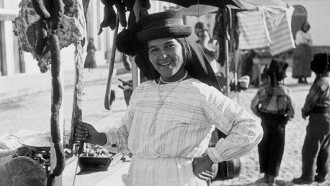
The first Portuguese documentary. A remarkable look at the lives of the working people of Nazaré, a fishing town in Western Portugal.
01 January 1944
Interesting, almost ethnographic, sequences on peoples of southern and central Angola, show the diversity of their customs and the richness of their cultures.
01 January 1957
Evocation of Salazar's birth, his passage through Coimbra and salient facts of his political life.
01 January 1959
Aspects of river and sea activities: fishing, salt unloading, seaweed collection, and others. Pateira de Fermentelos; Ria de Aveiro; Mira beach; fishing in Vieira de Leiria; fishing in Sesimbra; morning on the Tagus River.