Arif Babayev

Arif Babayev Trailers

The Day after Tomorrow at Midnight TrailerForgive Us TrailerThe Stab in the Back Trailer

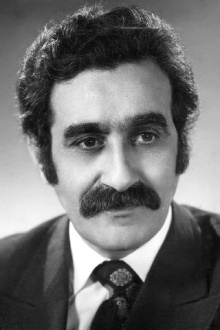
Arif Hadji oglu Babayev (Azerbaijani: Arif Hacı oğlu Babayev) was an Azerbaijani film director and Honorary Art Worker of the Azerbaijan SSR. Arif Babayev was born on September 20, 1928 in Baku. The Babayevs family lived on Qala Street, in Ichari Shahar. As a child, Arif attended theatrical circles. His engagement in theatre led him to apply to study in a theatrical school. Until then he played walk-on parts in the plays "Malikmammad", "Garaja giz" and "Ibrat". In 1946, the Azerbaijan State Theatrical Institute was created on the basis of the theatrical school. Arif Babayev was admitted into the directing program and was taught by director and actor Mehdi Mammadov. Mehdi Mammadov entrusted Mayor's role from N.V.Gogol's The Government Inspector to Arif Babayev. In 1953, Arif Babayev graduated from the institute and was placed to work at the Nakhchivan State Theater. In this theatre, he staged Gogol's play Marriage. He returned to Baku after some time and began working as a stage director at the Theater of Young Spectators. On February 14, 1956, the first program went on air of the Azerbaijani Television. Arif Babayev was invited to work on television. In 1956, he shot his first documentary film Children of our City, marking the birth of television film in Azerbaijan. In 1959, he was appointed the chief director of the Azerbaijani Television. In these years, he shot a number of documentaries, staged television plays, such as Moabit Diaries by Musa Cälil, Blind Woman by Taras Shevchenko, Law by Rasul Rza, and The Morning by Mehdi Huseyn. In 1964, he became the first television worker in Azerbaijan who was given the title of the Honorary Art Worker. He was invited to Azerbaijanfilm in the same year. In 1964, he debuted as a director with short the film Summit, the first one in the series Whom We Love More, based on original screenplay by Imran Gasimov.


Most Popular Arif Babayev Trailers

Total trailers found: 10

Wonderful Apples Trailer (1975)

29 December 1975

The film is about the gardener who cultivated magic apples which brought luck to people.

The Day after Tomorrow at Midnight Trailer (1981)

01 December 1981

After the novel of the same name of M. Avdiyev and A. Donets. The film is about first operations of National State Security.

The Stab in the Back Trailer (1979)

07 January 1979

Young inspector investigates a murder in small town.

Who Do We Love More? Trailer (1964)

01 January 1964

The movie almanac is dedicated to athletes. Three short stories ("Through the Mountain Forest", "The Top", The Force of Gravity") tell about mutual help, friendship, public duty and the formation of the character of a real person.

The Last Night of Childhood Trailer (1968)

08 December 1968

Murad, a young man fails the entrance exam to the Institute and starts working at the meat factory. His cousin Rustam, a worker on a building site, fights with him against the dishonest people who sell pieces of meat from the factory.

The First Hour of Life Trailer (1974)

16 September 1974

The film is about oilmen having different ideals and decisions, were also based on this same ideology, depiciting the heroism of oil workers, who never became exhausted and who continued working in oil, generation after generation.

The Day Passed Trailer (1971)

12 February 1971

The film is about man and woman who remembered their childhood. The film reflects atmosphere of Baku.

Man Casts an Anchor Trailer (1967)

10 December 1967

The film is about an oilman who took a lost worker's place and won the respect of other oilmen, was also based on this same ideology, depicting the heroism of oil workers, who never became exhausted and continued working in oil, generation after generation.

Peak Trailer (1965)

10 December 1965

The film-novella tells of a group of alpinists climbing a snowy mountain, and how they conduct themselves in the face of a difficult trial.

Forgive Us Trailer (1979)

22 July 1979

The film is about relations between two generations and about idols of the youth.