Curt Oertel Trailers
Der gehorsame Rebell TrailerThe Titan: Story of Michelangelo TrailerMichelangelo: Life of a Titan Trailer


Der gehorsame Rebell TrailerThe Titan: Story of Michelangelo TrailerMichelangelo: Life of a Titan Trailer

Total trailers found: 12

07 October 1932
“A documentary film illustrating and analysing the mediæval architecture and sculpture of the beautiful cathedral of Naumburg in Germany.
01 March 1925
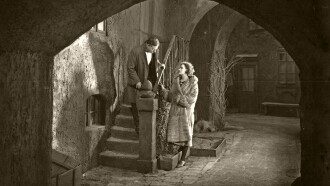
In 1921, we follow two women - Marie and Grete - from the same poor Viennese neighborhood, as they try to better the lives of themselves and their families during the period of Austrian postwar hyperinflation.

27 September 1931
Two of Germany's best and busiest directors collaborated on Berge in Flammen (Mountain in Flames). The storyline should be of interest to pro-ecologists, inasmuch as the directors take to task the warmongers of the world for despoiling the natural beauties of the European mountain ranges with their shell-fire.
22 January 1950
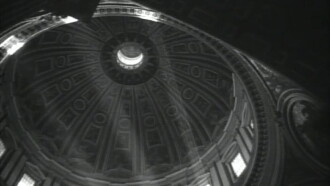
The life and works of the great artist Michelangelo Buonarroti are shown against the historical background of his time.
14 January 1930
Viktor, the son of Prince Gagarin, becomes engaged to the young Natasha, which Governor Malyutov, whose ward he is, does not like at all.

12 May 1926
Scientist Martin Fellmann is tormented by an irrational fear of knives and the irresistible compulsion to murder his wife.
10 November 1926
The film is an adaptation of the 1834 play by Alfred de Musset, On ne badine pas avec l'amour. The film is considered to be a lost film.
11 January 1934
Freely adapted from Theodor Storm's novella of the same name.
26 July 1952
The film begins dreamily describing the quieter times of the 16th century. The documentary, which was made in the years after World War II, goes on to examine the life and teachings of the reformer Martin Luther.
14 April 1935
Journeyman craftsman Paul Paulsen is in his third year of traveling and lives far from his North German homeland in a small village in Central Germany.
15 March 1940
The life and works of Michelangelo are presented by German actor Mathias Wieman, in the the historical context of the High Renaissance era.
