Dave Fleischer Trailers
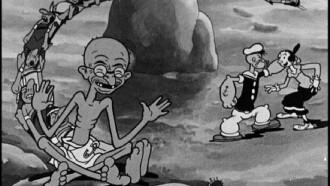
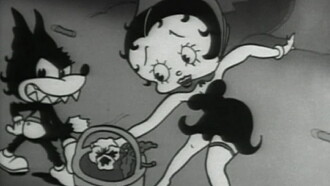
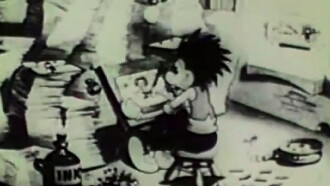
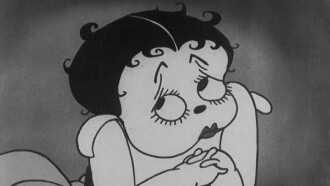
Out of the Inkwell: The Fleischer Story TrailerBetty Boop: Queen of the Cartoons TrailerKo-Ko's Conquest Trailer
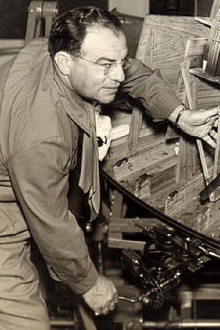
David "Dave" Fleischer (July 14, 1894 – June 25, 1979) was an American animator film director and film producer, best known as a co-owner of Fleischer Studios with his older brother Max Fleischer. He was a native of New York City.
Sometime around 1913-1914, Dave began working as a film cutter for the American branch of Pathé, the French company that was the world's largest film production and distribution company, and the largest manufacturer of film equipment, in the first decades of the 20th Century.
Dave Fleischer was notable during the brothers' early days as the rotoscope model for their first character, Koko the Clown. He went on to become director and later producer of the studio's output. Although he is credited as "director" of every film released by the Fleischer studio from 1921 to 1942, the lead animators actually performed directorial duties, and Fleischer mainly served as producer. Among the cartoon series Fleischer supervised during this period were Talkartoons, Betty Boop Cartoons, Popeye the Sailor, Color Classics and several others; Popeye would go on to be the top rival of Mickey Mouse. He also supervised two animated features released through Paramount Pictures, Gulliver's Travels (1939) and Mr. Bug Goes to Town (1941). The debt Fleischer Studios owed to Paramount for the budgets of those features, worsened by the lack of success that came from the studio's non-Popeye cartoons, was called in by Paramount; this forced the brothers to give the studio to Paramount on May 24, 1941. However, both were still able to remain in charge of Fleischer Studios for a time.
Fleischer was asked by Paramount to put the popular comic book hero Superman into a cartoon series. The big-budget Superman series became the most successful cartoon of the late period of Fleischer Studios. However, relations between Dave and Max were deteriorating. The feud starting simmering after the married Dave began an adulterous affair with his Miami secretary in 1938, and was followed by more personal and professional disputes.
In April 1942 Fleischer, no longer able to cooperate with his brother, left the company to become President of Screen Gems at Columbia Pictures, although he remained co-manager of Fleischer Studios until Paramount reorganized the studio in May 1942 after Max and Dave's contracts expired. Now owned wholly by Paramount, the studio was re-organized as Famous Studios, although the name wasn't officially adopted until May 1943.
In the late-1940s, Fleischer moved over to Universal, where he became a special effects expert and general problem-solver, working on films such as Francis (1950), The Birds (1963), and Thoroughly Modern Millie (1967).
Fleischer died of a stroke on June 25, 1979 in Woodland Hills, California, having spent over a decade in retirement.

Most Popular Dave Fleischer Trailers
Total trailers found: 654
12 December 1930
Bimbo becomes a long distance accordion champ and comes through with a load of credit.
16 June 2008
A documentary about the Fleischer brothers and how they revolutionized animation.
27 May 1938
A "Screen Songs" short mixing live action with cartoons. The animated section deals with what will be seen on the television sets of the future, i.
29 August 1930
Sailor Bimbo (as Barnacle Bill) jumps ship with his little black book and visits his lady friend, Betty Boop (with dog's ears).
01 September 1926
After Uplift Society-champion Crabbine Hicks has the musical revue shut down, her son Buster hides the out-of-work chorus girls in their home, while Crabbine is out of town.
26 April 1940
It's just another day at the Granite Hotel.
10 January 1931
Fleischer Studios giving "Please Go 'Way and Let Me Sleep" the 'Screen Song' bouncing ball treatment.
30 September 1926
Carrie is a chorus girl traveling with a medicine show. They stop outside a sanitarium to peddle their elixirs, not knowing the bogus sanitarium is providing bodies for an enterprising mortician.
09 June 1933
An old-fashioned "Burlesk" variety show, mostly animated with a live-action performance of "I'm Playing with Fire" by the Watson Sisters.
15 June 1944
A Dave Fleischer produced animated short.
22 April 1938
In a tribute to the Fleischer brothers shorts of the '20s, a janitor hypnotizes Max Fleischer's pen to draw Betty Boop.
24 July 1931
Bimbo finds himself surrounded by a mysterious group of robed figures who invite him to become a member of their secret organisation.
28 April 1932
Koko the Clown and Bimbo overhear Betty Boop singing about how much she wants a fur coat. That's enough for them.
04 March 1932
The Round Towners Quartet sings the title song with a Bouncing Ball. Cartoon sequence: Betty Boop and Bimbo go ice skating.
21 March 1935
The boys arrive at Olive's house at the same time, but at different doors. They both come in, and whenever Olive isn't looking, they start fighting.
17 October 1935
Betty Boop is singing on stage and is joined by a series of very funny alternate stars... a set of babies.
10 November 1939
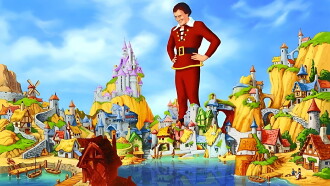
Gulliver washes ashore on Lilliput and attempts to prevent war between that tiny kingdom and its equally-miniscule rival, Blefiscu, as well as smooth the way for the romance between the Princess and Prince of the opposing lands.
10 July 1936
Greedy Humpty Dumpty's wall of gold is not enough. He wants all the gold in the sun, too.
01 November 1931
Sun bonneted Betty Boop takes a train to "Rudy Valley" where she gains weight and Rudy Vallee performs the title song with Bouncing Ball.
17 July 1936
Pudgy the pup tries to emulate a tough bulldog, but Betty Boop sings him the error of his ways.
11 April 1930
The beginning has the main character wooing a woman on a balcony with the flower she sends down then putting the moves on him.
01 January 1995
From the A&E "Biography" series, a review of the birth, development and cinematic history of Betty Boop, the flapper cartoon character who has been a popular icon since the 1930s.
03 August 1934
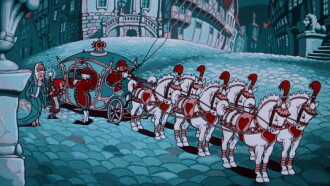
In the only Betty Boop color cartoon, Cinderella (Betty) goes to the ball thanks to her fairy godmother.
21 February 1941
Gabby is forced to take care of a strange animal called a Kango.
17 September 1942
A hobo crow tricks a canary out of his comfortable cage with inflated promises of happiness in the outside world.
17 December 1933
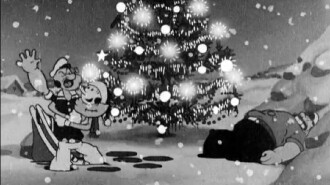
Popeye skates over to Olive's house to give her a Christmas present: ice skates of her own. While he's teaching her, Bluto skates up and gets fresh; of course, Popeye fights him.
01 May 1936
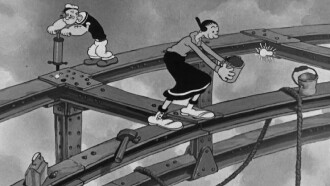
Popeye and Olive are taking a ferry run by Bluto. When they find out the fare, they decide, with Wimpy, to build a bridge.
14 November 1930
An Italian immigrant discovers his wife is a hootchy-kootchy dancer. Later, the audience is invited to follow the bouncing ball and sing along to "Mariutch Down at Coney Island.
02 March 1934
After drawing Betty Boop, Max Fleischer (live-action) leaves the studio; Betty and Koko try amateur dentistry, releasing enough laughing gas to convulse the 'real world.
29 September 1933
Popeye, Olive Oyl and Wimpy are shipwrecked on an island of hostile Indians
11 November 1932
Fire chief Bimbo is called to a house on fire, and rescues the Boswell Sisters and their piano, who start performing "When It's Sleepy Time Down South".
02 December 1938
Overworked as cook and dishwasher at a busy diner, Betty Boop calls it quits and accepts a job as nursery attendant at Bundle From Heaven Nursery.
01 April 1932
Betty Boop entertains at a gambling den with Bimbo in attendance; Arthur Jarrett (film debut) sings the title song with a Bouncing Ball.
09 February 1934
This series of animated cartoons- sometimes including bits of live action- took popular songs of the day and combined the popular "bouncing ball" following the lyrics in an effort for audience sing-along's.
16 June 1932
The Mills Brothers perform two songs with the Bouncing Ball.
16 January 1932
In the circus, Betty Boop is the lion tamer, sings the title tune on the high wire, and fights off the lecherous ringmaster.
27 December 1935
Pudgy the pup meets the female pup next door, whose snobbish owner calls him a "little nobody". A pep talk from Betty Boop turns Pudgy into a hero.
04 August 1932
Betty Boop, trying to keep a party lively, is aided by Rudy Vallee, who comes to live-action life from a sheet music cover and sings several songs with the Bouncing Ball.
12 December 1931
Betty Boop goes to Grandma's through the woods despite wolf warnings; but Bimbo follows and gives the old story a new twist.
27 November 1936
After wrecking Popeye's ship and stealing away Olive Oyl, hero of Arabic legend Sindbad decides to test him and his ever-resilient new rival's strength in order to prove their supremacy as the "most remarkable, extraordinary fella" of Sindbad's menagerie island.
10 June 1931
An alley cat pining for her tom is cheered up by a friendly mouse; the title song is presented with a Bouncing Ball.
28 April 1933
A man tries to sell peanuts at the Zoo but is harassed by an elephant and various animals, so he asks a singer for help.
18 August 1930
A Screen Song of the old standard.
29 August 1941
Twinkletoes is sleeping on the counter at the "Wide-Awake Delivery Service." when Mysto the Magician telephones and wants his magical paraphernalia picked up at his home and delivered to the theatre in five minutes.
26 February 1938
It's harvesting season, so all the fruits and vegetables come out to play.
18 August 1933
An animated short chronicling the adventures of Colonel Stoopnagle and Budd.
25 August 1932
Lillian Roth sings the title song; also animated sequences.
03 December 1921
Koko The Clown continually interrupts an animator, who turns his attention to trapping the clown.
14 September 1944
A love triangle occurs between the publisher's daughter Betty Moody. comic book artist Tim Jones, and the company's wily manipulative manager Hilton Payne.
09 August 1930
The Fleischer's Talkartoon short that debuted Betty Boop.
25 July 1935
Popeye and Bluto are deep sea divers. Popeye has a treasure map; for some reason he cuts Bluto in on the deal, but of course, Bluto's idea of 50-50 isn't exactly fair.
26 February 1935
A boy gets trigger happy with his BB gun, but soon regrets it.
28 April 1927
Bell Telephone instructional film shows how - and how not - to treat your upright desk telephone set.
26 December 1931
A Max Fleischer Screen Songs cartoon with part of it devoted to cartoon animation and the other part to Arthur Treacy, radio's Street Singer, doing the Irving Berlin song, with words and dancing-ball double-exposed at the lower left of the frame for audience participation.
06 February 1931
Elementary school-aged Bimbo is late to school, where he presents a note signed my father to his leonine bespectacled teacher.
15 November 1940
Gabby is constable in the village, and the mayor is on his case to catch pig thieves.
01 May 1926
Follow the bouncing ball sing-along
02 February 1934
Betty Boop, sleepless on a freezing night, builds a nice hot fire which proves too much of a good thing; in a dream she visits Hell, sings "Hell's Bells," and makes Hell freeze over!
13 October 1929
In this one, a cat is cleaning a store carpet when he gets interrupted by a mouse. After they do a brief tap dance, a lady cat comes in which has the male cat already smitten.
25 October 1940
Spies Sneak, Snoop and Snitch try to sneak up on the king while he is sleeping in order to steal some riches.