Eduard Tisse Trailers
Seeking Tisse TrailerSergei Eisenstein: Mexican Fantasy TrailerThe Magic Beam Trailer
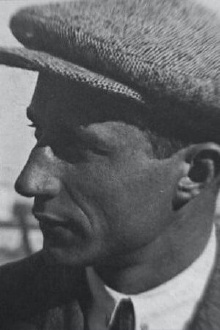
Eduard Tisse (13 April 1897 – 18 November 1961) was a Soviet cinematographer. In 1921, Tisse became a professor at Gerasimov Institute of Cinematography. His career took off when he worked with director Sergei Eisenstein on the film Strike. Tisse would become Eisenstein's standard cinematographer for the next twenty years.
Most Popular Eduard Tisse Trailers
Total trailers found: 37
24 December 1925
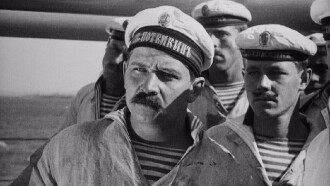
A dramatized account of a great Russian naval mutiny and a resultant public demonstration, showing support, which brought on a police massacre.
28 April 1925
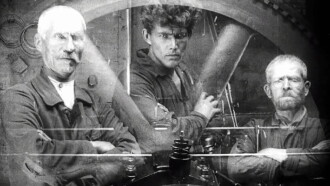
Workers in a factory in pre-revolutionary Russia go on strike and are met by violent suppression.
06 November 1935
A Russian outpost in Eastern Siberia comes under threat of attack by the Japanese. Aerograd is a new town with a strategically located airfield of vital interest to the government.
11 November 1944
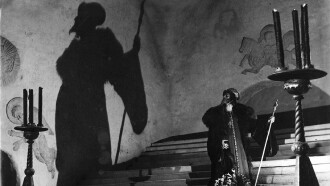
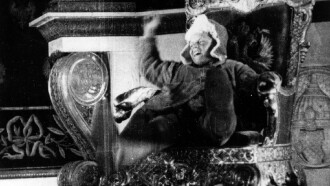
Set during the early part of his reign, Ivan faces betrayal from the aristocracy and even his closest friends as he seeks to unite the Russian people.
10 October 1958
This is the second part of a projected three-part epic biopic of Russian Czar Ivan Grozny, undertaken by Soviet film-maker Sergei Eisenstein at the behest of Josef Stalin.
24 November 1938
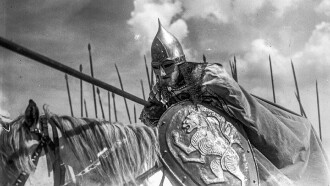
When German knights invade Russia, Prince Alexander Nevsky must rally his people to resist the formidable force.
31 October 1946
Yugoslav farmer-turned-partisan Slavko Babić starts an uprising against the fascist Germans and their allies.
11 May 1928
Sergei M. Eisenstein's docu-drama about the 1917 October Revolution in Russia. Made ten years after the events and edited in Eisenstein's 'Soviet Montage' style, it re-enacts in celebratory terms several key scenes from the revolution.
01 November 1963
“The Magic Beam” is a film essay woven together from newsreels and documentary material from different decades, fragments of hundreds of non-fiction and fiction Soviet films of the 1910s-1960s.
21 January 1956
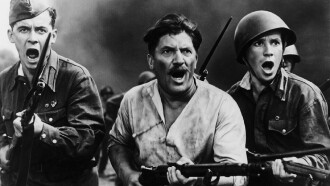
In June of 1941, at the outset of the Nazi invasion of Russia, a group of Soviet servicemen languidly biding their time at the Brest fortress on the Polish border, are suddenly galvanized into action.
06 June 1952
The young composer Mikhail Glinka performs his new work at a soiree at earl Vielgorsky's house. However, the public is accustomed to Western music, and reacts coldly to the creation of the composer.
30 September 1940
Second attempt to create a feature film out of the 200,000-plus feet of film which Soviet film-maker Sergei Eisenstein shot during 1931-32 in Mexico for American socialist author Upton Sinclair, his wife and a small company of investors.
01 January 1958
Documentary made for the 60th anniversary of Soviet director Sergei Eisenstein.
01 January 1921
A down on his luck peasant goes to fight in World War I and returns home a hero. Partially lost.
25 September 1929
Also known as The Old and the New, The General Line illustrates Lenin’s stated imperative that the nation move from agrarian to industrial culture in an epic ode to farm-collectivization progress.
01 October 1979
Having revolutionized film editing through such masterworks of montage as Potemkin and Strike, Soviet director Sergei Eisenstein emigrated West in hopes of testing the capabilities of the American film industry.
19 September 1974
In their youth, they loved each other, but broke up. Ilya got married, became a doctor, Sasha learned to become an engineer, got married.
18 October 1953
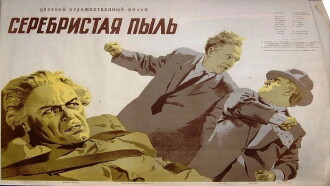
An American scientist invents a new weapon of mass destruction - silver dust. Corporate war breaks out between two military industry giants to own the weapon.
31 December 1932
Unedited film that Sergei Eisenstein, Grigoriy Aleksandrov and Eduard Tisse shot in Mexico 1931-32. This record only represents the 200,000-plus feet of unedited film that Sergei Eisenstein, Grigoriy Aleksandrov and Eduard Tisse shot in Mexico 1931/32 for Mary and Upton Sinclair and three American co-financiers.
23 May 2026
Famed Russian revolutionary film director Sergei Eisenstein traveled to Mexico in December 1930 to experience firsthand its “geographical, ethnological, cultural and historical diversity” and to make the feature film known to the world as ¡QUE VIVA MÉXICO! After shooting 200,000 feet of 35mm film footage, drawing hundreds of outlandish sketches and writing volumes of theoretical texts, he departed in April 1932 without a completed film.
22 January 1931
Footage of the aftermath of the January 14 1931 earthquake in Oaxaca, Mexico.
01 January 1958
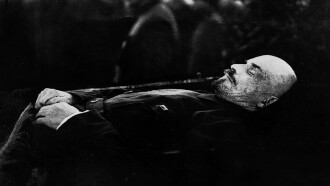
The unique film footage collected in this film has preserved some of the moments of Vladimir Lenin's life.
21 January 1925
Dziga Vertov-directed Soviet newsreel made to commemorate the first anniversary of the death of Vladimir Ilich Lenin (21st January 1924 - 1925) drawn from 'The Final Journey', a Pravda feuilleton written on the occasion of Lenin's funeral by the man who had introduced Vertov to cinema, Mikhail Koltsov.
12 November 1925
The story of a Jewish entrepreneur ins Tsarist Russia always look for a get rich quick scheme.
02 January 1925
Konstantin Eggert both directed and starred as Count Shemet, cursed by his insane mother’s traumatic experience with a bear to have seizures during which he himself becomes a “bear” on the kill.
16 March 1949
Soviet and American soldiers are meeting on the shores of the Elbe river in Germany in 1945.
26 June 1934
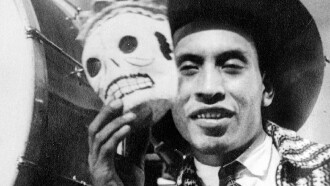
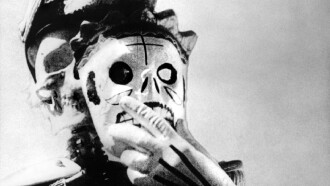
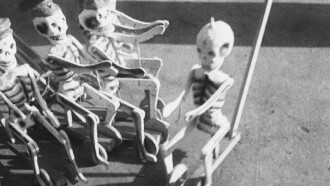
During his adventure in Mexico, Sergei Eisenstein made footage of a Mexican "Death Day" celebration for inclusion in his "Que Viva Mexico!" film project.
13 February 1921
historical footage capturing the funeral of Pyotr Kropotkin, the world-famous Russian revolutionary, philosopher, and theorist of anarcho-communism, held in Moscow on February 13, 1921.
28 February 1931
Romance sentimentale is a 1930 French film directed by Grigori Aleksandrov and Sergei M. Eisenstein. A short, experimental, slightly poetic montage of city and abstract images.
22 September 1933
As was common in Diaz's Mexico, a young hacienda worker finds his betrothed imprisoned and his life threatened by his master for confronting a hacienda guest for raping the girl.
05 February 1930
This film shows contrasting views of women with problematic pregnancies and the outcomes resulting when they seek out a back-alley abortionist, a trained and licensed abortion provider in a clinic, or an obstetrician capable of performing a Caesarian Section.
12 February 1998
Eisenstein shot 50 hours of footage on location in Mexico in 1931 and 32 for what would have become ¡Que viva México!, but was not able to finish the film.
11 November 2017
The story of the world-renowned Liepāja-born cinematographer Eduard Tisse, whose wife was convinced it was he who created all the famous films of Sergei Eisenstein.
30 April 1933
On the 15th anniversary of October. Covers the period from November 7, 1917, to November 7, 1932. The main character is a fifteen-year-old Komsomol member.