Edward Owens Trailers
Private Imaginings and Narrative Facts TrailerAvalon Lee and Patrick Sullivan TrailerTomorrow’s Promise Trailer
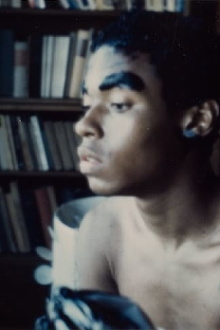
Edward Owens was an African American artist and filmmaker. He studied painting and sculpture at SAIC, in addition to making 8mm movies. Encouraged by his mentor, filmmaker Gregory Markopoulos, Owens moved to New York City. There he met filmmaker-poet Charles Boultenhouse, with whom Owens became romantically involved. Owens returned to Chicago for personal reasons in 1971, finishing his college degree but never completing another film. The time Owens spent in New York resulted in several films that showcase a unique approach to imagery, lighting, editing, and narrative that defines his brief yet meaningful career.
Most Popular Edward Owens Trailers
Total trailers found: 9
01 January 1970
“A montage of still and moving images, mixing and alternating black people and white people, fantasy and reality, a presidential suite and a mother’s kitchen: a sensitive, poetic evocation in the manner of the film-maker’s Remembrance.
01 January 1968
Colour, Sound, 16mm, 3 minutes.
01 January 1966
In November 1966, Mr. Owens completed his first film Autre fois j'ai aimé une femme ("Once I Loved a Woman"), which in its short existence, has had special screenings both at the school of the Institute and Morton Hall, the Second City Film Center, and the Filmmakers' Cinematheque of New York.
01 January 1966
Home movie of Barbra Streisand concert at Soldier Field, August 9, 1966. Scenes of her performing on stage (sometimes with her dog) are followed by scenes where photographer's flashes briefly illuminate Streisand standing in door of her trailer, holding her dog, her arm around her manager Martin Erlichman.
01 January 1966
Following a partnership with the Chicago Film Society to restore the 16mm films of SAIC alumnus Edward Owens, the Flaxman Library has recently finished new 16mm restorations of Owens' earlier 8mm work.
27 May 1967
“Tomorrow’s Promise is a film about vacantness. Which physically does ‘begin’, reversed, upside down on the screen […] suddenly another such position is taken (not in reverse), this time by a male figure and soon, in this same section, the girl of the reversed image reappears posed in a different way; a way obsessed by ‘mood’.
31 March 1967
“The music is by Marilyn Monroe singing ‘Running Wild’ from Some Like It Hot, because it’s a film portrait of Nettie Thomas.
01 January 1966
An 8mm portrait film, consistent with Owens’ other portrait films in 16mm, where his lingering gaze, dramatic lighting, and play with focus and underexposure form emotional landscapes rich with tension, uncertainty and warmth.
01 January 1966
Close-up shots of a young white woman dramatically lit, holding hands to her head and yelling, looking fearful.