Ernest Šmigura Trailers
Kováč Juraj TrailerSpomalený úder TrailerNúraddín Ali a Anísaldžalísa Trailer


Kováč Juraj TrailerSpomalený úder TrailerNúraddín Ali a Anísaldžalísa Trailer

Total trailers found: 38

01 January 1978
The plot takes place in the revolutionary year of 1848. It takes us to Príbelice, where Janko Kráľ returns from Pest after the March Revolution, to acquaint the Slovak people with the famous Twelve Points, together with his friend, teacher Ján Rotarides.
14 November 1963
A story of two old friends, who after ten years - one as the deputy director and the other as the chairman of the party organization - meet on a large construction site.
10 December 1975
A psychological story of a young printing house leader and his subordinates and a "dangerous contract from the West".
21 January 1977
A story about the love of two young people who were not divided by borders or the cruelty of time.
01 January 2001
The story tells of a statue in Pribino Square in Nitra, to which the inhabitants and ancient legend attribute the qualities of the brave blacksmith Juraj Corgoň.
02 February 1968
A classical ballad motif about an aging father and his three daughters is quite unusually here set against the backdrop of Czechoslovakia of the 1950s.
16 April 1970
The film is a historic parable about the topicality of revolution. 1514. The peasants' uprising is over, Dózsa has been arrested.

24 January 1975
Slovakian villagers towards the end of WW II are despairing as German troops fall back to their village.

02 May 1980
While playing Indians two Czechoslovak pioneers are captured by the criminal who wants to cross the border illegally.
06 November 1959
The drama of a young Slovak army officer who gradually realises the horrors of fascism during the fighting in Ukraine.
01 January 1981
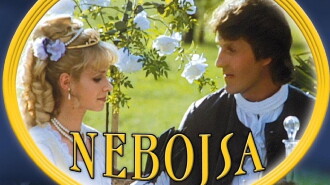
Nebojsa was the nickname given to a young man who was not afraid of anything. One day he heard that a cursed princess lived in a castle.

06 September 1983
A family saga taking place mostly in a small Slovak village over a period of thirty years (1887–1917).

25 April 1958
Historical satire from the first half of the 19th century, which captures the decay and decline of the landed estate.
27 August 1976
In Slovakia, they often and gladly honored those soldiers who refused to serve the fascist regime and stood against it.
24 August 1962
A bricklayer, Jozef Haviar, decides to live with his family on the small farm of his father through the difficult years of the economic crisis.
25 February 1977
A picture of generational confrontations between children and parents. A young and ambitious violin virtuoso, Peter, lives in long-lasting conflicts with his father.
24 August 1979
Historical reconstruction of the events of the anti-fascist struggle in Slovakia in 1943 and 1944.
23 January 1975
A chronicle of dramatic events capturing the fates of people living in a Slovak village just after World War II.
18 March 1977
A satirical story about a young teacher, Josefína, who resolutely embarks on a fight against a group of bricklayers who demand exorbitant prices for their dubious and poor-quality services and, under the pretext of helping, rob the inhabitants of a western Slovak village.
05 May 1978
Slovak psychological drama from the end of World War II. The plot of the film takes place in a short period of time just before the outbreak of the uprising.
30 January 1969
Slovak partisans, bravely fighting against Nazi superiority, would never have succeeded to such an extent if they had not been supported by the villagers.
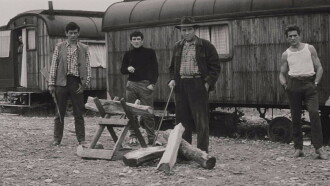
25 December 1964
A psychological drama from the judiciary. Lawyer Kolár handles the case of the rape and murder of a fourteen-year-old girl and tries to remove the fifteen-year-old boy from suspicion and subsequent conviction based on discrepancies in the case file.
20 August 1976
The myth of the anti-fascist resistance in Slovakia was one of the important themes of normalization cinema, of course, treated with an emphasis on the leading role of the communists.
14 February 1958
Drama about the rebellion of the Trencín Infantry Regiment against its superior officers in the Serbian city of Kragujevac, at the end of the First World War.
