F. Percy Smith Trailers
Minute Bodies: The Intimate World of F. Percy Smith TrailerFresh As a Daisy TrailerKew and Me Trailer
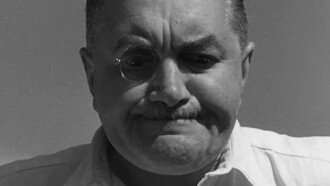
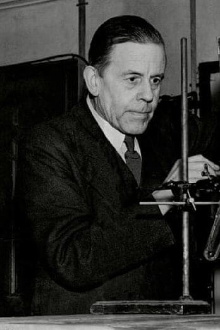
A distinguished pioneer of scientific filmmaking, Percy Smith was born in London in 1880. Working as a clerk at the Board of Education, Percy began to photograph the natural world around him, nursing a lifelong fascination with all manner of plant and animal life. His close-up photograph of a bluebottle's tongue caught the attention of film entrepreneur Charles Urban, who quickly began to exhibit Percy's work in London theatres. After the considerable success of sequences such as The Balancing Bluebottle, where he recorded flies juggling, Percy finally joined Urban as a full-time filmmaker in 1910. Before the outbreak of the First World War, Percy completed over fifty nature films for the Urban Sciences series including, in 1910, the famous piece,
The Birth of a Flower. An early example of stop-motion photography, the film was hugely popular. Meticulously researching his subjects, Percy devised ingenious ways to film slow-growing plant life - modifying his equipment with gramophone needles, candle wicks and other assorted objects, allowing him to continue filming plant movement even as he slept. In 1911 his study,
The Strength and Agility of Insects sparked a huge press debate - detailing a range of insects as they lift tiny dumbbells, twirl matchsticks and juggle objects much heavier than themselves he had to dispel rumours of trickery and cruelty by revealing his innovative filming techniques. Percy went on to serve as a naval photographer during the War and, upon his return, began work for British Instructional Films (BIF). Contributing to the company's widely acclaimed
Secrets of Nature series he worked on numerous films, including An Aquarium in a Wineglass (1926), The Home Wrecker (1929) and Magic Myxies (1931). He continued to work on the project in the 1930s when it became known as Secrets of Life and in 1939 published Secrets of Nature, a review of the filming techniques used throughout the series. (via wildfilmhistory.org)

Most Popular F. Percy Smith Trailers
Total trailers found: 56
27 October 1938
"If they were as rare as orchids we would probably rave about them" opens this film in the Secrets of Nature series, directed by the prolific Mary Field.
01 March 1945
A retired Major's efforts to hone his golf skills are thwarted by the diminutive but defiant common daisy.
01 August 1936
This film shows how and why the animals which inhabit a pond are dependent one on another for their survival.
01 August 1936
A Secrets of Life short.
18 March 1935
A Secrets of Life short of which the BFI gave this description: "The first part of the film is a speeded-up picture of germination and growth of the tomato plant, ending with the fertilization of the flower and the growth of the fruit.
16 May 1909
Charming animated illustration of one of nature's wonders from Britain's most inventive pioneer of wildlife filmmaking.
29 March 1935
A Secrets of Life short to which the BFI gave this description: "The film falls into two related sections: the first part shows, by fast motion.
16 February 1910
Propped upon the tail-end of a match, a housefly performs astonishing feats, alternately juggling a series of objects - a blade of grass, a cork, a miniature dumbbell… Most extraordinary of all is the sequence in which the fly spins a ball twice its own size, while a second fly perches on top.
10 June 1936
Short nature documentary by Mary Field and F. Percy Smith.
01 January 1942
Part of the archive's Junior Biology series, this study of maize is aided by diagrammatic, time-lapse, and microscopic footage.
22 March 1935
"A study of how plants obtain the elements necessary for their existence."
01 January 1927
How science and nature combine to purify water in a reservoir. Micro-cinematography shows the bacteria present in the water.
01 January 1926
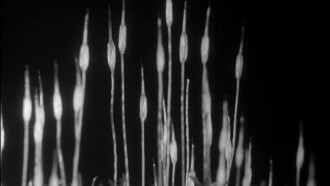
High speed photography used to show the seed dispersal methods of various plants.
28 January 1935
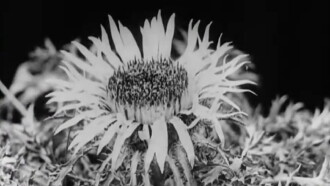
A study of the Spear Thistle demonstrating the processes of fertilisation.
01 June 1913
A documentary look at the harmonagraph, a mechanical device that uses a swinging pendulum to draw patterns.
01 January 1927
Micro-cinematography is used to show how plants transform their secretions into other substances.
22 June 1934
The first in the Secrets of Life series of short films.
10 June 1936
Mary Field and F Percy Smith create this whimsical look at the breeding habits and life cycle of frogs.
01 January 1927
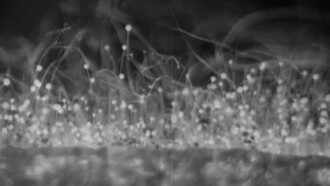
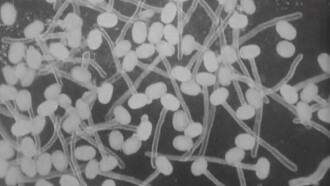
Short documentary film using innovative filming techniques to show how moulds grow and germinate.
11 November 1925
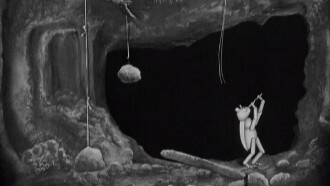
A bug’s life laid bare in this charming cut-out animated tale.
01 January 1926
The life cycle of the larva of the phantom-fly. Released in a silent (1926) and sound (1930) version.
01 January 1915
The film uses stop-frame animation to create maps on the screen, and showed the then-current military situation in the Dardanelles, using various maps to assist understanding.
11 November 1910
"Percy Smith (1880-1944) was world famous as a photographer of plant life. Probably the first British example of time-lapse photography as applied to the growth of plants.
01 February 1935
A Secrets of Life documentary about bathing time at the zoo. The film was registered on the Board of Trade's official list under Section 6 of the Films Act as 883ft long (roughly 9 minutes if projected at 24 frames per second) It is a remake, or update, of the short "Bath Time at the Zoo" from Secrets of Nature.
10 June 1932
Mary Field edits the time-lapse photography of F. Percy Smith to show the life cycle of ferns and related plants.
25 January 1943
The film shows speeded-up germination of the seed to form roots and shoot, at whose base the leaves later form a bulb.
01 January 1930
Time lapse photography of roots growing underground. Part of the “Secrets of Nature” series.
01 January 1929
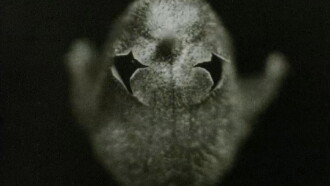
A life history of the Frog. Released in a silent (1929) and sound (1930) version.
04 August 1911
A short, early documentary work showing insects exhibiting extreme strength and agility.
23 January 1943
Part of the Junior Biology series, this study of pin mould is aided by diagrammatic, time-lapse, and microscopic footage.
20 February 1921
Nature’s Handiwork presents the marvelous and critical stages of transformation of caterpillars, moths and butterflies.
01 January 1933
A short documentary study of hops, barley and yeast, and how they interact.
01 January 1942
A Secrets of Life short.
11 July 1930
The film shows the birth, life and reproduction of sweet peas, a familiar and well loved plant of British gardeners.
01 July 1932
Short, anthropomorphically-inclined documentary showing the life-cycle of the common newt.
02 January 1933
Mosses are seen on walls, old roofs and in hedgerows.
01 January 1933
A Secrets of Nature short.
02 January 1927
A short black-and-white silent documentary film featuring the sexual elements of pollenation in Dandelion, Globe thistle, Daisy, Cornflower, Carline thistle and Everlastings.
31 December 1930
The Strangler shows the life history of dodder, from its earliest stage as a seedling, to its parasitic stage feeding off its host.
01 January 1942
A Secrets of Life short.
17 April 1929
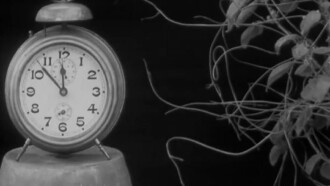
Time lapse photography of the broad bean flower unfurling.
01 August 1936
A Secrets of Life short about the production of seeds.
01 April 1931
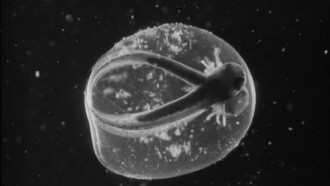
Short documentary showing infusoria in a wine-glass.
10 June 1942
Underwater and microscopic photography by F. Percy Smith tell the story of a newt's life.
01 December 1940
A wildlife film with a difference: it has A Message for any humans in the house. "The squirrel in the tree, the fox below, the birds, insects, all know that a time of plenty will not last forever".
11 October 2016
A meditative, immersive tribute to the astonishing work and achievements of naturalist, inventor and pioneering filmmaker F.
14 November 1911
An early British Kinemacolor short, in which delicate tones and shades of color are beautifully reproduced in examples of highly cultivated sweet pea flowers.
23 February 1944
This peek behind the scenes at Kew Gardens in the 1940s was part of the ever-eccentric Secrets of Life series.
01 February 1931
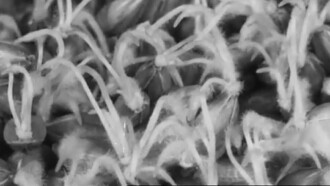
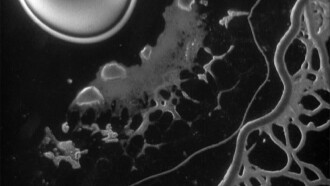
Short film showing (with limited accuracy) the life-cycle of myxomycetes.
01 January 1944
History - and natural history - filmed on location in Selborne, East Hampshire. This unusual edition of the long-running series Secrets of Life tells the story of the village's famous son, Rev Gilbert White, whose 1789 book The Natural History and Antiquities of Selborne is a classic of natural history.
01 January 1925
If you are sitting comfortably then Archie the Ant will begin his bedtime story, although sadly Archie’s creator left it unfinished.
07 October 1910
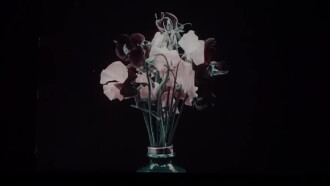
This hand-tinted picture shows a series of hothouse flowers turning upon a pedestal, then displays time-lapse photography of flower growth.
12 May 1938
The lifecycle of a freshwater trout; looking in detail at the development of a trout embryo and hatchling.
12 May 1938
A Secrets of Life short.
01 January 1926
The struggle between plants for existence and methods of seed dispersal. The plant movements are shown at twenty thousand times their normal speed and in extreme close up.