Genden Sangijav Trailers
Khatanbaatar TrailerPeople's Khatanbaatar TrailerThe story of Bushkhuu Trailer
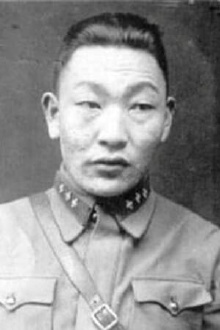
Genden Sangijav was born in 1919 in Övörkhangai. He starts as an actor of National Theater between 1939 and 1944 before becoming stage director. In 1973, he is promoted director of National Theater of Young Children in Ulan Bator. Along his theater career, he directed several long features. He is promoted Artist of People a few months before his death in 1981.
Most Popular Genden Sangijav Trailers
Total trailers found: 16
01 January 1959
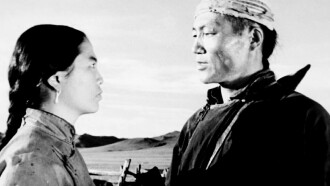
Darbazar, who was carrying a secret letter to General Sukhbaatar about how ordinary herdsmen participated in the People's Revolution of 1921, fell into the hands of the enemy, and before being killed, he left his wife to continue the work he intended to do.
19 February 1968
It shows how the October Revolution affected the hearts of the Mongolian people, and how they defeated the white bandit Baron Ungern at the beginning of the revolution and put an end to his evil activities.
18 January 1978
In this film, a group of people who go up to the mountains to collect wood depict the conflicts of behavior and thoughts that become apparent during their work.
05 July 1967
At the beginning of the People's Revolution of 1921, it tells about the friendship between Bold, a herdsman, and Mikhail, a Russian boatman, who live on the banks of a river near the border.
21 January 1970
It shows the valiant struggle of revolutionary young people who are fighting to keep people fleeing from their homeland due to the persuasion of the opponents of the revolution.
01 January 1964
A moral movie about old and young people, relationships, friendship, and humanity, which tells about Osor's serious death while driving a car while intoxicated.
01 January 1956
In the middle of the 1950s, the harmful effects of the old social customs, rigidity, and bureaucracy in the forward development of social life were shown in a comical tone in connection with the incident where an old man with a dam entered the city to look for parts for a haymaking machine.
01 January 1957
In 1928, when scientific hospitals were introduced to Mongolia, the Russian female doctors who came to rural areas and the famous local maarambas overcame old customs, opinions, and religious influences, and showed how people's views were changed and a new morality was formed in their minds.
23 January 1964
This fairy-tale-themed movie tells about the emotional world of two rich and poor people, quoting from the folk proverb, "When greed becomes too much, you become a witch.
28 January 1981
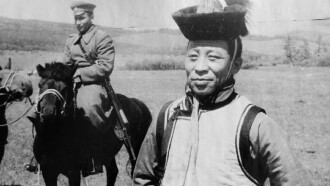
A 2-part epic film novel based on the historical life of Khatanbaatar Magsarjav, the legendary Mongolian military general who stood out in the struggle for the independence of his country and the freedom of his people.
01 March 1961
He expressed the idea that this issue should be a universal concern, while clearly stating that the care of parents has a special role in the development of children's morals.
29 January 1981
A 2-part epic film novel based on the historical life of Khatanbaatar Magsarjav, the legendary Mongolian military general who stood out in the struggle for the independence of his country and the freedom of his people.
31 January 1968
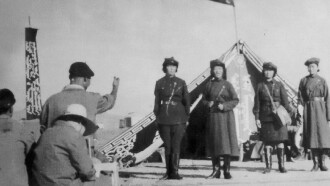
A historical feature film showing how the people's party led by D. Sukhbaatar, the leader of the People's Revolution of 1921 and the general of all military forces, destroyed the oppressors at home and abroad and brought the dawn of a free life to the country.
01 January 1961
The great changes in social life and people's minds in Mongolia before and after the revolution are lived in the form of Dolingor, the humble servant of rich Bold, hard worker, and Bat, who fought against slavery and gained freedom.
23 January 1975
The meaning of being a man's spouse and a mother swan in the world is shown through the life of Tumur's wife Naran, a work that shows how precious love and marital happiness develops amid the conflicts of old and new ideas.
01 January 1979
One of the good qualities of the poor orphaned boy, Boroloi, is depicted in the form of a myth, which is absorbed by the Bushes.