Glauber Rocha Trailers
Golpe de Vista Trailer11 and a Half Questions to Julio Calasso TrailerSteps Trailer
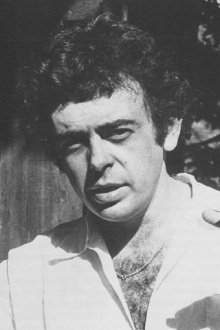
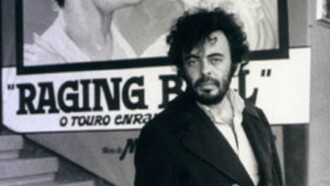
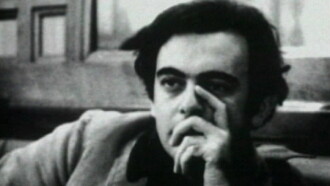
Glauber de Andrade Rocha (Vitória da Conquista, March 14, 1939 — Rio de Janeiro, August 22, 1981) was a Brazilian filmmaker, considered by critics, specialized journalists and the public as one of the biggest names in the history of Brazilian cinema. Revered as a revolutionary genius, he was one of the founders of the avant-garde Cinema Novo movement, and many of his works, such as Deus e o Diabo Na Terra do Sol, Terra em Transe and O Dragão da Maldade Contra o Santo Guerreiro, are often listed as some of the best Brazilian films of all time.
Most Popular Glauber Rocha Trailers
Total trailers found: 83
02 June 1998
Documentary that celebrates 100 years of cinema in Latin America and talks about the origins and the development of cinema in this subcontinent.
24 March 2021
An experimental, visual poem that registers life and the architecture of Sintra (Portugal), captured by Paula Gaitán and featuring glimpses into her own photography art, rural/urban contrast, and memories with Glauber Rocha and family.
02 January 2008
Documentary on "Antonio das Mortes", Glauber Rocha's 1969 film.
12 June 2015
In 1973, during a trip to the city of Essaouira, in Morocco, Glauber Rocha and girlfriend Mossa Bildner took a Super 8 camera to register their impressions.
20 March 2003
At 84 years of age, Lúcia Rocha admitted herself to a hospital in São Paulo to undergo heart tests.
22 October 2020
A deep dive into Glauber Rocha's years exiled in Italy in the 70s. Through a collection of interviews and archives, the movie shows the making of his film Claro (1975) and his relation with European auteurs in their filmic and political views.
11 May 2008
Using home movies and other media, a filmmaker returns to Sintra, Portugal to search for memories of her late husband, Brazilian filmmaker Glauber Rocha.
16 October 2022
A final conversation with departed actor, director and musical producer Julio Calasso Jr., a key character in the Brazilian artistic scene.
01 January 2010
Documentary about Der Leone Have Sept Cabeças
24 November 1969
Through folklore manifestations and diverse artistic expressions, the film is a document that exalts and honors the Bahian culture.
13 March 1964
Wanted for killing his boss, Manuel flees with his wife Rosa to the sertão, the barren landscape of Northern Brazil.
19 August 1970
A politically oriented film in which images suggestive of a mock western are accompanied by an attack on all cinematic conventions to date and a debate on the nature and possibility of revolutionary cinema.
27 August 1965
Simon, a deeply religious man living in the 4th century, wants to be nearer to God so he climbs a column.
02 May 1967
Eldorado, a fictitious country in America, is sparkling with the internal struggle for political power.
15 May 2019
Follows the story of Opinião, a theatre group created in 1964 during the early Brazilian dictatorship period to oppose the government through artistic performances.
31 August 1979
Explores the complex relationship between the spirit, body, and mind. The film is a nightmare with closed eyes because it counts among the most terrible moments of my life, my second exile, which lasted a very long time.
17 November 1980
Drawing inspiration from a poem penned by Castro Alves, this film vividly captures the political, cultural, and intellectual climate of Brazil during the late 1970s.
27 January 2020
A totally Cardoso-appropriated footage delirium, done as a tribute to US independent cinema's original rebel.
17 September 2003
Documentary about Brazilian filmmaker Glauber Rocha, one of the most important names in the Cinema Novo, with interviews with some of his friends and colleagues.
12 December 2015
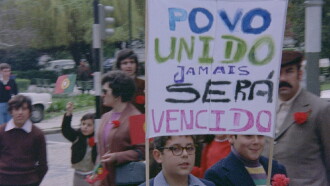
On April 25, 1974 the iconoclastic Brazilian filmmaker Glauber Rocha was in Portugal. There, he joined the collective collective film "As Armas e o Povo".
16 September 2005
Contemporary film critics regard the epic film I Am Cuba as a modern masterpiece. The 1964 Cuban/Soviet coproduction marked a watershed moment of cultural collaboration between two nations.
02 April 2014
Documentary on the view, testimonies and times of Darcy Ribeiro, since military dictatorship.
26 May 1967
Chronicles the life of a 17 year-old girl living in the upper-class Rio de Janeiro neighbourhood of Ipanema.
01 January 2006
The documentary "Depois do Transe" covers the entire process of creating the masterpiece "Entranced Earth", which was released and awarded at the Cannes Film Festival in 1967.
06 November 1967
The new Brazilian cinematic movement (Cinema Novo) through films starring actors Antonio Pitanga and Luiza Maranhão.
18 March 2021
An authentically marginal cinema created in Catholic university in Brazil. One of the most intriguing and imaginative moments in modern cinema in the voice of some of its select conspirators—with Carlos Reichenbach at the lead—, and through the most razing flow of images that can possibly be conceived.
01 January 1959
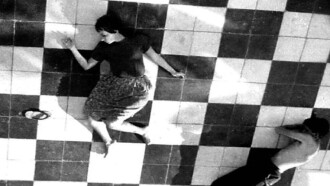
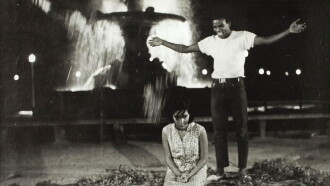
A man and a woman are laying on a chess-like patio. Both are trying to reach each other in the best way they can.
01 November 1977
Film directors with hand-held cameras went to the streets of Lisbon from April 25 to May 1, 1974, registering interviews and political events of the Portuguese "Carnation Revolution", as that period would be later known.
29 October 2000
The Portuguese Revolution (1974-75) seen through the eyes of some of the most important photographers and filmmakers that witnessed the event.
16 April 1967
Originally produced for German TV, Improvised and Purposeful is a firsthand look at the "Cinema Novo" movement (otherwise known as the 'Brazilian New Wave').
01 January 1966
A report on Sarney's inauguration as the governor of the Maranhão state. His promises are heard alongside images of the grim reality.
14 June 1969
A new incarnation of Cangaceiro bandits, led by Coirana, has risen in the badlands. A blind landowner hires Antônio to wipe out his old nemesis.
03 August 1971
A white-robed preacher wanders and sermonizes across African lands; European communists and CIA spies conspire out of mutual self-interest to engineer the appointment of an African bourgeois to a puppet government presidency; and a revolutionary group marches in exile.
16 October 1970
In a castle, somewhere in the Thirld World, Diaz is delirious, dreaming of the power he had in Eldorado, while oppressing the indians, workers and peasants.
01 January 1972
A diary of a trip filmed by Glauber in Punta del Leste (Uruguay – 1972) that documents the reunion of the Rocha familiy: Dona Lúcia, the mother; Anecy Rocha, the sister; Paloma, the daughter, and Walter Lima Jr.
20 November 1975
In the words of the director, a movie about 'the colonizers in the view of the colonized', the movie presents a series of disconnected happenings throughout Europe and Brazil emphasizing the perception of human life as trance-like experiences and thus offering a view of the human history as a connection of symbolic behavior.
28 May 1962
In Bahia, an educated black man returns to his home fishing village to try and free people from mysticism, in particular the Candomblé religion, which he considers a factor of political and social oppression, with tragic outcome.
10 March 1961
The naive sailor Ron arrives in Bahia to visit the famous Água dos Meninos street market. There, however, he is passed behind by the prostitute Maria, lover of the bandit Chico Diabo, who stabs him.
14 September 2012
Set against the turbulent atmosphere of the 1960s, Tropicália is a feature length documentary exploring the Brazilian artistic movement known as Tropicália, and the struggle its artists endured to protect their right to freely express revolutionary thought against the traditional Brazilian music of that time.
02 January 1997
Documentary that addresses, through the testimony of directors and actors, the work of Dib Lutfi, considered one of the greatest photographers of Brazilian cinema.
01 January 1972
This film shows people with constant psychological and social conflicts: the violence among outlaws, conflicts between man and woman, police and society.
16 May 2016
A deep investigation, in the way of a poetic essay, on one of the main Latin American movements in cinema, analyzed via the thoughts of its main authors, who invented, in the early 1960s, a new way of making movies in Brazil, with a political attitude, always near to people's problems, that combined art and revolution.
11 March 1977
This controversial film from director Glauber Rocha records the funeral of his friend, major Brazilian painter Emiliano Di Cavalcanti.
13 May 1966
In search of a better life, Luzia leaves the Northeast of Brazil and goes to Rio de Janeiro, looking for her fiance who went first to pave their way.
02 January 2024
The rise of Brazilian directors Anselmo Duarte and Glauber Rocha occurred through different professional trajectories.
01 January 1974
The film, created in exile from 1971 to 1973 between Cuba and Rome, is considered a "semi-finished" work by Glauber Rocha.
22 October 2020
In 1965, a year after the military coup in Brazil, an oasis of freedom opened in the country's capital.