Gyula Gazdag Trailers
Negative history of Hungarian cinema TrailerColonel Redl TrailerConfidence Trailer
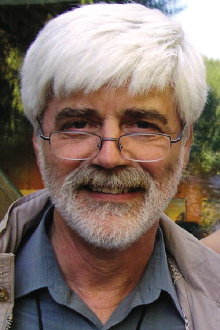
Gyula Gazdag (born 19 July 1947 in Budapest) is a Hungarian film director, screenwriter and actor. Gyula Gazdag is a director of film, theater and television. He was a professor at the UCLA School of Theater, Film and Television from 1993-2015 and has served as the artistic director of the Sundance Filmmakers Lab since 1997.
His numerous feature films include A Hungarian Fairy Tale (1987), which won the Special Jury Prize at the Locarno Film Festival. Named one of the year’s 10 Best Films by the Village Voice and the Best Feature Film of the year by the Hungarian Film Critics Awards, it screened at 20 film festivals worldwide, including the Directors’ Fortnight at Cannes.
Gazdag’s other films include Stand Off (1989), which won a Special Jury Prize at the San Sebastián International Film Festival; Lost Illusions (1983), named Best Screenplay by Hungarian Film Week; Singing on the Treadmill (1974); The Whistling Cobblestone(1971), named Best First Feature by the Hungarian Film Critics Awards; and Swap.
Gazdag has also directed many documentaries, including A Poet on the Lower East Side: A Docu-Diary on Allen Ginsberg (1997); Hungarian Chronicles (1991); Berlinale Forum entrant Package Tour (1985); The Banquet (1982); The Resolution (1972), named on one of the best 100 documentaries of all time by the International Documentary Association; The Selection (1970) and The Long Distance Runner (1969).
Most of Gazdag’s films were banned for shorter or longer periods of time in communist Hungary; some also had been denied foreign exhibition. For the stage, he directed Candide, The Bald Soprano, The Abduction From the Seraglio, The Tempest, Tom Jones and The Hothouse, among many others. Gazdag has been a creative advisor at the Maurits Binger Film Institute in Amsterdam since 2002 and at the Script Station of the Berlinale Talent Campus since 2006.

Most Popular Gyula Gazdag Trailers
Total trailers found: 21
19 February 1970
SELECTION documents a KISZ (Hungarian Young Communist League) chapter at an oil refinery that is interested in hiring a musical act as entertainment for young workers.
29 April 1989
In a border town two sons of the local commander using stolen arms take hostages of eighteen girls in a dormitory, because they want to go West by plane.
13 August 1975
The royal summary court sentences Sallai Imre and Fürst Sándor to death on charges of attempting to uproot the state and the social order.
19 September 1972
Shot in 1972, this remarkable documentary was released ten years later and had its first Western film festival screenings last year.
20 February 1985
Set during the fading glory of the Austro-Hungarian empire, the film tells of the rise and fall of Alfred Redl, an ambitious young officer who proceeds up the ladder to become head of the Secret Police only to become ensnared in political deception.
25 June 2013
This documentary explores the artistic, musical and literary resonances of the mystique of the road - and especially of going off the beaten track - in American lore.
21 February 1985
A documentary which follows a coach party of former inmates on a trip to Auschwitz.
01 January 1978
This grotesque, micro-realistic film is set in a small village at the end of the seventies. A TV-staff comes to the Petőfi Memorial House.
01 January 2010
Reconstructions of unrealized Hungarian films in cooperation with the greatest Hungarian film directors.
25 April 1983
Via the New York Times: "The Hungarian director Gyula Gazdag has transposed the middle section of Balzac's "Lost Illusions" from Paris in the mid-19th century to the Budapest of 1968.
10 January 1980
Janos and Kata are thrown together during the Second World War and forced to pose as husband and wife to hide from the Nazis.
05 June 1974
Mr. Dezső and Rezső are selecting the heroes for their new operetta. They represent different tastes and styles, and keep arguing about the casting of the four men and four women.
01 January 1997
Filmmaker Gyula Gazdag's fascinating documentary follows Hungarian poet, playwright and activist István Eörsi on a trip to the streets of New York to visit his friend and contemporary, the iconic beat poet Allen Ginsberg.
07 May 1987
Shot in B&W, Gyula Gazdag's film follows the surreal and often comic quests of young Andris, an orphan searching for a father who doesn't exist, and Orban, a government clerk who's had enough of oppressive bureaucracy.
15 April 1971
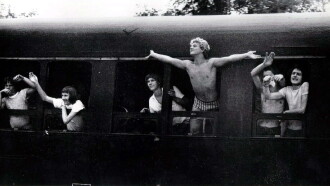
The week-days of a youth-camp, playing democracy, are depicted in this documentarist satire. Due to faulty organisation, the Budapest high-school students get only working tools, but no work to do.
01 January 1968
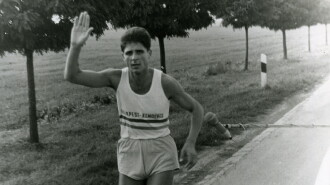
György Schirilla, known for his long-distance running and swimming across the icy Danube, ran to Moscow to commemorate the 50th anniversary of the October Revolution.
01 January 1982
Right after the Red Army in 1944 was deliberating a little village, Veszto in eastern Hungary, the locals formed their "government", excommunicated the goods remaining in the village and distributed them among the poor.
01 January 1974
Hungarian short film.