Hans-Henrik Krause Trailers
Mirror of the Planet TrailerMurder in Paradise TrailerPeter von Scholten Trailer
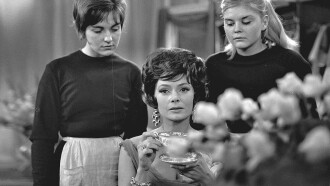
Hans Henrik Krause var søn af politimester Richard Christian Krause (død 1945) og hustru Johanne Elisabeth Pontoppidan (død 1961). Han tog i en tidlig alder til København, hvor han søgte optagelse på Det Kongelige Teaters elevskole, men blev afslået, da man mente han var for ung. I stedet læste han hos Henrik Malberg og blev han uddannet på elevskolen på Aarhus Teater 1937-39. Her debuterede han den 1. september 1937. Efter et par år i Århus tog han i 1941 til hovedstaden og slog hurtig sit navn fast både i teatret og på film. Han spillede i første opførelser af "Silkeborg" og "Vetsera blomstrer ikke for enhver". Under besættelsen var han med i modstandsbevægelsen og blev fængslet. I 1948 klarede han at dublere den store Jason-rolle i "Medea" på Riddersalen, efter at Per Knutzon døde ved et fald fra en trappe efter premierefesten. Det var Hans-Henrik Krauses exhustru, Inge Hvid Møller, der spillede Medea. Blandt hans øvrige roller kan nævnes Marchbanks i "Candida" og Estragon i "Vi venter på Godot". Han var på studierejse til Divodlo Theater i Burian, Prag 1947, Berliner Ensemble !961 og No- og Kabukiteater i Japan 1960 og 62. Fra 1956-58 var han meddirektør (sammen med forfatter og skuespiller Niels Otto Bing 28-12-1907 - 04-02-1985) for Riddersalen og var med til at introducere danskerne for absurd teater med Samulel Becket. Krause instruerede både radio- og fjernsynsteater, i tv spillede han Fouché, Napoleons politiminister, i "Kamæleonen" i 1960, og på Landsskolescenen var han direktør Hoff i "Anna Sophie Hedvig" i 62. I 1960´erne og 70´erne blev han en af landets bedste instruktører, især med Brecht forestillinger på Aalborg Teater i 1961-64. Krauses succes "Mutter Courage" omarbejdede han til tv i 62, og han fik overvældende anmelder- og publikumssucces med "Den kaukasiske kridtcirkel". Han var selv på Aalborgscenen i 63 som kommunisten i "Herr Mississippis ægteskab" Til tv instruerede han "Måne for de mislykkede "i 64. Derefter blev han free lance instruktør af forestillinger på Folketeatret, Det Ny Teater, Det ny Scala samt på Det kgl. Teater. Her iscenesatte han blandt andet "Tribadernes nat", "Tre høje hatte" og "Chez nous". På Det ny Scala var han iscenesætter af "Tango" på Folketeatret "Åh, sikken dejlig krig" samt "Mutter Courage", "Den kaukasiske kridtcirkel", "Hr. Puntila" og "Svejk". Også på TV-Teatret i samme årtier var han instruktør på forestillinger som "Stuepigerne" og "Fødselsdagsselskabet". I 1980erne blev han igen primært skuespiller og medvirkede i "Mod til at dræbe" på Teatret ved Sorte Hest og i "Autumn and Winter" på Cafe Teatret som nogle af de bedste. I 90erne var han tilknyttet ensemblet hos Dr. Dante på Aveny og hvor han - kun afbrudt af et gæstespil på Det kgl. Teater i "Efter orgiet" - spillede i fx. "Mågen" og "Jagten", "Åbne hænder" og "Dr. Dantes elektroniske komedie". På TV var han bl.a. med i komedieserien "Ugeavisen" og i TV-spillet "Elskere". Han medvirkede i "Bryggeren", hvor han spillede billedhuggeren H.V. Bissen. På film huskes Hans-Henrik Krause fra "Otte akkorder" fra 1944. Hans-Henrik Krause blev den 5. maj 1941 gift på Horsens Rådhus med skuespillerinden Inge Hvid-Møller. Ægteskabet blev opløst i 1946. Den 20. december 1950 blev han gift med skuespillerinden Lise Ringheim. Dette ægteskab blev opløst i 1953 og den 9. november 1957 blev Hans-Henrik Krause gift med cand. jur., fuldmægtig i Landbrugsministeriet Marianne Borch (13-01-1932)

Most Popular Hans-Henrik Krause Trailers
Total trailers found: 27
20 July 1967
Denmark, 1967. In the midst of a cultural renaissance, all cultured people want to support Danish cinema, especially when it receives funding from the film fund to shoot scenes on location in a bank.
10 June 1962
Danish adaptation of Pulman's 1959 dramatic debut about young Harvey Green (Baard Owe), whose life has reached a baffling crossroads.
02 March 1992
Jytte Rex' sixth feature explores the here and now, the once and future beyond, Death and Eros, and proof of God's existence to be found in the Black Holes in a universe of nothingness.
29 September 1961
Based on a true story from the fateful day of August 29, 1943, when the Germans disarmed the Danish army and navy.
21 November 1966
Open marriages, friends and lovers, secrets and lies are all coming to light after a fatal accident during a party.
31 August 1970
Wild West Danish comedy. The story of four strapping lads who defeat a gang of criminals intent on stealing honest people's gold should not be taken seriously.
12 September 1969
If your name is Kaj Jensen and you live on Frederiksborggade, there is a certain likelihood that you will be confused with Kaj Jensen on Fredriksberggade.
03 October 1948
Soya's satirist take on variations of Danes, who willingly or unwillingly came to deal with German troops during the five year Second World War occupation.
29 October 1971
Two men disappear at the same time, with one of them committing suicide using dynamite. The police try to figure out which one died and what happened to the other.
20 March 1954
A different kind of Danish film about Denmark, the Danes, and everyday life in Denmark. An episodic film consisting of different storylines, which are linked together by several smaller scenes.
27 February 1987
He freed the slaves in 1848. He spoke out against the king and the government. He loved his wives equally.
20 December 1946
Ditte is born out of wedlock and lives as a young girl with her old beloved grandmother. As an illegitimate child she is teased in school and more than anything in the world she wants a father.
07 August 1944
On the deck of the Aalborg boat, the young girl Elly stands and stares at Copenhagen's towers and roofs, shining in the red glow of the afternoon sun.
12 September 1972
This is a film about the stuff dreams are made of, yet, there is nothing elevated in this concept, on the contrary.
14 October 1988
The nameless journalist from Murder in the Dark receives two shocks in quick succession. First, his good friend Kurt is murdered, and then his editor-in-chief sends him to the provinces! Here, a prostitute has been killed at the brothel "Paradise.
04 November 1944
Eight separate family dramas (uncovering many aspects of deceit) are woven together to the sound of a certain Chopin waltz.
29 January 1951
"Naalen" is the title character in the film, a ruthless black market kingpin whose wake inevitably follows a series of other crimes.
12 February 1945
Director Albrechtsen, who heads a large construction company, is a tough and ruthless businessman. He does not shy away from dubious transactions when they serve his interests, and it is precisely on this basis that he comes into sharp conflict with his employee of many years, civil engineer Humlegaard, and the conflict leads to Humlegaard leaving the company.
26 March 1972
The mysterious, impoverished Count Virtus (Federspiel) realizes his dream of a life at sea, and his young servant Kent (Springborg) must endure much pain before he finds happiness.
06 October 1970
The married couple Pierre and Eva live in a conventional middle-class environment, but Pierre increasingly feels alienated from people and things.
20 September 1977
In the wake of a divorce, Thelma now lives alone with her teenage daughter Irene. Somewhat overwhelmed by the situation (and initially often hiding in bed), the two women embark on new experiences.
03 August 1942
During World War I, the engineer Torben returns home with secret papers from the Russian Tsar to the courier Tuschin, Torben's best friend.
12 July 1945
Four Danish-Americans who, thanks to their exploits across the Atlantic, should have been behind bars, have taken up residence in a Copenhagen hotel.
21 October 1973
Some young squatters have occupied a building that the insurance company wants to demolish, but Adam Berg hesitates to call the police on them.
12 January 1944
Senior barrister Cornelius Thorsen is passionate about three things: good food, fine wine and above all else his lovely daughter Else.
07 November 1962
Solange and Claire are two housemaids who construct elaborate and subversive sadomasochistic rituals when their mistress is away.